
Blog
Your First Electric Trail Bike: A 2026 Beginner’s Guide to Starting Right

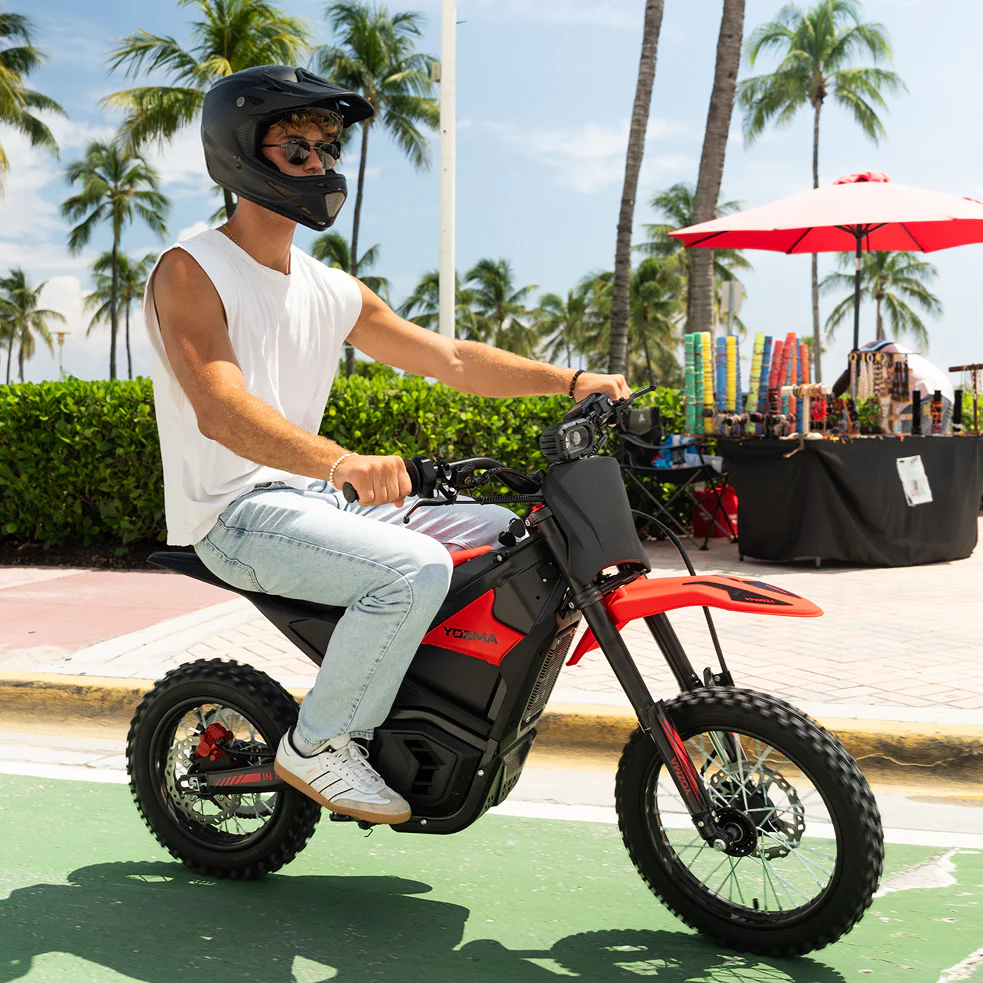
Electric trail bike for beginners you’ve decided to ditch the pavement and point your tires toward the dirt. The idea of an electric trail bike for beginners is calling—the promise of exploring forest paths, climbing hills without gasping, and accessing a new kind of freedom. But as a newcomer, the world of e-MTBs and electric dirt bikes can feel overwhelming. You’re faced with a jungle of specs, power figures, and price tags, all while wondering, “What do I actually need to not just survive, but truly enjoy my first trail?” As guides who’ve helped countless riders make this transition, we’re here to map the path. This isn’t about finding the most hardcore bike; it’s about finding the right partner to build your confidence and skills on the dirt. Let’s talk about what makes a trail bike truly beginner-friendly in 2026.
What Makes a Trail Bike “Beginner-Friendly” in 2026?
Forget raw power. A beginner-friendly bike is a teacher. It’s designed to build skill, prevent intimidation, and forgive mistakes while you learn the language of the trail.
The Holy Trinity: Control, Stability, and Forgiveness
- Progressive Power Delivery: This is non-negotiable. You don’t want a twitchy throttle that jerks the bike forward. Look for bikes with selectable ride modes (Eco, Trail, Sport). A well-tuned “Trail” or even “Beginner” mode provides smooth, predictable acceleration that helps you learn throttle control without unexpected wheelies or spins. This electronic governorship is your best friend.
- Stable, Confidence-Inspiring Geometry: Beginner bikes tend to have a slightly more relaxed head tube angle and longer wheelbase. This makes the bike feel more stable at speed and less twitchy on technical sections, helping you feel planted as you learn.
- Forgiving Suspension: You don’t need 200mm of travel. You need a suspension fork (and possibly rear shock) that’s tunable and plush. It should absorb small bumps and roots comfortably, keeping the bike tracking straight and saving your arms and back from fatigue. Look for forks with simple preload and rebound adjustments.
Smart Tech That Actually Helps (Not Distracts)
In 2026, good beginner bikes use tech to lower barriers:
- Integrated Speed Limiters: Crucial for learning. Being able to cap your top speed electronically means you can focus on technique without the fear of the bike getting away from you.
- Walk-Assist Mode: A godsend when you stall on a steep hill or need to push the bike over an obstacle. A button that makes the bike creep forward at walking pace is a simple, invaluable feature.
- Intuitive Displays: A simple, clear screen showing battery level, assist mode, and speed is all you need. Avoid overly complex units with data overload.

Navigating Your Options: E-MTB vs. Electric Dirt Bike
This is a critical fork in the road. Your choice depends on the type of trails you’ll ride and the riding posture you want.
The Electric Mountain Bike (E-MTB) Path: Pedal-Assist Trail Riding
If you envision riding on mountain bike trails (singletrack, flow trails) and want a more traditional cycling experience with exercise, an E-MTB is your choice.
- Defining Feature: Pedal-assist only. The motor only helps when you pedal.
- Beginner Advantages: Feels more like a bicycle, is often lighter and nimbler on tight trails, and is almost always welcome on non-motorized mountain bike trails (check local rules!).
- Look For: A mid-drive motor (for better weight distribution and climbing), a lower top tube for easy mounting, and a battery integrated into the frame.
The Electric Dirt Bike/Moto Path: Throttle-Controlled Adventure
If you envision exploring wider fire roads, OHV trails, or open terrain, and want the simplicity of a throttle, this is your path.
- Defining Feature: Twist-and-go throttle, often with pedal-assist options.
- Beginner Advantages: Easier to manage on very steep climbs (no pedaling required), often more robustly built for rough terrain, and can feel more familiar if you have motorcycle experience.
- Look For: Multiple power modes, a key removable for security/power cutoff, and a sturdy kickstand.
The Verdict: For most beginners on traditional, technical mountain bike trails, a Class 1 E-MTB (pedal-assist, 20 mph max) is the recommended, and often legally required, starting point. For open, mixed-use, or motorized trails, a throttle-equipped bike opens up different possibilities.
Key Specs to Prioritize (And What to Ignore as a Beginner)
Don’t get blinded by big numbers. Here’s your beginner-specific spec sheet.
Priority #1: The Motor System
- Type: Mid-drive is king for trail riding. It keeps weight centered, improves handling, and leverages the bike’s gears for efficient climbing. Hub drives can be found on more affordable models but are less optimal for technical climbs.
- Power: Don’t fixate on wattage. A 250W mid-drive can outperform a 750W hub drive on a trail. Look for torque ratings (Nm). For a beginner, 50-70 Nm is ample, powerful, and controllable.
Priority #2: The Battery & Range
Range anxiety is real. The advertised “max range” is a fantasy. For trail riding with hills, plan for 40-60% of the claimed range. A 500Wh battery might give you 20-30 miles of realistic trail riding. For a beginner, this is more than enough for several hours of learning. Prioritize a bike with a removable battery for easy charging.
Priority #3: The Component Package
- Brakes: Hydraulic disc brakes are mandatory. They offer one-finger, modulated stopping power in all conditions. This is a critical safety feature.
- Drivetrain: A wide-range 1x (single front chainring) drivetrain is perfect. It’s simple, reduces clutter, and gives you all the gears you need for hills.
- Tires: Look for legitimate trail tires with knobby tread, not semi-slick hybrids. Good tires are your connection to the ground.
Your First Rides: A Beginner’s Progression Plan
You have the bike. Now, let’s build skill safely and systematically.
Pre-Flight & Practice Zone
Before hitting a trail, find a safe, open field or empty parking lot.
- Session 1: The Controls. Practice starting, stopping, and emergency braking. Get a feel for the different power assist levels and how they affect acceleration.
- Session 2: Basic Maneuvers. Practice slow-speed balance, figure eights, and looking through turns (where your head goes, the bike follows).
Hitting the Trail: Start Smart
- Choose a “Green” or Easy Trail: Look for wide, smooth, non-technical trails with minimal obstacles.
- Use a Lower Assist Mode: Start in Eco or Trail mode. This forces you to use proper gear selection and pedaling technique, building fitness and bike handling skills.
- Look Ahead: Your biggest skill is looking where you want to go, not at the obstacle you’re trying to avoid. Scan the trail 20 feet ahead.
- Session Goals, Not Distance: Your first few rides are about time in the saddle and comfort, not miles covered. An hour of focused practice is worth more than three hours of terror.
The Trail Awaits—Start with Confidence
Choosing your first electric trail bike is an exciting step into a wider world. By focusing on a bike that prioritizes controllable power, stable handling, and quality fundamentals over extreme performance, you set yourself up for success. The right beginner bike doesn’t hold you back—it builds you up. It transforms initial apprehension into growing confidence with each ride, allowing you to focus on the sheer joy of exploring new paths and the quiet thrill of electric-assisted adventure.
The trail is less daunting with the right partner. Let the experts at eBikePlugs.com help you find the perfect electric trail bike to begin your journey.
Follow us on Instagram and Facebook
Frequently Asked Questions (FAQ)
Q: How much should I spend on my first electric trail bike?
A: For a quality beginner E-MTB from a reputable brand, expect to invest $2,500 – $4,000. This gets you reliable components, a good mid-drive motor, and hydraulic brakes. For an entry-level throttle-equipped electric dirt bike, prices start around $1,500 – $3,000. Remember, this is an investment in safety and longevity.
Q: Is an electric trail bike cheating?
A: Absolutely not. It’s accessibility. It allows you to ride further, explore more, conquer hills that would be demoralizing on a regular bike, and most importantly, have more fun. It gets people outdoors and exercising who might otherwise not. You still get a fantastic workout; you just cover more ground with a bigger smile.
Q: What essential gear do I need besides the bike?
A: A MIPS-equipped mountain bike helmet is #1. Add riding gloves, padded shorts, a hydration pack, and proper flat-pedal shoes. For more aggressive trail riding on an electric dirt bike, consider knee/shin guards and a full-face helmet.
Q: How do I know if a trail allows electric bikes?
A: Research is critical. Land access rules vary wildly. Generally, Class 1 E-MTBs (pedal-assist only, 20 mph) are allowed on most mountain bike trails. Throttle-equipped bikes are typically only allowed on motorized vehicle trails (OHV areas). Always check with the local land manager (park website, trail association) before you ride.
Q: What’s the biggest mistake beginners make?
A: Riding in too high of an assist mode, too soon. It leads to poor bike handling, going too fast for their skill level, and burning the battery quickly. Start in the lowest effective mode and only increase it when you need help on a climb. Master the bike, then let the bike help you.


