Blog
Ebikes In Nebraska: Street Legal Questions Where You Can Buy
Just bought an e-bike and wondering whether you need a plate, a license, or a policy before riding it to work in Omaha? You don’t. If your bike fits one of Nebraska’s three legal classes, the state treats it as a bicycle. The trouble starts when a bike exceeds those limits, or when you roll onto a downtown sidewalk where city rules apply. This guide explains the statute, where you can ride, the gear the law expects, and how to buy a compliant bike.
Key Takeaways
- Nebraska adopted the three-class system through LB138, operative since September 2, 2023.
- Every class caps the motor at 750 watts and one brake horsepower. Class 1 and 2 stop assisting at 20 mph; Class 3 at 28 mph, pedal-assist only.
- A compliant e-bike needs no license, registration, title, or insurance, and the state sets no helmet rule or minimum age.
- A bike past those limits can be treated as a moped or motorcycle, which requires an operator’s license.
- State law has no blanket sidewalk ban, but Omaha bans it across a defined downtown area and enforces with citations and impoundment.
Table of Contents
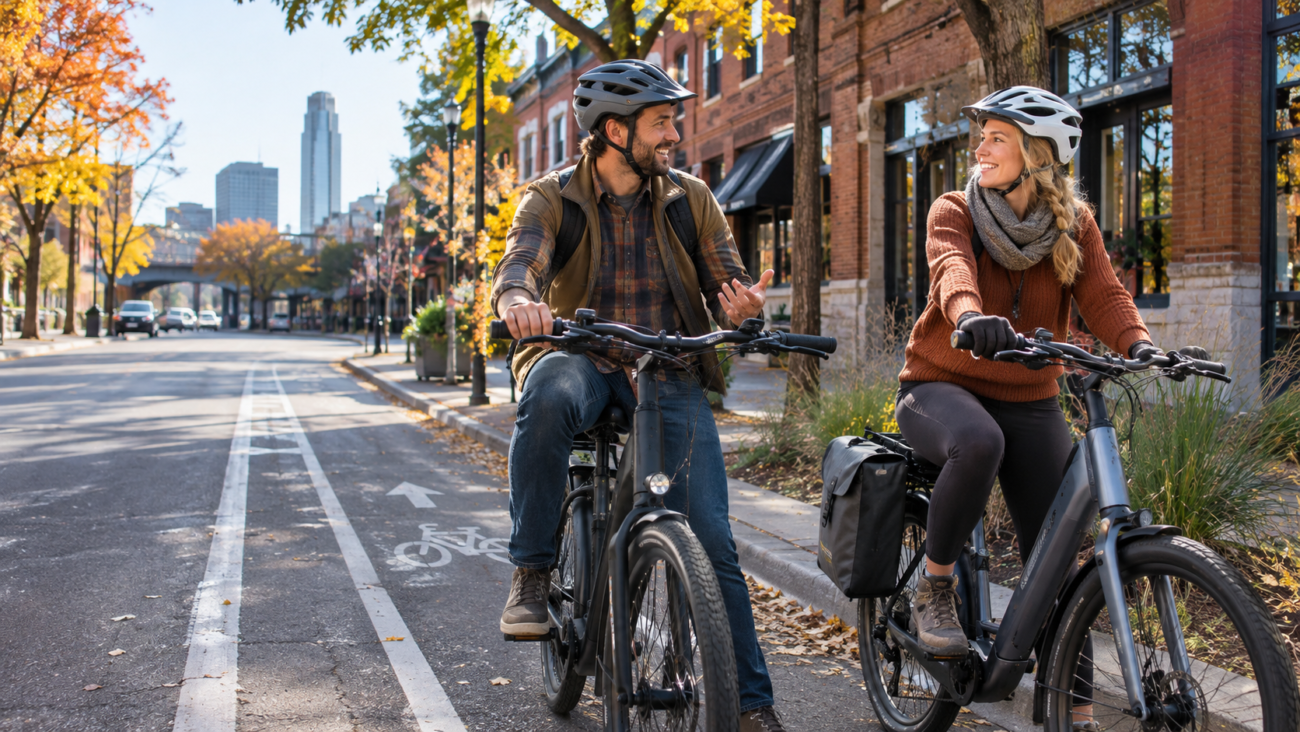
Ready to compare compliant models? Ebike Plugs lists each bike’s class, motor rating, and assisted speed so you can check legality before ordering. In-house financing is available: $800 down, no credit check, no interest. Call or text (714) 749-3162.
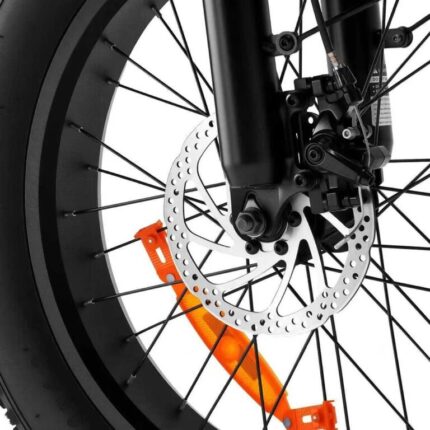
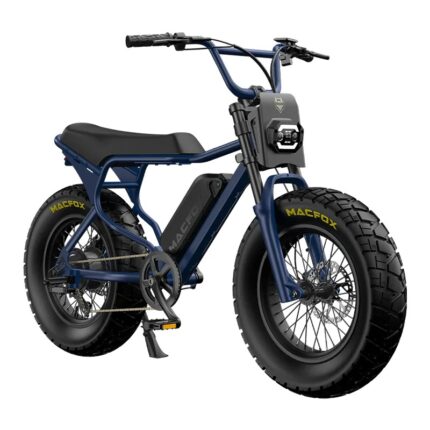
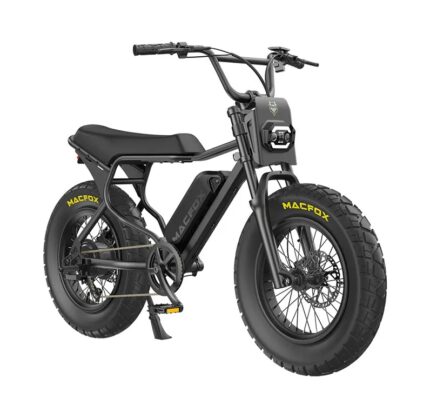
Ebikes In Nebraska
Three layers of authority decide every question here. The state statute sets the definitions: a bike meeting them is a bicycle under the traffic code, not a moped, which is why no paperwork follows it. Cities add their own rules on streets and sidewalks they control. Land managers — natural resources districts, Nebraska Game and Parks, the U.S. Forest Service — set access rules on their own property, independently of both.
So most access answers are layered: yes under state law, unless the city or land manager says otherwise.
What Are The Laws Regarding E-Bikes In Nebraska?
Three definitions do most of the work. Sections 60-614.02, 60-614.03 and 60-614.04 define Classes 1, 2 and 3, all enacted by LB138 and operative on September 2, 2023. The same bill removed qualifying e-bikes from the motor-driven cycle definition, which is why no operator license applies.
On the road you have a cyclist’s rights and duties: obey signals, ride with traffic, yield where required. Access decisions stay largely local, because Nebraska law lets a local authority regulate bicycles by ordinance.
What Is The Legal Speed And Motor Watt Limit For E-Bikes In Nebraska?
The motor must satisfy two tests, not one. It cannot exceed 750 watts, and it cannot produce more than one brake horsepower. The Class I definition states both conditions, and a bike failing either falls outside the class. Listings often quote only horsepower, or only a peak wattage figure.
Assistance must stop at 20 mph for Class 1 and Class 2, and at 28 mph for Class 3. Those ceilings govern only the motor, so coasting downhill above the cutoff is not a violation, though posted limits still apply.
Unlocking a limiter or fitting a stronger controller changes the legal picture: a bike assisting past these limits can fall under moped or motorcycle rules, which require an operator’s license. Ask the seller to confirm class, rated wattage, and assisted top speed in writing.
How Does Nebraska Define An Electric Bicycle?
The statute builds the definition from four parts: two, three, or four wheels; a saddle or seat; fully operative pedals for human propulsion; and an electric motor within its class’s limits. That separates it from mopeds, high-powered electric dirt bikes, and stand-up scooters. A common pitfall: pedals that work only as footrests do not count.
Does Nebraska Use The Three-Class E-Bike System?
Yes. The classes differ by how the motor engages and when it shuts off.
| Class | How Power Engages | Assist Stops At | Motor Limit | Typical Fit |
|---|---|---|---|---|
| Class 1 | Pedaling only | 20 mph | 750 W and 1 bhp | Paths, trails, relaxed commuting |
| Class 2 | Throttle or pedaling | 20 mph | 750 W and 1 bhp | Stop-and-go traffic |
| Class 3 | Pedaling only | 28 mph | 750 W and 1 bhp | Longer road commutes |
Pedal assist feels like a steady tailwind; a throttle works more like a scooter. Bikes that look identical often sit in different classes, so read the label, not the silhouette.
Are E-Bikes Street Legal In Nebraska?
Yes. A Class 1, 2, or 3 e-bike can use public roads, bike lanes, and paved state highway shoulders under bicycle rules. Interstates and other freeways are the main exception. Riding slower than traffic, keep as near the right edge as practicable, moving left only to pass, turn, avoid hazards, or take a narrow lane.
Drivers carry duties too. LB530, effective September 3, 2025, created a vulnerable road user category covering cyclists and pedestrians; where possible, drivers approaching one must change lanes rather than squeeze past.
Is your e-bike street legal in Nebraska? Work through this branching check.
Question 1: Does it have working pedals that can propel it?
- Yes: go to Question 2.
- No: not an e-bike. Check DMV moped or motorcycle rules.
Question 2: Is the motor 750 watts or less and no more than one brake horsepower?
- Yes: go to Question 3.
- No or unknown: get both figures from the manufacturer.
Question 3: Does a throttle move the bike without pedaling?
- Yes: go to Question 4.
- No: go to Question 5.
Question 4: Does all assistance stop at 20 mph?
- Yes: likely Class 2. Read the sidewalk section first.
- No: outside every class.
Question 5: Where does pedal assistance stop?
- 20 mph: likely Class 1, broadest path access.
- 28 mph: likely Class 3. Check local path rules.
- Above 28 mph: not a legal e-bike.
This check is general information, not legal advice. A bike outside all three classes leaves three options: keep it to private property, ask the manufacturer for a documented compliant setting, or license it as a moped or motorcycle.
Are Class 3 E-Bikes Legal In Nebraska?
Yes, and they must be pedal-assist only, with no throttle. Nebraska’s definition does not require a speedometer.
Class 2 suits stop-and-go traffic and riders wanting help away from intersections. Class 3 suits longer commutes where holding 25 mph keeps you near traffic flow. A local authority can still restrict Class 3 on paths it manages, so the faster bike trades flexibility for speed.
Do You Need A License, Insurance Or Registration For An E-Bike In Nebraska?
No. A compliant e-bike needs no license, title, plate, or insurance, because Nebraska excludes bicycles from its motor vehicle definition. That changes once a bike leaves the three-class framework.
| Requirement | Class 1, 2 Or 3 E-Bike | Over 750 W Or Past Class Limit |
|---|---|---|
| Legal category | Bicycle | Moped or motorcycle |
| Operator’s license | Not required | Required |
| Registration and plate | Not required | Required |
| Helmet | No state requirement | Required unless 21+ with approved course |
“Not required” is different from “not wise.” Ask your insurer whether the policy covers e-bike theft and liability, and keep your receipt and serial number.
Do You Need A Helmet To Ride An E-Bike In Nebraska?
No. Nebraska has no statewide helmet requirement for e-bike riders of any age. The helmet statute covers motorcycles and mopeds only, and since January 1, 2024 even those riders are exempt at 21 or older with an approved safety course. Cities and facility managers can set stricter rules.
Wear one anyway. The NTSB helmet findings from 2019 call helmet use “the single most effective way for riders to reduce their chances of receiving a serious head injury.” Choose one meeting the CPSC standard, and replace it after any impact.
Is There A Minimum Age For Riding An E-Bike In Nebraska?
No. No statute sets a minimum operating age for any class, including Class 3, so the judgment rests with parents and rental businesses. Before handing over the bike, test real skills: a hard stop from full speed, hand signals, a planned route.
Use case (hypothetical): a Lincoln parent buying for a 14-year-old. A parent wants their teenager riding to school and joining family rides on the MoPac East Trail. With no legal age floor, they pick a Class 1: no throttle, 20 mph cap, broadest path access. They practice emergency stops and plan a route avoiding downtown sidewalks. The limitation is that a Class 1 still reaches 20 mph quickly, so early supervision matters.
Where Can You Ride An E-Bike In Nebraska?
Generally, anywhere a bicycle can go. This table shows who controls each location.
| Location | E-Bike Access | Who Sets The Rules | Check Before Riding |
|---|---|---|---|
| Streets and bike lanes | All three classes | State, cities | Downtown sidewalk bans |
| Interstates and freeways | Not allowed | State | Alternate routes |
| Shared-use paths | All classes unless restricted | Cities and NRDs | Trailhead signs |
| Cowboy Trail | Bicycle rules apply | Nebraska Game and Parks | Closure map, conditions |
| National forest and grassland | Motorized routes only | U.S. Forest Service | Motor Vehicle Use Map |
Are E-Bikes Allowed On Trails And Bike Paths In Nebraska?
Generally yes. State law sets no class restriction on bicycle paths, so all three travel as bicycles unless a local authority or land manager says otherwise.
Cowboy Trail access works by default rather than explicit permission: Nebraska Game and Parks publishes no class-by-class e-bike restriction, so the state’s bicycle treatment governs. The official trail page describes a developed 187-mile section of crushed limestone, about eight feet wide, from Norfolk to Valentine, with camping communities 10 to 15 miles apart. Plan battery range around those stops, check the closure map, and call NGPC trails staff on 402-684-2921 if a section’s status is unclear.
The MoPac East Trail runs 22 miles from Lincoln to Wabash. The Lower Platte South Natural Resources District restricts motorized vehicles without addressing e-bikes, so call before your first ride. On federal land the rule flips: the U.S. Forest Service treats e-bikes as motor vehicles, so on the Nebraska National Forest and its grasslands, ride only routes open on the Motor Vehicle Use Map.
Is It Illegal To Ride An E-Bike On The Sidewalk In Nebraska?
It depends where you are. State law sets no blanket ban: a sidewalk rider has a pedestrian’s rights and duties but must yield to people on foot, and cities can prohibit sidewalk riding by ordinance.
Omaha’s rules are the strictest and most precisely drawn. Under the Omaha police policy, sidewalk riding is banned in the downtown business district bounded by Chicago north, Jackson south, 20th west and 8th east, including those boundary streets, plus Jackson to Jones between 10th and 11th. Inside the Old Market and Wholesale District — Harney to Howard between 10th and 13th, Howard to Jackson between 10th and 12th — you may not even walk a bike along the sidewalk. Violators receive a criminal citation and officers may impound the bicycle.
Lincoln also restricts sidewalk riding downtown, but the boundaries have been described differently over the years, so check the current city code.
What Safety Gear Must Be Fitted To An E-Bike In Nebraska?
The bicycle equipment statute, §60-6,318, sets three requirements:
- Front light at night: white, visible from at least 500 feet.
- Rear reflector at night: red, visible from 100 to 600 feet in a car’s low beams. A red rear light visible from 500 feet may be added.
- Brakes: able to stop within 25 feet of the point of braking from 10 mph on dry, level, clean pavement.
You can check that braking standard yourself: mark a 25-foot run, ride in at a steady 10 mph, brake hard at the mark. Worn pads and contaminated rims stretch the distance, and a heavy e-bike is less forgiving than the pedal bike the rule was written for.
The battery deserves attention the statute does not give it. Consumer Product Safety Commission guidance is consistent: stay present while charging, never charge overnight while asleep, use only the supplied charger, charge away from exit routes, and retire any damaged or modified pack. Look for a bike certified to UL 2849.
Where Can You Buy An E-Bike In Omaha And Lincoln?
Buyers have three paths, and the difference shows up after the sale.
| Option | Service Depth | Best For | Ask Before Buying |
|---|---|---|---|
| Specialty bike shop | Fit, tuning, in-person repairs | First-time buyers | Which brands they service |
| Big-box chain | Limited, often mail-in warranty | Budget shoppers | Who repairs the motor |
| Online retailer | Remote support | Confident DIY riders | Parts and battery availability |
Whichever route you take, run four checks. One: read the class, assisted top speed and wattage off the label on the bike, not the advertisement. Two: confirm the rated wattage is 750 or lower, and ask whether it is continuous or peak. Three: ask in writing whether the cutoff can be unlocked, because a bike sold compliant but shipped unlockable is still your problem on a traffic stop. Four: on the demo ride, hold it at the cutoff and confirm the motor stops helping where the label says.
Use case (hypothetical): an Omaha commuter choosing between Class 2 and Class 3. A rider commutes eight miles to an office near the Old Market. Since downtown sidewalks are off limits and the Old Market bars even walking a bike along them, the final blocks are on the street either way. Most of the route is arterial road, so they pick a Class 3 for its 28 mph assist and add a 500-foot headlight for winter evenings. The limitation: some paths restrict Class 3, so weekend detours need checking.
Frequently Asked Questions About Ebikes In Nebraska
Are Ebikes In Nebraska Legal To Ride On Public Roads?
Yes. Class 1, 2, and 3 e-bikes with motors of 750 watts or less and no more than one brake horsepower are treated as bicycles and can use public roads, bike lanes, and paved state highway shoulders. Interstates and freeways are the main exception. Bikes exceeding those limits fall under moped or motorcycle rules instead.
Can You Legally Ride An E-Bike On The Street In Nebraska?
Yes. You can ride a compliant e-bike on Nebraska streets without a license, registration, or insurance. Follow the same traffic rules as any cyclist, ride with traffic, and use a white front light and a red rear reflector after dark.


