
Blog
Ebikes In Alaska (License, Insurance, Ship, Juneau)
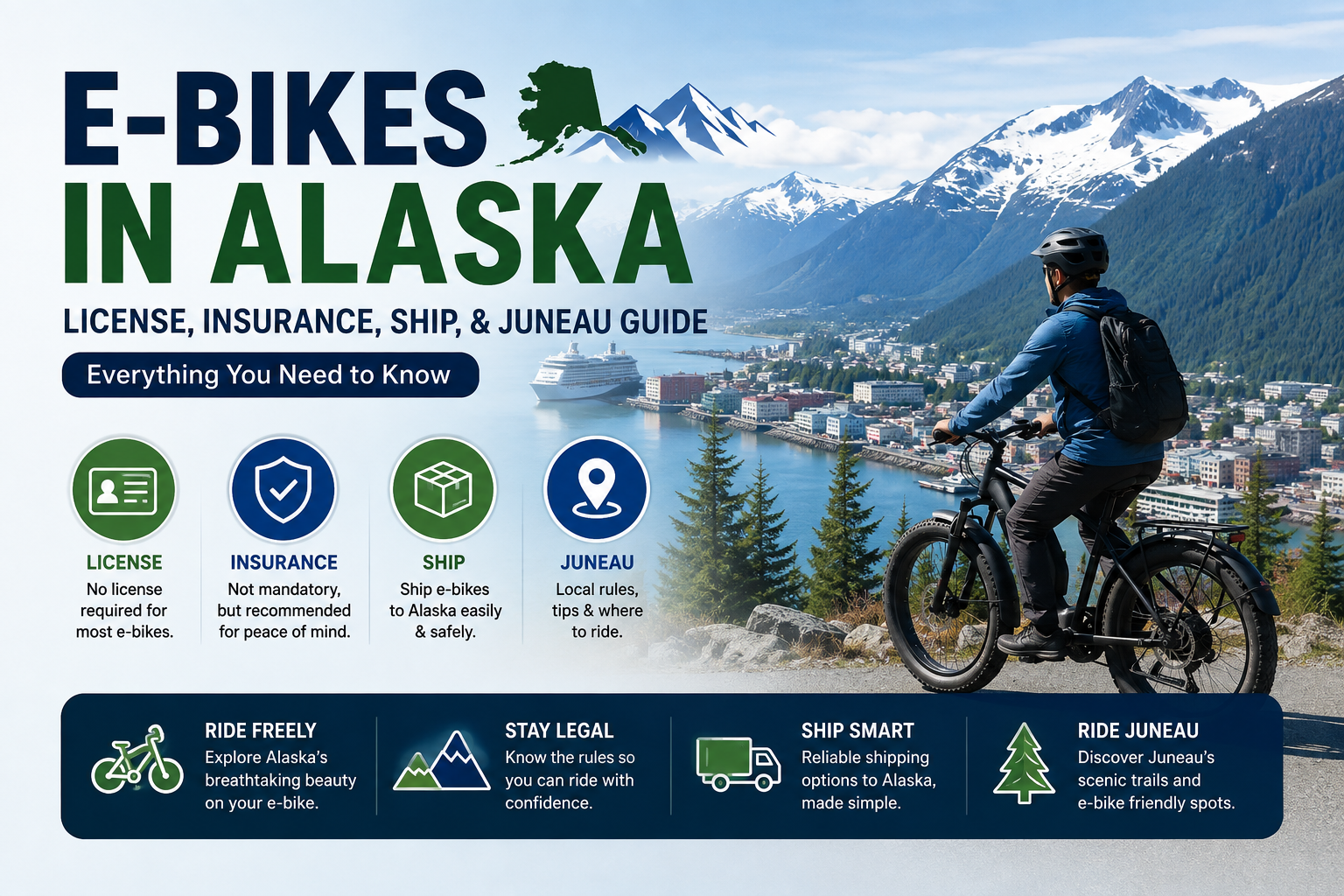
If you’re planning to ride an e-bike in Alaska, you might think there are laws in place to regulate them but surprisingly, there aren’t any. This lack of clear rules can lead to confusion in all sorts of situations, like when you’re getting ready to hit the trails, or when you’re stopped by a police officer, or even when you’re trying to buy an e-bike from a retailer who won’t ship to Alaska.
Key Takeaways
- Alaska has no statewide e-bike statute. House Bill 8, which would have adopted the three-class framework, was vetoed in July 2023 and never overridden.
- No state law requires a driver’s license, registration, or insurance for a pedal-assist e-bike.
- Your real rulebook is local: municipal code, Alaska State Parks regulations, and federal land policy.
- Anchorage requires a helmet for anyone 15 or younger on a bicycle in public places, under code section 9.38.200.
- Large e-bike batteries are regulated hazardous materials, which is why brands decline Alaska delivery and freight costs jump.
Table of Contents
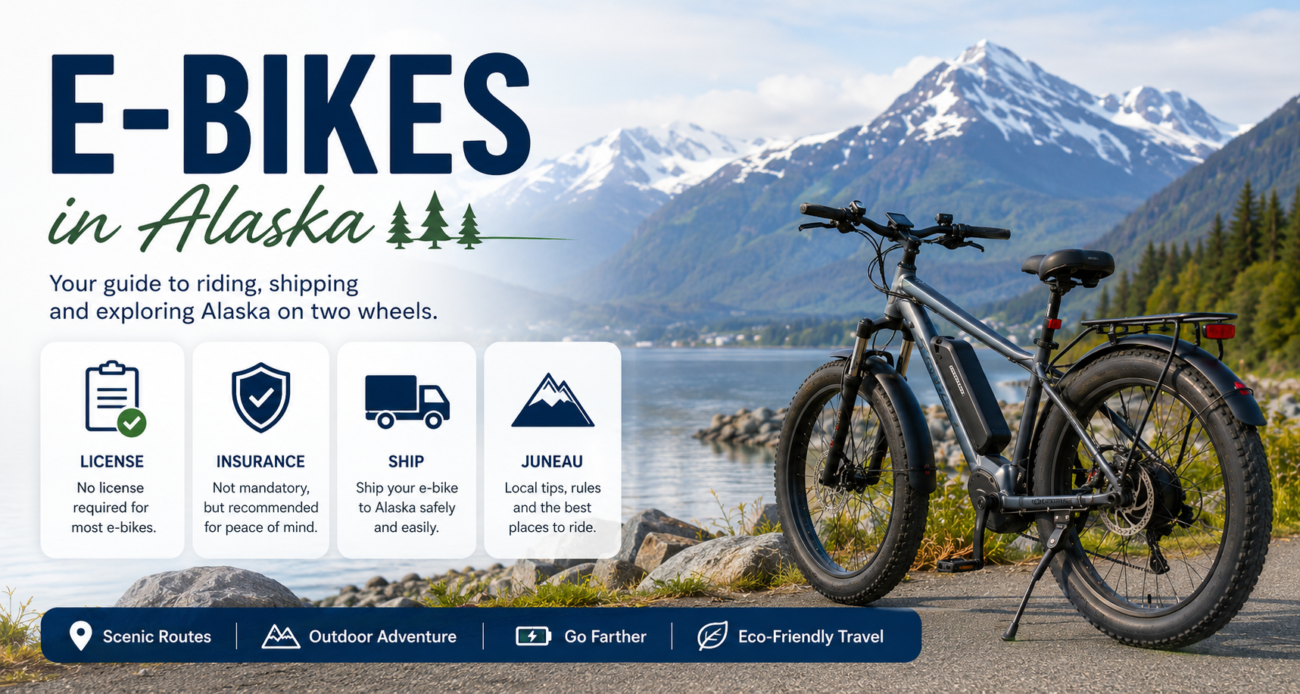
So, to help clear things up, this guide will answer some of the most common questions that Alaska e-bike buyers have, such as whether you need a license to ride one, what kind of helmet you need to wear, which trails you can ride on, which retailers will ship e-bikes to Alaska, and what you can expect from a guided e-bike tour in Juneau.
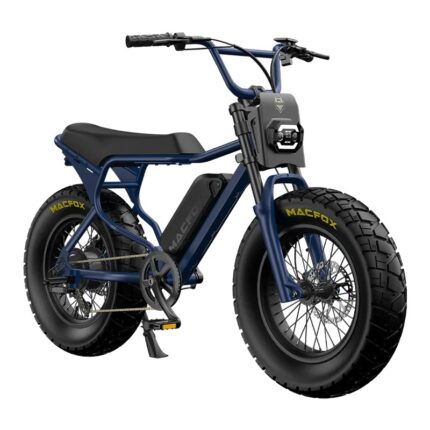
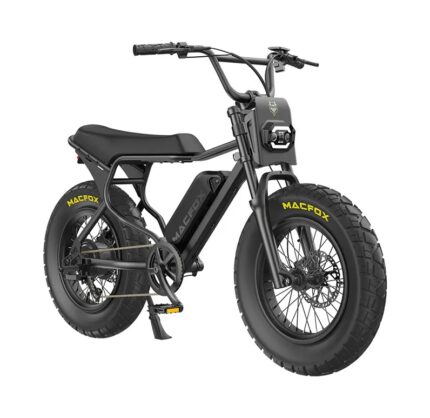
Ebikes In Alaska
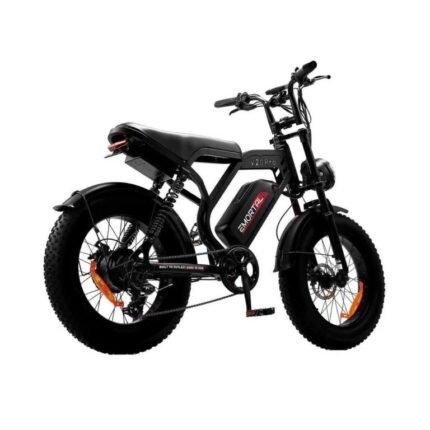
Electric assist earns its keep here. Headwinds, gravel shoulders, and long climbs turn a modest errand into a workout, and a motor flattens all three. A 30-mile range also changes what counts as a reasonable trip between communities.
Then there is the season. Summer daylight supports rides until late evening, while winter means darkness, ice, and cold batteries. That pushes buyers toward fat tires, bigger batteries, and durable drivetrains rather than lightweight commuters.
How Does Alaska Regulate Ebikes Under State Law?
Alaska is one of the few states that doesn’t have any specific laws about electric bikes. In fact, there isn’t even a definition of what an electric-assisted bicycle is, or a system to categorize them. And to make things even more unclear, there’s no cutoff point for how much assistance these bikes can give you.
The Alaska state lawmakers made an effort to pass a law about e-bikes. They came up with House Bill 8, which would have treated e-bikes like regular bicycles. This bill had specific rules, like only allowing e-bikes with 750 watts of power and a top speed of 20 or 28 miles per hour. Both the House and Senate agreed on this bill with a lot of support from both parties. However, when it got to Governor Mike Dunleavy’s desk, he decided to veto it. If you look at the official record of the bill on the Alaska Legislature’s website, you can see that it was vetoed on July 20, 2023. After that, the lawmakers didn’t try to override the veto, so the bill didn’t become a law.
That history matters, because many online guides still call Alaska a three-class state. It is not.
When a law isn’t clearly stated, three other systems take over to get the job done.
| Rule layer | Who sets it | What it controls |
|---|---|---|
| Municipal code | City or borough assembly | Roads, bike lanes, sidewalks, local trails |
| State regulation | Alaska State Parks | Park roads and park trails |
| Federal policy | NPS, BLM, Forest Service | Routes on federal land |
Law enforcement tends to follow a similar pattern. For instance, if you’re stopped by a trooper on the side of the highway, they probably won’t bother checking the wattage of your stuff. But, if you’re at a trailhead with a sign posted, a ranger is more likely to take action based on what the sign says. It’s all about the context and where you are.
Do You Need A Driver’s License, Registration, Or Insurance For An Ebike In Alaska?
You don’t need a license or registration, and the state doesn’t require insurance either.
In Alaska, there’s no specific law that considers a pedal-assist bicycle as a motor vehicle. This means the DMV doesn’t have a particular category for e-bikes. The state defines a motor-driven cycle based on engine size – it has to be 50cc or less, which is more about small gas-powered machines, not electric hub motors like those found in e-bikes. So, when it comes to e-bikes, they don’t fit neatly into the existing categories.
The picture changes if your machine is not really a bicycle. Anchorage code separates low-speed from high-speed electric bicycles and treats the high-speed category as motor-driven cycles. A 3,000-watt build with decorative pedals is what triggers that reading.
Insurance is a separate question from legality. Policies differ widely on property limits, theft away from home, and liability, so ask your carrier to confirm coverage in writing.
Worth keeping on your phone if you are stopped:
You need a picture of the label on your appliance that shows how powerful its motor is and what class it belongs to. 2. The purchase receipt listing the exact model. 3. A link to the ordinance where you ride most.
Are Ebikes Street Legal In Alaska?
In Alaska, you can ride a standard pedal-assist e-bike on public roads, and it’s treated just like a regular bicycle. This means you’ll need to follow the same rules as cyclists, so ride with the flow of traffic, stop at signals, and obey all the usual traffic laws. As a cyclist, you have the same rights and responsibilities as anyone else on the road, so be aware of your surroundings and follow the rules to stay safe.
Officers separate you from mopeds and motorcycles on two points: functional pedals and modest motor output. Cross that line and you are riding an unregistered motor vehicle.
In some places, local rules can make things stricter. For example, in Anchorage, you’re not allowed to ride your bike on the sidewalk in the central business area. But in Fairbanks and Juneau, they follow the general rules for bikes, unless something specific says otherwise.
Does Alaska Use The Three Class Ebike System?
Not in traffic law. Most states adopted the Class 1, 2, and 3 framework, and Alaska remains outside it after the veto.
The framework still appears here, just not where people look for it. Alaska State Parks regulations define electric bicycle classes and set access by class, so the classes govern where you ride even though they never reached traffic law.
| Class | How assist works | Assist stops at | Recognized in Alaska by |
|---|---|---|---|
| In Alaska, there are rules about bikes with pedal assist. These bikes can go up to 20 miles per hour. You can use them in State Parks and in Anchorage. The federal government also has some policies about these bikes. | |||
| Class 2 | Throttle or pedal assist | 20 mph | State Parks, Anchorage |
| In Alaska, you can find Class 3 bikes that only have pedal assist and can go up to 28 miles per hour. These bikes are allowed in State Parks and even in Anchorage. |
When you’re getting ready to make a purchase, take a closer look at the label from the manufacturer. You know, that little sticker is usually the first thing a park ranger checks, so if the seller can’t even tell you what class it is, that’s a pretty big red flag. It’s like a warning sign that something might not be quite right.
Are Class 2 Throttle Ebikes Legal In Alaska?
Yes. A hand throttle does not make a bicycle illegal here, and both Anchorage code and state park regulations recognize throttle-capable machines.
What really counts is the end result, not how you get there. When a bike’s power exceeds the standard 750-watt limit or it no longer has pedals that work, local laws can consider it something other than a bicycle. Additionally, federal park rules restrict throttle-only power to areas where cars are allowed, which is a separate issue. This means that even if a bike is still technically a bike, it might not be allowed in certain places if it’s too powerful or doesn’t have working pedals. The rules can be a bit confusing, but basically, it’s all about where and how you can use your bike.
Get the specification sheet in writing before you pay, since marketing pages change without notice.
How Fast And How Powerful Can An Ebike Be In Alaska?
In the absence of a state law, people often look to the federal guidelines for low-speed electric bicycles as a reference point. According to these guidelines, a low-speed electric bicycle is defined as one with a motor that has a power output of less than 750 watts and can reach a top speed of no more than 20 miles per hour on flat ground, using only the motor. This definition provides a benchmark for understanding what constitutes a low-speed electric bicycle, even though there is no state-specific statute to govern these vehicles. As a result, this federal definition serves as a de facto standard in the absence of state regulations.
Riding really fast is okay as long as you’re the one making it happen – it’s the motor that’s the issue. What matters is when the motor is doing all the work on its own. If you start messing around with aftermarket tuning kits or speed unlockers, you’re basically asking to lose the benefits of having a bicycle. And to make matters worse, you’ll probably void your warranty too. These kinds of tweaks can get you in trouble, so it’s best to just stick with the original settings and enjoy your ride.
What Safety Rules Apply To Ebike Riders In Alaska?
Bicycle rules apply, and they are stricter than casual riders expect. Impaired riding is enforceable. Lighting is required after dark, meaning a white front lamp plus a rear light or reflector. Passengers are limited to bikes built and equipped for them.
Winter darkness changes the math on visibility. Reflective ankle bands outperform a static jacket stripe, because moving light reads as a person rather than roadside clutter.
When you’re out on the trails, you’ve got to be aware of the local hazards. Moose can be a real problem, especially during the spring when they’ve got their calves with them – they just won’t budge, no matter what. And then there’s the roads, where the gravel shoulders can be brutal on narrow tires. That’s why, when winter rolls around and the ice sets in, you’ll see everyone switching to studded tires – it’s just the best way to stay safe.
Battery safety belongs in the same conversation. The Consumer Product Safety Commission’s battery safety guidance recommends using only the charger supplied with the device, never charging unattended overnight, and avoiding reworked packs. Let a cold battery warm up indoors before you plug it in.
Do You Need A Helmet To Ride An Ebike In Alaska?
So, it really depends on where you’re riding your bike. In Alaska, there’s no law that says you have to wear a helmet everywhere in the state. But, in Anchorage, they have their own rules. If you’re 15 or younger, you have to wear a helmet when you’re riding in public – that means streets, sidewalks, bike paths, trails, parking lots, and even skate parks. The rule is outlined in the municipal code, section 9.38.200. If you get caught without a helmet, the first time you’ll just get a warning. But, if you get caught again, you’ll have to pay a small fine.
When you’re buying a bike helmet, make sure to check for a certification sticker inside. This is important because all bike helmets sold in the US have to meet a certain safety standard. But a good fit is also crucial – if the helmet is sitting too far back on your head, it won’t protect your forehead in case of an accident, which is the most vulnerable area. So, it’s not just about meeting the standard, it’s also about getting the right fit.
What Is The Minimum Age For Riding An Ebike In Alaska?
In Alaska, there isn’t a statewide rule about the minimum age for kids to be on their own. Even in Anchorage, the city doesn’t have a specific age limit. Instead, it’s up to the parents to decide when their child is ready for more independence.
When it comes to deciding if a kid is ready to ride, don’t just think about their age – look at how they behave. For example, can they draw a straight line while looking back over their shoulder? And do they understand that a car waiting to turn right might not see them? A lot of parents start their younger kids out on Class 1 bikes, which can be a good way to help them learn and get comfortable. It’s all about making sure they’re ready and able to handle the bike safely.
Where Can You Ride An Ebike On Alaska Trails, Bike Lanes, And Sidewalks?
Paved multiuse paths are generally open, and Anchorage’s 2024 ordinance opened municipal trails to e-bikes under a class framework. Sidewalk riding is allowed in many areas, but not downtown.
Mountain biking on natural trails is a whole different story. A lot of these trails are on land that doesn’t allow motorized vehicles, and that’s where things can get tricky with e-bikes – they can be considered motorized, depending on who’s in charge of the land.
State parks get specific in a way that matters for fat-tire buyers. The state park regulation covering bicycles, fat-tire bicycles, and electric bicycles allows a fat-tire Class 1 electric bike on any area or trail open to fat-tire bicycles, unless that trail is posted closed. The same regulation lets the director close trails temporarily to protect soil, vegetation, or public safety.
| Land manager | General e-bike position | What to check first |
|---|---|---|
| Municipality | Class framework on paths and lanes | Current ordinance, downtown limits |
| Alaska State Parks | Class-based access, fat-tire provision | Posted closures at the trailhead |
| National Park units | Allowed where bicycles are allowed | Superintendent’s compendium |
| BLM and Forest Service | Varies by route | Motorized or non-motorized status |
Read the sign at the trailhead, since it reflects closures no guide can keep current.
Which Ebike Companies Ship To Alaska?
Fewer than shoppers expect. Direct-to-consumer brands fall into three groups: those that deliver with a surcharge, those that require a freight forwarder, and those that exclude the state at checkout.
The battery is the main issue here. You see, big lithium-ion batteries are considered hazardous materials, so the Department of Transportation has strict rules about how they can be shipped. These rules, which can be found on the lithium battery rules page, cover things like packaging, labeling, and documentation, and they vary depending on how the battery is being transported. For example, shipping by air has the toughest requirements. Now, when it comes to sending something to Alaska, often the ground service actually uses planes, which is why some bike shipping companies won’t send to the state.
Use this decision path before ordering.
Question 1: Do you need the bike serviced locally under warranty? What’s the next step? If the answer is yes, we move on to Question 3. But if it’s no, we’ll head to Question 2 instead.
Yes, the brand will ship to an Alaska address at checkout. So, you need to check if something was delivered. If it was, get the total amount in writing and then compare it to what you’d pay at a local store. If it wasn’t delivered, just move on to the next question.
Do you have a local store that sells that brand in your area? If yes, buy locally and skip freight entirely. If no, go to Question 4.
Question 4: Are you comfortable coordinating a freight forwarder and terminal pickup? If yes, price ocean freight and forwarding before committing. If no, buy in state or rent while you decide.
Why Are Delivery Costs So High For Ebikes In Alaska?
When you’re shipping something, a few things are really important. First, you have to think about how far it has to travel – we’re talking thousands of miles, either by boat or truck, or maybe both. Then there’s the issue of handling dangerous materials, because batteries need special care when they’re being moved around. They need to be packaged and labeled in a certain way, and the people handling them need to know what they’re doing. But there’s another thing that’s important, even if it’s not as obvious: the size of the package compared to its weight. For example, a box for an e-bike is pretty big, but it’s not super heavy, and shipping companies charge based on how much space it takes up, not just how much it weighs.
Ways to trim the total:
Will the seller be able to send the battery by itself using a shipping method that follows all the rules and regulations? 2. Consolidate accessories into the same shipment rather than ordering later. 3. Use a hub address in Anchorage or Fairbanks rather than a village delivery. 4. Collect from the freight terminal yourself and skip residential delivery fees. 5. Compare the fully delivered price against in-state retail.
Factor returns in as well. Sending a defective bike back is slow and costly, and some brands refuse e-bike returns from Alaska.
Where Can You Buy An Ebike From Local Alaska Experts?
When you buy locally, it simplifies things. A specialist in your area can give you advice on which motors are reliable during a harsh Southcentral winter, which batteries drain faster in cold temperatures, and which fat-tire setups perform well on groomed trails. They have firsthand knowledge of what works best in your specific region, so you can make informed decisions. This way, you can avoid the guesswork and get the right equipment for your needs. Plus, local experts can provide valuable insights and help you find the perfect setup for your adventures.
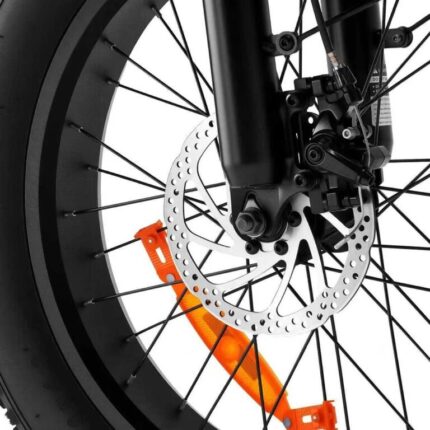
Assembly matters more than most buyers expect. Torque settings on disc brakes and motor bolts are safety items, and warranty work done in state takes days rather than a return shipment.
Consider a commuter weighing a $1,600 online fat-tire bike against a $2,200 bike from a local shop. Add freight, hazmat handling, and paid assembly, and the gap narrows, while the online option carries return risk the local one does not. For year-round commuting, the in-state purchase is usually the stronger call. For a summer-only bike bought by someone comfortable with a wrench, online can still win.
Want to take a bike for a spin? Come on down to our showroom and we’ll get you all set up. First, we’ll make sure the frame is the right fit for you. Then, we’ll tweak the suspension to get it just right. And to top it off, we’ll throw in the first service free with every bike purchase.
What Should You Expect On A Juneau Rainforest Ebike Adventure?
If you’re looking to explore Juneau, consider taking a guided ride through the beautiful temperate rainforest. You’ll get to see stunning shoreline views and cross over creeks at a relaxed pace. The trails are mostly paved and packed, making it easy to navigate through the dense forest filled with Sitka spruce, hemlock, and heavy moss that’s right up against the trail. The scenery is breathtaking, and the pace is slow enough to take it all in.
Operators generally supply the bike, helmet, rain layers, and a guide. Confirm participant requirements before booking, since most tours set a minimum age and expect riders to balance a bicycle unassisted.
Fitness demands stay modest because the motor absorbs the climbs. Dress for rain whatever the forecast says, and plan on half a day door to door.
Picture a cruise passenger with five hours ashore and no cycling background. A guided departure removes route-finding, supplies rain gear, and returns to the dock on schedule, which matters when the ship will not wait. The trade-off is flexibility.
Reserve a guided rainforest ride if you want summer dates, and check the schedule before finalizing shore plans.
Frequently Asked Questions About Ebikes In Alaska
What Do You Need To Know Before Buying Ebikes In Alaska?
When buying something, you should check a few things. First, make sure you know how powerful the motor is and what class it is you can find this information on the label from the company that made it. Next, confirm that the company will actually deliver to where you live. Finally, calculate the total cost after adding the cost of shipping and putting it together. If you live in a cold place, like Alaska, it’s especially important to think about how well the battery will work in the cold and if the company will help you with any problems in your state.
Can You Ride An Ebike On Alaska Roads Without A License?
In Alaska, you don’t need a driver’s license, registration, or insurance to ride an ordinary pedal-assist electric bicycle – it’s treated just like a regular bike on public roads. However, things can get a bit tricky with high-output machines, as local ordinances might have their own rules. So, before you assume your fast electric bike is good to go, it’s a good idea to check your city’s definition to see how they classify these types of vehicles. This way, you can avoid any potential issues and ride safely and legally.


