
Blog
Ebikes In Arizona: What Is Legal And Where Can You Ride?
Riding an e-bike in Arizona can be a blast, but figuring out where you’re allowed to ride it can be a real headache. The state has its own set of rules, your city or town might have different ones, and the signs at the trailheads can be totally confusing. If you get it wrong, you could end up with a ticket, your bike getting taken away, or a harder time with insurance if you’re in an accident. So this guide breaks down what Arizona law says, which e-bikes don’t fit the rules, and how to check what’s allowed in your area.

Key Takeaways
- In Arizona, an e-bike that qualifies has pedals you can actually use and a motor that’s not too powerful – we’re talking less than 750 watts.
- No title, registration, vehicle license tax, driver license, or insurance is required by state law.
- Class 1 and Class 2 assistance stops at 20 mph. Class 3 stops at 28 mph, and cannot use a bicycle or multiuse path unless it is beside a roadway or the manager allows it.
- In Arizona, there isn’t a law that says everyone has to wear a helmet when riding. But some places, like Tucson, Sierra Vista, Yuma, and Pima County, do have rules that say kids under 18 have to wear helmets.
- Phoenix bans e-bikes from sidewalks and sets a minimum age of 16.
- Federal agencies treat every class as motorized, closing the Arizona Trail and Sedona singletrack.
- Sur-Ron and Talaria style machines are not electric bicycles under Arizona law.
Table of Contents
Arizona makes owning an e-bike pretty hassle-free. If your setup has functional pedals and stays under 750 watts, you skip the licenses, registrations, and insurance entirely. The trick is knowing where you’re allowed to roll it, since city ordinances and trail rules shift from one block to the next. That’s why every bike we stock is vetted against Arizona’s rules before it leaves the warehouse, so you can skip the fine print and head straight for the canal path.
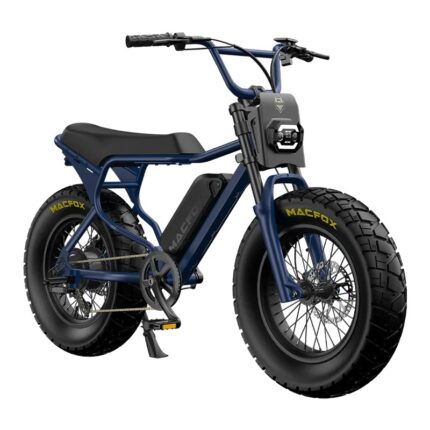
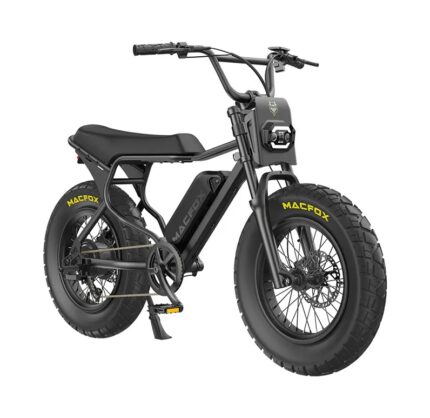
Ebikes In Arizona
Electric bikes are now a common sight in our area. You can spot them on the canal paths in Phoenix, the paved Loop in Tucson, and even on the hills of Flagstaff. They’re also popular in retirement communities, where having a motor can make all the difference in whether someone gets to ride or not.
There are basically two laws that cover most of the rules for electric bicycles. One says what makes a bike an electric bicycle. The other explains how riders are treated and where they can go, which is more like how cyclists are treated than motorists.
But that’s not all. There’s another layer of rules. Local governments, like cities and counties, as well as park departments and federal land managers, all have their own. So just because an electric bike is allowed on a street in Phoenix, it doesn’t mean it’s allowed on the path right next to it.
Are Ebikes Legal In Arizona?
Yes. In the state, you can ride an electric bike just like a regular bike, and the person on it has to follow the same rules as someone on a regular bike. You also don’t need to register it, get a special license, or pay extra fees like you would with a car. That makes it easier for people to use electric bikes without a lot of hassle.
Riders are generally treated like cyclists, unless there’s a specific exception in the statute or a local authority has its own regulations. This means a city can decide to ban riding on sidewalks or set a minimum age limit, which is why you can’t just give a simple statewide answer.
To ride safely and legally, three things need to come together:
- The bike itself has to fit the definition of what’s allowed.
- The person riding it has to meet the local rules about age and wearing a helmet.
- The path or road they’re on has to be open to that type of bike.
If all three line up, then it’s okay to ride.
What Ebikes Are Street Legal In Arizona?
A street legal machine has working pedals, a motor under the wattage ceiling, an assist cut-off matching its class, the permanent manufacturer label, and working brakes. Nothing further is needed.
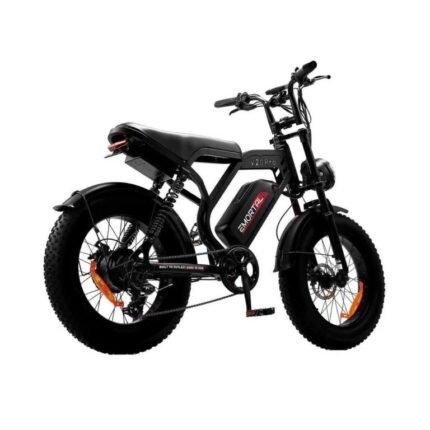
A bike with a 1,000W or 3,000W build just doesn’t cut it when it comes to power. And if you’re looking at imported electric dirt bikes, they often fail in two big ways: they’re over the power limit and usually don’t even have pedals.
Modification matters just as much. Unlocking a speed limiter pushes a bike past its labeled class while the sticker stays on the frame. The label describes how the bike left the factory, not how it behaves now.
| Feature | Compliant e-bike | Sur-Ron or Talaria style |
|---|---|---|
| Pedals | Required, fully operable | Usually none |
| Motor | Under 750 watts | Thousands of watts |
| Paperwork | None under state law | Motor vehicle rules apply |
| Bike paths and lanes | Usually open, depending on class | Not allowed |
How To Choose An Ebike Class That Is Legal In Arizona
Run these checks before money changes hands.
- Check the label for the important details: what class it is, how fast it can go with help, and how powerful the motor is.
- Confirm the pedals are fully operable, not decorative.
- Confirm stated motor output sits under 750 watts.
- Ask the seller in writing whether the controller can be unlocked, and what that does to compliance and warranty.
- Check the class against the paths, parks, and trails you plan to use.
Still unsure which class fits? Work through these.
Question 1. Where will most of your riding happen?
Roads and bike lanes: go to Question 2.
Paved paths, canal paths, or the Loop: go to Question 3.
Desert singletrack: skip ahead to the trail access section, because the person in charge of the land has already made that decision for you.
Question 2. Do you have to keep up with the flow of traffic on main roads?
Yes: Class 3 fits, and most paths are closed to it.
No: Class 1 or Class 2 buys wider access for the same money.
Question 3. Do you ever want to cruise without having to pedal?
Yes: Class 2 gives you a throttle and still keeps your path access.
No: Class 1 is the most widely accepted class on shared paths.
This isn’t about following the law on a particular path. It’s more about picking the right gear for where you actually ride.
How Does Arizona Define An Electric Bike?
In Arizona, they have a specific definition for what makes an electric bicycle. It’s a bike or tricycle with pedals that work properly and an electric motor that’s under 750 watts. The definition is pretty strict – if the bike is missing pedals or the motor is too powerful, it doesn’t fit the category. From there, three classes sort out which bikes qualify for what.
If you’re looking at an e-bike, you might notice a label somewhere near the seat or the chain. Since 2019, manufacturers have been required to put a permanent label on each bike showing its classification, how fast it can go with assistance, and the power of the motor. It’s a quick way to know what kind of bike you’re dealing with.
Arizona law also draws a line between e-bikes and other motorized vehicles like motorcycles and scooters. That distinction is what keeps a qualifying e-bike out of the registration and licensing system in the first place.
What Separates Class 1, Class 2, And Class 3 Ebikes?
There are two main things to consider: can the throttle move the bike by itself, and at what speed does the assistance stop? Class 1 and Class 3 bikes are pedal-assist, meaning you need to pedal to get help from the motor. But Class 2 bikes are different – they can move on their own with just the motor, no pedaling needed.
| Class | Motor behavior | Assistance ends at | Path access under state law |
|---|---|---|---|
| Class 1 | Assists while pedaling | 20 mph | Allowed unless prohibited locally |
| Class 2 | Can propel without pedaling | 20 mph | Allowed unless prohibited locally |
| Class 3 | Assists while pedaling | 28 mph | Only if road-adjacent or permitted |
Do You Need A License, Insurance, Or Registration In Arizona?
So, it’s a no to all three requirements. The law says electric bikes are exempt from things like title certificates, registration, and license taxes. You also don’t need a driver’s license or insurance for them. And there’s no need to buy a license plate or take a test to ride one.
| Requirement | Required by state law | Where a rule may still apply |
|---|---|---|
| Driver license | No | Local minimum age rules |
| Registration or title | No | If the machine fails the definition |
| Vehicle insurance | No | Voluntary theft or liability cover |
| Helmet | No | City and county ordinances |
Voluntary cover is still worth pricing, though. Homeowner and renter policies often cap off-premises theft well below what a modern e-bike costs to replace.
Let’s consider a scenario. A woman who lives in Mesa buys a Class 2 fat-tire bike to ride around her neighborhood and along a nearby canal path, about six miles in total. She doesn’t need a license or registration for it, but the bike actually cost her more than the deposit on her car. So she checks her renter’s insurance policy and finds a pretty low limit for theft that happens off her property. To make sure the bike is fully covered, she adds a scheduled item rider. That decision wasn’t about following any rules or regulations. It was simply a smart financial choice to protect her investment.
When Does An Ebikes Become A Motorcycle?
When an e-bike no longer fits the definition, it’s not an e-bike anymore. If you take off the pedals, make the motor too powerful – over 750 watts – or tweak it to go faster than it’s supposed to, it becomes a different kind of vehicle altogether. At that point, the rules for motor vehicles kick in, rather than those for e-bikes.
This change comes with some serious responsibilities. It depends on what kind of vehicle you end up with, but you might need to register it, get a license plate, insurance, and a special driver’s license or endorsement. You’ll also have to make sure it meets certain safety standards.
When it comes to electric dirt bikes like Sur-Ron and Talaria, they don’t really fit the typical definition of a bicycle. Most of them aren’t certified for street use, so you can’t just title them and ride them on the road. Usually you can ride them on designated off-highway routes, but that’s about it. If you’re thinking of buying one and you’re not sure how it will be classified, it’s a good idea to check with the Motor Vehicle Division first.
How Old Do You Have To Ride An Ebikes In Arizona?
In our state, there’s no specific age limit set by law for riding an electric bike. Instead, local governments have stepped in to create their own rules, which can vary quite a bit from one place to another. So when it comes to riding an electric bike, it’s the local rules that matter, and those are the ones that actually get enforced.
The differences between cities can be big. Phoenix says you have to be at least 16 years old to operate one. Gilbert is more lenient, allowing 12-year-olds to ride Class 1. Other cities have their own rules, and some of them are based on the class of bike rather than the age of the rider. So before you let a teenager start riding, check the rules for every city they’ll be riding in, not just the one where they live.
In Arizona, parents can also be held responsible. The state uses a system called comparative fault, which means that if a young rider does something wrong, it can impact who’s to blame and how much money they might get if they make a claim.
Do You Have To Wear A Helmet On An Ebike In Arizona?
There is no statewide helmet requirement at any age. That is unusual, and it does not make helmets optional everywhere.
Under state active transportation guidance, Tucson, Sierra Vista, Yuma, and Pima County require helmets for riders under 18. Other jurisdictions have added e-bike-specific helmet or age provisions, so confirm the ordinance where you ride.
In the desert, it’s even more important to have the right gear. The sun’s glare, the grit, and the heat all make it harder to see and to hold on. That’s why protection for your eyes and hands matters more here than in places with milder weather.
If you’re biking at night, you need a white light on the front of your bike that can be seen from 500 feet away. You also need a reflector on the back that can be seen from 50 to 300 feet away. A rear light is a good idea too, but don’t think it can replace the reflector – they’re two separate things you should have.
Where Can You Ride An Electric Bike In Arizona?
Bike lanes and roads that allow bicycles are usually open to all three classes. But when it comes to paths, things get separated by class. And on natural trails, that’s when federal rules kick in.
| Land manager | Typical e-bike position | Before you ride |
|---|---|---|
| Streets and bike lanes | Open to all three classes | Check local speed rules |
| Paved and canal paths | Usually fine for Class 1 and 2 | Get permission for Class 3 |
| Arizona State Parks | Roadways and designated motorized trails | Contact the park |
| National forest and federal land | Treated as motorized | Check the motor vehicle use map |
Here’s a use case. A Flagstaff rider buys a Class 1 e-mountain bike expecting to ride local singletrack. Much of the surrounding land is national forest, where every class counts as motorized and access is limited to routes open to motor vehicles. He keeps the bike for the urban trail system and forest roads instead. Same bike, two answers, decided by the land.
Can You Ride An Ebikes On The Sidewalk?
The rules vary from city to city, since the state lets local authorities decide. For example, Phoenix doesn’t allow it at all. In Tucson, you can’t do it unless there’s a sign saying it’s okay. But in other towns, it’s fine as long as you’re not near stores or shops.
In areas where it’s permitted, people on foot get priority, and some places even set speed limits on sidewalks and shared paths, even where there’s no sign. To find out the rule in your city, it’s a quick two-minute task: look up your city’s online code and search for the sections on bikes and sidewalks.
Are Ebikes Allowed On The Arizona Trail And In Sedona?
No in both cases, with narrow exceptions. Congress designated the Arizona National Scenic Trail for non-motorized use, and federal agencies classify e-bikes as motor vehicles. The Arizona Trail rules therefore exclude e-bikes except on dirt roads already open to motorized use.
Sedona’s red rock trails are mostly on Coconino National Forest land, which means only certain trails are open to bikes with motors. Prescott National Forest has clear rules: e-bikes can go on about 400 miles of trails that allow motors and 1,200 miles of forest roads, but they’re not allowed on trails that don’t permit motors, like the Prescott Circle Trail. That keeps some trails just for hiking and non-motorized biking.
Cities are more bike-friendly these days. Take Tucson, for example. Its paved Loop is perfect for e-bikes, as long as you follow the rules. Same with the canal network in Phoenix and the urban trails in Flagstaff. But here’s the thing: Pima County still considers e-bikes motorized when it comes to natural trails. Paved paths are one thing, dirt trails are another. Two different worlds.
What Are The Rules For Ebikes In Phoenix And Other Cities?
In some areas, local governments have the power to control how e-bikes are used. Phoenix is the clearest example. You’re not allowed to ride an e-bike on sidewalks, and you have to be at least 16 years old to operate one. The police department has these rules outlined as part of the city’s laws.
In other areas, the rules are different. Queen Creek has a speed limit of 15 mph on sidewalks, trails, parking lots, and bike lanes, even if there’s no sign. Gilbert has guidelines based on the class of bike or the age of the rider. Some cities in the Valley have also added new rules for parks or required helmets for young riders.
Things can change quickly, so it’s best to check the city clerk’s code library and the police traffic page for the most up-to-date information. And if you cross from one city into another, just remember that the strictest rule along your route is the one that applies to your ride.
What Are The Penalties For Breaking Ebikes Laws In Arizona?
Most of the time, if you break the rules while riding an e-bike, you’ll get a ticket for a civil traffic offense, with the fines decided by local authorities. Some common mistakes include riding your e-bike where it’s not allowed, ignoring signs that say you can’t ride on certain paths, and riding at night without turning on your lights.
If an officer pulls you over and decides your machine is actually a motor vehicle and not a bike, you could be in bigger trouble. You might get cited for not having a license, not registering it, and not having insurance, all at the same time. And to make matters worse, it could even get towed.
Impairment is genuinely unsettled. Some Arizona attorneys argue the state’s broad definition of vehicle reaches e-bikes, while others say e-bikes fall outside the categories the DUI statute targets. Published commentary disagrees, so do not treat an e-bike as a safe ride home after drinking.
Ordinary traffic duties apply throughout: signal, stop, ride with traffic, and yield as any road user would.
Frequently Asked Questions About Ebikes In Arizona
Do You Need A License For A 1000W Ebike In Arizona?
In Arizona, e-bikes can’t be more than 750 watts. So a 1,000W machine is too strong and doesn’t qualify for the exemptions e-bikes usually get. That means it’s treated like a regular motor vehicle, which can mean a license, registration, and insurance. Some of these machines aren’t allowed on the streets at all, so you can’t even get a title for them.
Can You Ride An Ebike On A Sidewalk In Phoenix?
No. Phoenix doesn’t allow electric bikes on sidewalks, and you have to be at least 16 to ride one. Stick to the road or a bike lane, and if you need to use a sidewalk to make a turn, get off and walk the bike.


