
Blog
Ebikes In Kentucky And The Rules Every Rider Should Know Before Hitting The Road
Shopping for an e-bike or planning your first ride, only to find Kentucky guides that flatly contradict each other? The confusion has a simple cause: Kentucky never wrote an e-bike law. An e-bike with working pedals that runs primarily on human power is legally a bicycle, so the state asks for no license, registration, or insurance. The catch is everything layered on top, from city sidewalk bans to federal trail rules. This guide separates state law from local rules so you can ride legally from day one.

Key Takeaways
- Kentucky has no e-bike statute and no three-class system. An e-bike with working pedals that runs primarily on human power is a bicycle under state regulation.
- Bicycle-status e-bikes need no state license, registration, or insurance, but a bike modified to behave like a moped can lose that status.
- A red rear reflector or light is required on public roads at all times. After dark, add a white front light and a red rear light.
- Riding impaired is illegal on any vehicle in Kentucky, bicycles included.
- Louisville, Lexington, Fort Mitchell, and federal land managers set their own access rules, so check before you ride.
Table of Contents

Shopping for ebikes for sale in Kentucky? Because the state never wrote an e-bike law, the thing that matters is whether a bike still reads as primarily human-powered: working pedals, factory controller settings, and a motor that assists rather than does all the work. Ebike Plugs can run a free spec check on any model before you buy, so you know how it fits Kentucky’s bicycle definition and your local rules.
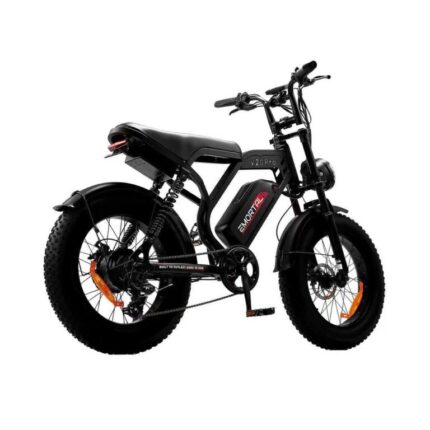
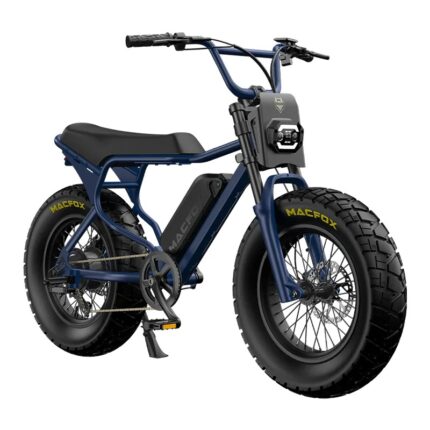
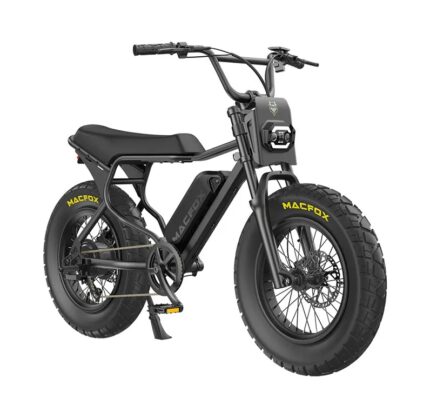
Ebikes In Kentucky
Kentucky regulates e-bikes through its general bicycle rules, 601 KAR 14:020. That regulation defines a bicycle as a device with an attached seat, propelled primarily by human power, regardless of wheel count. It never mentions motors, watts, or classes, so a pedal-assist e-bike rides as an ordinary bicycle.
In practice, three layers of rules apply:
- State rules cover lights, brakes, lane position, and signaling.
- City ordinances decide sidewalk riding, local helmet rules, and park paths.
- Land managers decide trail access, from Metro Parks to the U.S. Forest Service.
Are E-Bikes Street Legal In Kentucky?
Yes. A pedal-assist e-bike with working pedals is street legal because it meets the definition in the Kentucky bicycle regulation. You ride with the same rights and duties as any cyclist.
The legal line is not wattage. It is whether the machine is still primarily human-powered. Kentucky’s moped definition in KRS 186.010 describes a motorized bicycle with no more than 2 brake horsepower, an automatic transmission, and a top speed of 30 mph or less. Lexington’s government notes that moped look-alikes capable of more than 30 mph require registration and insurance, and moped operators need a driver’s license or permit.
That definition was written for small gas engines, so how it applies to a modified e-bike is not settled. Removing a speed limiter, reflashing a controller, or adding an oversized kit can push your bike out of bicycle status.
Bicycle Or Moped? A Quick Self-Check
No Kentucky law sets these exact thresholds. They reflect the bicycle definition and the 30 mph moped benchmark.
| Question | Lower Risk (Bicycle) | Higher Risk (Moped Or Motorcycle) |
|---|---|---|
| Working pedals? | Yes, and you use them | Removed or decorative |
| Main power source | You, with motor help | Motor does nearly all the work |
| Motor-only top speed | Well under 30 mph | 30 mph or faster |
| Controller settings | Factory settings | Limiter removed or reflashed |
Quick branching check (not legal advice):
Question 1: Does your bike have working pedals you use on most rides?
- If yes, go to Question 2.
- If no, it may be treated as a moped or motorcycle. Ask your county clerk about licensing first.
Question 2: Can the motor alone reach 30 mph or faster?
- If no, go to Question 3.
- If yes, confirm its status with local police or your county clerk before riding on roads.
Question 3: Is the controller on factory settings?
- If yes, it most likely rides as a bicycle. Check local rules under Where Can You Ride An E-Bike In Kentucky.
- If no, restore factory settings or get written guidance first.
How Does Kentucky Law Define An Electric Bike?
It does not. Kentucky has no purpose-written electric bicycle definition at the state level. E-bikes fall under the general bicycle definition, and the key phrase is “primarily by human power.”
Most states adopted a model law with operable pedals, a motor under 750 watts, and three speed-based classes. Kentucky adopted none of it. Some cities now write their own definitions: Lexington uses a 15 mph motor limit, and Fort Mitchell adopted class definitions in 2026.
The definition decides licensing, equipment, and trail access downstream. A Class 1 sticker on your frame is a manufacturer label, not a Kentucky legal ruling, though some ordinances and land managers use those labels.
What Motor Power And Speed Limits Apply To E-Bikes In Kentucky?
Kentucky sets no wattage limit. The familiar 750-watt figure comes from the federal e-bike definition, which describes a low-speed electric bicycle as having fully operable pedals, a motor under 750 watts, and a motor-only top speed under 20 mph with a 170-pound rider.
That federal law governs product safety, not Kentucky traffic rules.
Speed has two meanings. The assist cut-off is where the motor stops helping. The posted speed limit applies on every road, whatever your motor does.
Does Kentucky Use The Three Class E-Bike System?
No. Kentucky has not written the three-class system into state law. Class labels come from industry standards, manufacturer marketing, and out-of-state guides.
Two statutes are often misquoted. KRS 189.289 regulates electric low-speed scooters and sets a minimum age of 16 for them. KRS 189.285 covers motorcycle helmets and moped operator rules. Neither creates e-bike classes or applies to a bicycle-status e-bike.
Three-Class Model Vs Kentucky
| Feature | Typical Three-Class State | Kentucky State Law |
|---|---|---|
| Class labels in law | Yes | No |
| Motor power cap | 750 watts | None |
| Class 3 minimum age | Often 16 | None |
| Required class label | Usually | No |
| Local class rules | Rare | Growing, such as Fort Mitchell |
Are Class 2 Throttle E-Bikes Legal In Kentucky?
Generally yes. Kentucky law never mentions throttles, so a throttle bike with working pedals is usually treated as a bicycle.
The risk shows up in two places. An officer who sees you cruising without pedaling may doubt the bike runs primarily on human power. Some land managers also exclude throttles: the Parklands of Floyds Fork and Land Between The Lakes allow only Class 1 bikes on their trails.
Expert tip: Keep the pedals working, actually pedal, and use the throttle for starts rather than cruising.
Why Is Class 3 Access Legally Unclear In Kentucky?
Because no state rule addresses it. Class 3 bikes assist up to 28 mph, and that speed draws scrutiny from police, cities, and trail managers.
Local rules are filling the gap. In 2026, Fort Mitchell passed an ordinance banning Class 3 e-bikes from city sidewalks and requiring riders to walk their bikes near Beechwood School at arrival and dismissal. Other Northern Kentucky cities are discussing similar rules.
Do You Need A License, Registration, Or Insurance To Ride An E-Bike In Kentucky?
No, not for a bike treated as a bicycle.
- License: not required for bicycle-status e-bikes
- Registration: not required for bicycle-status e-bikes
- Insurance: not legally required, but often worth having
Paperwork changes if your machine is classified as a moped or motorcycle. Then you may need a driver’s license or permit, and faster machines can require registration and insurance.
Insurance is where riders get caught out. Homeowners and renters policies may exclude motorized bikes or cap theft payouts below the value of a premium build. Ask your insurer in writing, or consider a dedicated bicycle policy.
Is There A Minimum Age To Ride An E-Bike In Kentucky?
No statewide minimum age applies to bicycle-status e-bikes. Age floors appear in two other ways: moped and motorcycle classifications bring licensing ages, and land managers set their own. The Parklands of Floyds Fork limits e-bike use to riders over 16.
Parents should start young riders on quiet streets with low assist. Louisville bars riders 11 and older from sidewalks, so a young teen belongs in the street or a bike lane there.
What Safety Equipment Do You Need To Ride An E-Bike At Night In Kentucky?
Kentucky’s bicycle regulation sets the equipment rules for every bicycle, electric or not.
Night Riding Gear Checklist
| Item | Legal Requirement | Practical Tip |
|---|---|---|
| White front light | At night or in dark weather; visible 500 feet and lighting objects 50 feet ahead | Angle it slightly down |
| Red rear reflector or light | On public roads at all times; visible 100 feet | Keep it unblocked by bags |
| Red rear light | At night or in dark weather; steady or flashing, visible 500 feet | Add a second light on a helmet or rack |
| Brakes | Must stop within 15 feet from 10 mph on dry pavement | Check pads monthly |
| Bell or horn | Optional, but you must warn walkers by bell, horn, or voice | A bell beats shouting |
Heavier e-bikes wear brake pads faster. Carry passengers only on a seat or carrier built for them.
What about drinking? KRS 189.520 makes it illegal to operate any vehicle that is not a motor vehicle while impaired, and an alcohol concentration of 0.08 or more creates a presumption of impairment. If your bike is classified as a motor vehicle, the standard DUI law applies instead. Either way, do not ride impaired.
Are Helmets Required To Ride An E-Bike In Kentucky?
No statewide helmet law applies to bicycle riders of any age. Local rules can add one: Louisville requires riders under 18 to wear a helmet in Metro Parks, and Fort Mitchell’s ordinance includes helmet requirements.
Choose a helmet with a CPSC sticker inside, which means it meets the U.S. bicycle helmet standard. Faster riders can look for NTA 8776, a Dutch standard written for e-bike speeds.
Where Can You Ride An E-Bike In Kentucky?
By default, anywhere a regular bicycle can go: roads, shoulders, and marked bike lanes. Where a bike lane exists, Kentucky expects you to use it, except when turning left, passing, avoiding a hazard or car door, or riding at traffic speed.
Ride with traffic and keep right in a shared lane, but take more of the lane when it is too narrow to share. No more than two riders may ride side by side. Signal turns by hand.
Drivers have duties too. Under KRS 189.340, motorists must leave at least three feet when passing a cyclist where space allows. If a signal fails to detect your bike, you may proceed through a red light after stopping, but only when safe.
Ready to match a bike to your commute or trail plans? Ebike Plugs offers fittings and test rides and in-house financing options.
What Do Louisville And Lexington Ordinances Say About E-Bikes?
Louisville: Anyone 11 or older is barred from riding a bicycle on any sidewalk in Louisville Metro, and nobody may ride on downtown sidewalks. Riders under 18 must wear a helmet in Metro Parks. The ordinance also bans motorized vehicles from bike lanes and paths, so a bike that crosses into moped territory loses lane access. The official Louisville bike laws page summarizes these rules.
Lexington: City code defines an electric bicycle as one whose motor propels it at no more than 15 mph. Local reporting indicates e-bikes may use bike lanes but are kept off sidewalks except at driveways, and bicycles are banned from downtown business-district sidewalks.
Smaller cities: In Berea, Bowling Green, Covington, and Danville, email the city clerk and ask for bicycle and e-bike ordinances by number.
Use case (hypothetical): A Lexington commuter buys a Class 3 bike for a six-mile downtown ride. Because the city’s definition stops at 15 mph, she rides in bike lanes, never on sidewalks, and asks the city in writing how a 28 mph assist is treated. Until it answers, her status at higher speeds remains uncertain.
Can You Ride An E-Bike On The Sidewalk In Kentucky?
Sometimes. State rules allow bicycles on sidewalks unless a law or ordinance prohibits it, and many cities do, especially downtown.
Where it is allowed, you take on a pedestrian’s duties. Slow to walking speed around people, yield to pedestrians, warn before passing, and never dart from the sidewalk into traffic.
Are E-Bikes Allowed On Trails, Bike Paths, And State Parks In Kentucky?
It depends on who manages the land. This table summarizes the most-asked locations.
| Location | Current E-Bike Rule | Before You Go |
|---|---|---|
| Paved city paths | Usually allowed unless posted | Check signs and ordinances |
| Parklands of Floyds Fork | Class 1 only, riders over 16 | Leave throttle and Class 3 bikes home |
| Land Between The Lakes | Class 1 on all bike trails since February 2026 | Class 2 and 3 not permitted on trails |
| Daniel Boone National Forest | Motorized roads and trails only, unless designated | Check the forest’s travel map |
| Kentucky State Parks | No published statewide policy found | Call the park office first |
Federal forests treat e-bikes as motor vehicles. Under the Forest Service e-bike policy, all three classes may use roads and trails open to motor vehicles, while non-motorized trails require a formal designation. Land Between The Lakes made that designation for Class 1 bikes, as its LBL e-bike notice explains.
Use case (hypothetical): A rider plans a weekend at Land Between The Lakes on a Class 2 throttle bike. Because only Class 1 bikes are authorized on bike trails, he sticks to Forest Service roads or rents a pedal-assist bike for the singletrack.
Frequently Asked Questions About Ebikes In Kentucky
What Are The Rules For Ebikes In Kentucky?
Ebikes in Kentucky follow bicycle rules when they have working pedals and run primarily on human power. The state requires no license, registration, or insurance for these bikes. You need a rear reflector or light on roads, front and rear lights at night, and working brakes, while cities and land managers add sidewalk, helmet, and trail rules.
Are E-Bikes Street Legal In Kentucky?
Yes. Standard pedal-assist e-bikes are street legal in Kentucky because the state treats them as bicycles. Bikes modified for high speed, or ridden mainly on motor power, may be treated as mopeds or motorcycles, which can require a license, registration, and insurance.


