Blog
Ebikes In Minnesota: Rebate, Public Land, Ride, Where To Buy
Shopping for an e-bike in Minnesota means sorting through viral law rumors, closed rebates, and listings that call a 2,000-watt e-moto a “bike.” One wrong purchase can leave a teen riding an unregistered motorcycle. Here is the short answer: a legal e-bike has working pedals, a motor of 750 watts or less, and a Class 1, 2, or 3 label. Riders must be at least 15. You need no license, plates, or insurance. The state rebate is closed, and lawmakers passed no new e-bike laws in 2026.
Key Takeaways
- Minnesota treats a legal e-bike as a bicycle, so bicycle rules, rights, and duties apply.
- Check the frame label before you pay. It must list the class, top assisted speed, and motor wattage.
- No one under 15 may operate any e-bike, even with a parent nearby.
- A machine above the e-bike limits falls under motorized bicycle or motorcycle rules, which require a license or permit.
- Minnesota’s DWI chapter has no e-bike exception, so never ride impaired.
- The state rebate ended after 2025, but some utilities and cities still run their own programs.
Table of Contents
Ready to compare bikes? Start with the frame label, because in Minnesota the class, top assisted speed, and a wattage of 750 or less are what separate a bicycle from a machine your teenager cannot legally ride. Every bike we stock is listed that way, and Ebike Plugs offers in-house financing with $800 down, no credit check, and no interest, on weekly or monthly payments.
Are Ebikes Allowed In Minnesota?
Yes. Minnesota law includes the electric-assisted bicycle in its definition of a bicycle. You may ride one on road shoulders, in bike lanes, and on bike routes, the same way you would ride a regular bike.
Paths work a little differently. Class 1 and Class 2 bikes may use bike paths and shared-use trails with the motor running unless a specific statute bars them. Class 3 bikes are allowed unless the agency that manages the path prohibits them. Managers of natural-surface, nonmotorized trails and bike parks may regulate any e-bike class.
A legal e-bike needs no driver’s license, registration, plates, title, or insurance. Ask whether your homeowner or renter policy covers theft, since many policies cap bicycle claims.
After dark, you need a white front light visible from 500 feet and a red rear reflector, or front and rear lamps visible from 500 feet.
Practical tip: Photograph the class label and serial number on day one for theft reports.
Do You Need A Driver’s License For An Ebike In Minnesota?
No. A compliant e-bike needs no driver’s license, instruction permit, or state ID. The only gate is age: Minnesota law bars anyone under 15 from operating an e-bike of any class.
A suspended license generally does not stop you from riding a compliant e-bike, because the traffic code treats it as a bicycle. The catch is compliance. A more powerful machine may count as a motorized bicycle, which requires a driver’s license or a motorized bicycle permit. If your license was revoked after an impaired-driving case, ask your attorney whether any court or probation conditions limit what you may operate.
Why Are Police Targeting Overpowered Ebikes In Minnesota?
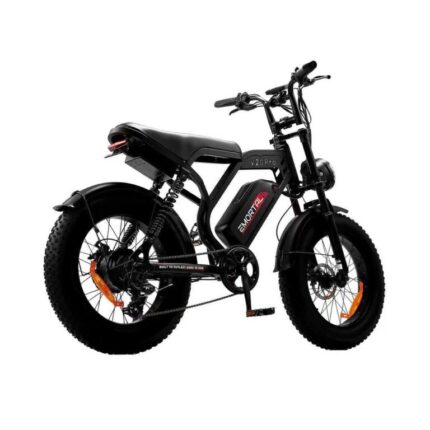
Because many machines sold online as e-bikes are really electric motorcycles. A Saint Paul police traffic commander told FOX 9 that many parents do not understand what they bought, and officers say bikes above 750 watts draw their attention. Here is how Minnesota sorts these machines.
| Feature | Legal E-Bike | Motorized Bicycle | E-Moto (Motorcycle Rules) |
|---|---|---|---|
| Working pedals | Required | Optional | Often missing |
| Motor power | 750 watts or less | Up to about 2 horsepower, 30 mph max | Above motorized bicycle limits |
| License | None, rider 15 or older | License or motorized bicycle permit | Motorcycle license or permit |
| Helmet under 18 | Not required by state law | Required | Required |
| Sidewalks | Allowed except business districts and local bans | Not allowed | Not allowed |
| State trails | Allowed where bikes ride | Not allowed | Not allowed |
Use case: A parent shopping for a 15-year-old. Dana finds an online “e-bike” advertising 35 mph and a 1,500-watt motor. Those specs exceed every e-bike class, so her son would need a license and could not ride bike paths. She switches to a labeled Class 1 bike. He gives up top speed but rides legally.
Buyer beware: When a listing brags about top speed instead of class, assume it is not a legal e-bike.
What Are The Latest Ebike Law Changes In Minnesota?
None in 2026. The session ended in May without new e-bike or e-moto laws, despite viral posts saying otherwise. The Bicycle Alliance of Minnesota published a 2026 session recap correcting the misinformation.
Here is what lawmakers debated:
- SF 3236: helmets for e-bike riders under 18, later bundled with e-moto provisions
- SF 3280: letting cities set e-bike-specific speed limits
- HF 3785 / SF 4186: clarifying that e-motos are not e-bikes
SF 3236 passed the Senate 34 to 33 on May 15, 2026, but stalled in the House. Any revival would come in the 2027 session at the earliest.
To check the law yourself:
- Open the Minnesota e-bike statutes page from the Revisor of Statutes.
- Read subdivisions 6a and 6b for riding and equipment rules.
- Search new bill numbers in the Legislature’s bill status tool after each session.
Which Ebike Classes Are Legal To Ride In Minnesota?
All three classes are legal, along with multiple-mode bikes that switch between classes.
| Class | How The Motor Works | Assist Stops At | Path Access |
|---|---|---|---|
| Class 1 | Pedal assist only | 20 mph | Allowed unless a statute bars it |
| Class 2 | Throttle or pedal assist | 20 mph | Allowed unless a statute bars it |
| Class 3 | Pedal assist only, speedometer required | 28 mph | Allowed unless the managing agency bans it |
Any motor above 750 watts takes a bike out of the e-bike category. The motor must cut out when you brake, and manufacturers must attach a permanent label showing the class, top assisted speed, and wattage. No label, no purchase.
Branching quiz: Is your bike a legal e-bike in Minnesota? This is a general guide, not legal advice.
Question 1: Does the bike have fully working pedals?
- If yes, continue to Question 2.
- If no, it is not an e-bike. Review the motorized bicycle and e-moto table above.
Question 2: Does a permanent label list a class, top assisted speed, and wattage of 750 or less?
- If yes, continue to Question 3.
- If the label is missing, ask the seller for written specs before buying.
- If wattage tops 750, treat it as a motorized bicycle or motorcycle.
Question 3: Is the rider at least 15?
- If yes, the bike is legal to ride. Check trail signs before using paths.
- If no, the rider must wait or use a standard pedal bike.
What Is The Speed Limit For An Ebike In Minnesota?
Minnesota sets no special e-bike speed limit. The 20 and 28 mph figures mark where the motor stops helping, not a legal cap. Pedal hard or coast downhill and you can go faster; the motor simply cuts out.
Posted limits and safe-speed rules still apply, and path managers may post lower limits.
Unlocking a controller is a different matter. State law bars modifying an e-bike out of its class unless the label is updated or removed. A bike that exceeds every class is no longer an e-bike, so license and trail restrictions can follow.
How Do Speed Rules Change In A Business District?
Speed rules stay the same, but sidewalk rules change. Minnesota bars bicycle riding on sidewalks in business districts unless the city allows it, and cities may ban sidewalk riding elsewhere too. A business district is generally a stretch of road where businesses occupy most of the frontage.
Downtown habits that keep you safe:
- Ride in the street lane, not on storefront sidewalks.
- Slow near angled parking, where drivers back out blind.
- Give an audible signal before passing on a bikeway.
One rule surprises riders: Minnesota cyclists may roll through a stop sign when no vehicle is in or approaching the intersection. You must still slow enough to stop and yield the right-of-way.
Can You Get A DWI On An Ebike In Minnesota?
You could face that risk. The general traffic code treats a legal e-bike as a bicycle, but the DWI chapter uses its own definition of motor vehicle. It covers any self-propelled vehicle that is not moved solely by human power, and it contains no e-bike exception. That wording gives prosecutors room to charge, and careless riding charges can apply regardless. Talk to a Minnesota defense attorney about any specific case.
Better options exist:
- Take transit, since many Metro Transit buses and trains carry bikes.
- Book a rideshare and lock the bike overnight.
- Walk the bike home with the motor off.
Do Younger Riders Have To Wear A Helmet In Minnesota?
No, not under state law. Minnesota has no helmet mandate for e-bike riders of any age as of October 2026, because the under-18 proposal never became law.
Motorized bicycle operators under 18 must wear protective headgear, and schools or events may set their own rules.
Fit matters more than price:
- Sit the helmet level, about two finger-widths above the eyebrows.
- Adjust the side straps to form a V under each ear.
- Tighten the chin strap until one finger fits beneath it.
- Check for a CPSC certification sticker inside.
- Replace the helmet after any crash impact, even with no visible crack.
Where Can You Ride An Ebike On State Trails And Public Land?
The Minnesota Department of Natural Resources allows legal e-bikes on state trails wherever regular bicycles may ride. Machines that fail the e-bike definition are barred from trails closed to motorized vehicles. The DNR’s state trail rules also note that state forests and wildlife management areas may follow different rules.
| Location | E-Bike Access | Watch For |
|---|---|---|
| Paved state trails | Classes 1 to 3 allowed | Yield to slower users and signal when passing |
| Natural-surface trails and bike parks | Manager decides | Posted e-bike rules at the trailhead |
| Snowmobile-groomed state trails in winter | Fat biking strongly discouraged | Fast sled traffic |
| Groomed cross-country ski trails | Not allowed unless opened as multi-use | Winter signage |
| State forests and wildlife areas | Rules vary by unit | Unit-specific regulations |
Motorized bicycles and motorized foot scooters are not allowed on state trails, while Segways follow pedestrian rules. A “No Motorized Vehicles” sign does not ban a legal e-bike from a state trail, but a “No E-Bikes” sign on a mountain bike trail does.
How Does The Minnesota Electric Assisted Bicycle Rebate Work?
It does not work right now. The Department of Revenue says all certificates have been allocated and no future application periods are planned.
The 2023 Legislature funded rebates for 2024 and 2025. Approved applicants handed a certificate to an approved retailer, which took the discount off at checkout.
The 2024 round was first-come, first-served. It offered 50 to 75 percent of the cost, up to $1,500, depending on income. The 2025 round switched to a lottery and paid 75 percent of qualifying costs, up to $750. Applicants needed 2024 adjusted gross income below $78,000 for married filing jointly, $62,000 for head of household, or $41,000 for other filers. People with qualifying disabilities could also apply.
Recipients received Form 1099-MISC and must report the rebate on their state return, as the official rebate details page explains.
Local programs can help in the meantime. The Minnesota Power rebate offers customers $200 on qualifying new e-bikes bought April 1 through December 31, 2026, with higher amounts for some income-qualified households. Edina also runs an e-bike reimbursement lottery for residents.
Use case: A Duluth commuter. Marcus, a Minnesota Power customer, wants to replace short car trips. He buys a new pedal-assist bike, keeps the receipt, and files the utility rebate. The $200 is modest, yet it covers a good lock and lights.
Which Ebikes Qualify For The Minnesota Rebate?
Qualifying bikes had to be new, meet the state e-bike definition, use a motor of 750 watts or less, and fit Class 1, 2, 3, or multiple-mode. The battery or electric drive system also needed approval from an independent safety lab.
Accessories counted only when bought with the bike: a helmet, lights, a lock, a luggage rack, a basket, a bag or backpack, fenders, and reflective clothing. Used bikes did not qualify, and the rebate could not exceed the bike’s price.
Keep that safety-lab rule as a personal standard, especially if the bike will charge indoors.
Where Can You Buy An Ebike In Minnesota?
Your best choice depends on how much service you want after the sale.
| Shop Type | Service | Sizing | Warranty Support |
|---|---|---|---|
| Independent shop | In-house mechanics | Test rides and fitting | Shop often files claims |
| Regional chain | Several locations | More sizes on the floor | Standard process |
| Direct-to-consumer brand | You or a mobile tech | Size charts only | Ship parts back |
On a demo ride, test how smoothly the brakes slow you. Ask about winter range, because lithium batteries deliver less range in freezing weather. Before paying, confirm the class label, wattage, and battery certification in writing.
Ready to compare bikes? Ebike Plugs offers in-house financing with $800 down, no credit check, and no interest, with weekly or monthly payments. Contact our team with your height, commute distance, and preferred class.
Which Minnesota Retailers Sell Cargo Ebikes?
Most independent shops and chains carry some cargo models, but stock moves fast, so call ahead to confirm a test bike. Look for a posted payload rating, child-seat mounts, a low battery position, and a wide center stand.
Minnesota law lets an adult carry a child in a seat or trailer securely attached to the bike, but no bike may carry more riders than it was designed for. State law also expressly permits studded tires for icy months.
Frequently Asked Questions About Ebikes In Minnesota
Are Ebikes In Minnesota Legal To Ride On Roads And Trails?
Yes. Class 1, 2, and 3 e-bikes with motors of 750 watts or less may ride wherever regular bikes can, including road shoulders, bike lanes, and paved state trails. Local agencies can restrict Class 3 bikes on their paths, and natural-surface trail managers can limit any e-bike. Riders must be at least 15.
How Does The Minnesota Electric Assisted Bicycle Rebate Work?
The state rebate is closed. Minnesota ran it in 2024 and 2025, giving approved residents a certificate that retailers applied at checkout. The 2025 lottery covered 75 percent of costs up to $750 for qualifying filers. Check your electric utility and city for local programs instead.


