Blog
Ebikes In Idaho: Legal Bikes Registration Where You Can Ride
Wondering whether Idaho wants a plate, a license, or insurance for your e-bike? Usually it doesn’t. A bike with working pedals, a motor under 750 watts, and a Class 1, 2, or 3 rating counts as a bicycle under Idaho law. The harder part is knowing where you may ride, because Boise, Garden City, Nampa, state parks, and federal agencies each draw their own lines. Guess wrong and you risk a citation or a wasted trail day. This guide sorts the rules by class and by place.
Key Takeaways
- Idaho Code 49-106 defines an e-bike as a bicycle with fully operable pedals and a motor under 750 watts that fits Class 1, 2, or 3.
- A compliant e-bike needs no driver’s license, registration, title, or insurance. Anything outside the definition is a motor vehicle.
- No statewide helmet law or minimum age applies to e-bike riders, though cities, parks, and manufacturers can set limits.
- The Idaho Stop names e-bikes at stop signs, so you may slow, yield, and roll through when clear.
- Boise and Garden City keep Class 3 bikes off the Greenbelt and sidewalks.
- Only Class 1 and Class 2 are listed as allowed on the Trail of the Coeur d’Alenes.
- National forests allow e-bikes only on routes open to motor vehicles.
- House Bill 500, in force since July 1, 2026, makes drivers use due care around e-bike riders.
Table of Contents
The Ebike Plugs team sets up, sells, and services e-bikes, and we name the code section or agency page behind each rule so you can check it yourself. Every bike we stock carries a readable class label and a stated rated wattage, which is exactly what an Idaho officer or a trail ranger will look for. Treat this guide as general information, not legal advice.
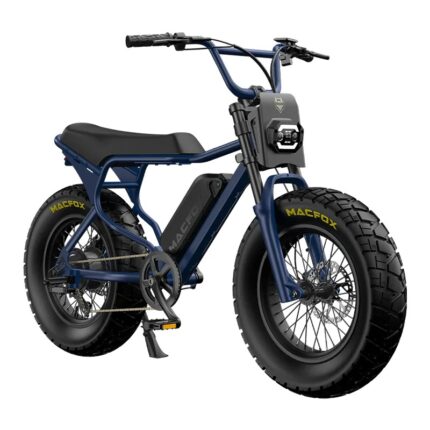
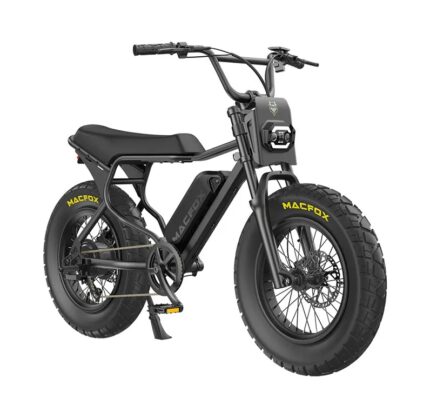
Ebikes In Idaho
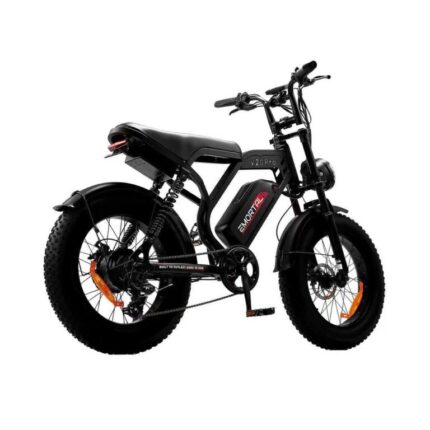
A machine that meets Idaho’s definition is a bicycle, not a moped, scooter, or motorcycle, and it follows bicycle rules.
The 750-watt line is the gatekeeper. Stay under it, with assist cutting out at your class speed, and you keep bicycle freedoms. Cross it, and two bikes that look alike face completely different rules: one rolls onto the Boise Greenbelt, the other needs a title, plate, insurance, and motorcycle endorsement.
What Are The Rules And Regulations For Electric Bikes In Idaho?
Idaho regulates e-bikes as bicycles under Title 49 of the Idaho Code, and cities and land managers can add limits. House Bill 76, effective July 1, 2019, created the three classes, opened sidewalks and multiuse paths unless a local ordinance or sign says otherwise, and exempted e-bikes from registration, license, and insurance requirements. It also required manufacturer labels and made rider violations infractions.
Your duties mirror a regular cyclist’s: ride with traffic, yield to people walking, and warn before passing. Since July 1, 2026, House Bill 500 adds that e-bike riders share the rights and duties of other road users, must exercise due care, must sit on an attached permanent seat, and may not carry more people than the bike is designed for.
Buyer beware: a machine outside the definition is a motor vehicle. In Garden City, riding a high-speed e-moto in a banned area can cost $300 plus court costs.
Do Electric Bikes Have To Stop At Red Lights In Idaho?
Yes. At a steady red light, you must stop and yield to all other traffic. Once you have stopped and yielded, Idaho Code 49-720 allows a cyclist to proceed with caution. At stop signs, you may slow to a reasonable speed, yield, and roll through without a full stop.
One detail matters. The stop-sign rule names electric-assisted bicycles directly; the red-light rule names bicycles and human-powered vehicles. Because Idaho defines an e-bike as a bicycle with a motor, the red-light rule is widely read as covering compliant e-bikes, but wait for green whenever an officer, crossing guard, or sign directs otherwise. Either way, yield to anyone close enough to be a hazard.
What Counts As An Electric Bicycle Under Idaho Law?
A machine qualifies under the official Idaho e-bike definition when it has fully operable pedals, an electric motor of less than 750 watts, and a fit with Class 1, 2, or 3.
The statute does not say whether 750 watts means continuous or peak output. The manufacturer’s label is your best evidence, so a bike rated 750 continuous watts but advertised at 1,500 peak deserves extra scrutiny. Electric dirt bikes with token pedals fail.
How Does The Three-Class System Work For Riders In Idaho?
Each class is defined by how the motor helps and when it stops.
| Class | How Assist Works | Assist Cuts Out At | Best For |
|---|---|---|---|
| Class 1 | Pedal-assist only | 20 mph | Greenbelt and rail-trail cruising |
| Class 2 | Throttle or pedal-assist | 20 mph | Errands, cargo, easier starts |
| Class 3 | Pedal-assist only | 28 mph | Longer road commutes |
The class decides access whenever a path limits categories, so a Class 3 commuter needs a route that avoids paths excluding it.
Do You Need A Helmet, License, Or Registration To Ride An Electric Bike In Idaho?
No license, plate, title, or mandatory insurance applies to a compliant e-bike. That changes once a machine falls outside the definition.
| Requirement | Compliant E-Bike | Machine Outside The Definition |
|---|---|---|
| Driver’s license | Not required | License plus motorcycle endorsement |
| Title and registration | Not required | Required |
| Insurance | Not required | Required |
| Helmet | Not required statewide | Required for riders under 18 |
| Bike lanes and paths | Allowed unless banned locally | Generally banned |
Nampa police have said helmets are not required for e-bicycles, while riders under 18 on electric motorcycles must wear one. Some parks and events set their own rules, and a helmet is sensible at any speed.
The Idaho Code sets no minimum age for any e-bike class. Some online guides repeat an under-15 limit for Class 3, but that comes from model legislation, not Idaho law. Manufacturers may still set age or weight limits, and 28 mph is a lot for a young teen.
Insurance is optional, but check whether your homeowner’s policy covers e-bike theft.
Where Can You Ride An Electric Bike In Idaho?
You can ride a compliant e-bike almost anywhere a regular bike goes, unless local rules or posted signs say otherwise.
| Location | Class 1 And 2 | Class 3 | Who Decides |
|---|---|---|---|
| Public streets | Allowed | Allowed | State and city |
| Shared paths and sidewalks | Usually allowed | Often banned locally | City or county |
| State park trails | Varies by park | Varies by park | Idaho Parks and Recreation |
| National forest routes | Motorized routes only | Motorized routes only | U.S. Forest Service |
Quick Quiz: Which Idaho Rules Apply To Your Ride? (General guidance, not a legal determination.)
Question 1: Does your bike have working pedals and a motor rated under 750 watts?
- Yes: go to Question 2.
- No: it is likely a motor vehicle. Review the license table above.
- Not sure: check the frame label, then go to Question 2.
Question 2: Does the motor assist above 20 mph?
- Yes, up to 28 mph: you have a Class 3. Go to Question 3.
- No: you have a Class 1 or 2. Go to Question 4.
- Above 28 mph: treat it as an e-moto and read the Boise section.
Question 3: Will you ride the Greenbelt, sidewalks, or a rail trail?
- Yes: plan a road route, because many of those surfaces exclude Class 3.
- No: streets are generally open to you.
Question 4: Will you ride on forest or BLM land?
- Yes: use motorized routes unless a written decision opens a trail.
- No: city and state paths are generally open to you.
What Are The Laws Regarding Electric Bikes In Boise?
Boise allows Class 1 and 2 e-bikes on streets, sidewalks, crosswalks, bike lanes, pathways, and the Greenbelt. Under the city ordinance, Class 3 bikes are not allowed on the Greenbelt, sidewalks, crosswalks, or bike lanes. The city’s Boise e-mobility rules page also lists bike lanes as recommended for Class 3, so follow the stricter reading until the city clarifies.
On Ridge to Rivers, e-bikes may use only the nearly 52 miles of motorized trails and primitive roads, with an ADA accommodation on certain city-owned trails. E-motos, meaning machines over 750 watts or faster than 28 mph, need a plate, title, insurance, license, and motorcycle endorsement for Boise streets, and are banned from sidewalks, bike lanes, and shared pathways.
The Greenbelt has no posted speed limit, but reckless riding can be cited. Neighboring rules differ:
| City Or Trail | Class 1 And 2 | Class 3 | Notable Rule |
|---|---|---|---|
| Boise | Streets, sidewalks, bike lanes, Greenbelt | Streets | E-motos need plate, title, insurance |
| Garden City | Streets, sidewalks, bike lanes, Greenbelt | Kept off Greenbelt, sidewalks | Over 28 mph banned from paths; police ask 15 mph on Greenbelt |
| Nampa | Streets, pathways, most sidewalks | Check city code | 20 mph cap on paths; downtown dismount zone |
| Trail of the Coeur d’Alenes | Allowed | Not listed as allowed | Managed by state parks and the Coeur d’Alene Tribe |
Use case (hypothetical): A Meridian rider wants a Class 3 bike for a Boise commute ending on the Greenbelt. That stretch is off-limits for Class 3, so the choices are a street route with lights and mirrors, or a Class 1 bike that keeps Greenbelt access but tops out at 20 mph.
Can You Ride An Electric Bike On Roads And Bike Lanes In Idaho?
Yes. All three classes can use public roads, and bike lanes are generally open statewide, though Boise’s ordinance keeps Class 3 out of its bike lanes.
Signal turns during the last 100 feet when your hands aren’t needed for control, and ride as far right as is safe. On rural highways, run lights even in daylight.
Can You Ride An Electric Bike On The Sidewalk In Idaho?
Usually yes, but your city decides. State law allows sidewalk riding unless a local ordinance or sign bans it.
Give an audible signal before passing pedestrians and use low assist in crowds. Nampa requires dismounting in its downtown zone, and Boise bans Class 3 from every sidewalk.
Are Electric Bikes Allowed On The Trail Of The Coeur D’Alenes?
Yes, for Class 1 and Class 2. The official trail page lists only those classes, so leave a Class 3 at home. The 73-mile paved route runs between Mullan and Plummer, managed by Idaho Parks and Recreation and the Coeur d’Alene Tribe, with twenty developed trailheads.
For a full-length ride:
- Choose a trailhead with parking and arrange a shuttle for one-way trips.
- Compare your battery’s real-world range with the distance; many bikes won’t cover 73 miles at high assist.
- Call businesses in Kellogg, Wallace, or Harrison ahead if you need a charging stop.
- Download maps first, since cell service can be spotty.
Use case (hypothetical): A family plans a weekend with one Class 2 bike and one borrowed Class 3. The Class 3 rider should rent a compliant bike in a trail town, and splitting the ride into two shorter days keeps the Class 2 battery within range.
Can You Ride An Electric Bike On Federal Land In Idaho?
Mostly only on motorized routes. The U.S. Forest Service manages e-bikes as motor vehicles, so they belong on roads and trails marked for motorized use on each forest’s Motor Vehicle Use Map.
The Bureau of Land Management works differently. Its BLM e-bike guidance explains that managers may open non-motorized trails to Class 1, 2, and 3 e-bikes only through a formal local decision, so check with the district office. Designated wilderness is closed to all bicycles.
Which Electric Bikes Are Street Legal In Idaho?
Run this audit before your next ride:
- Pedals can move the bike on their own.
- The motor is rated under 750 watts.
- Assist stops at 20 mph for Class 1 or 2, or 28 mph for Class 3.
- A class label is on the frame.
- A front light and rear reflector are fitted for night riding.
If you’re comparing ebikes for sale in Idaho, read the rated continuous output, not the peak figure. Be wary of marketplace and grey-import listings boasting 35 mph; no bike that fast fits Idaho’s definition, whatever the listing says.
Not sure which class fits your routes? Browse our class-labeled bikes or contact our advisors to compare models and ask about in-house payment plans.
What Equipment And Labeling Must An Electric Bike Have To Be Legal In Idaho?
Since September 1, 2019, Idaho Code 49-727 has required manufacturers and distributors to permanently attach a label showing class, top assisted speed, and motor wattage, in Arial at 9-point type or larger.
Idaho Code 49-723 requires a light visible from at least 500 feet to the front and a rear reflector between sunset and sunrise, and when visibility drops below 500 feet. We found no Idaho statute setting e-bike brake standards, but heavier, faster bikes need well-maintained brakes regardless.
Tuning kits, derestriction firmware, and swapped controllers can push a bike past its class, making the label inaccurate and turning it into a motor vehicle. Send us a clear photo of your frame label, and we’ll help you read what it lists.
Is Idaho Changing Its Electric Bike Laws?
Yes. House Bill 500 was signed March 16, 2026, and took effect July 1, 2026. It followed an October 2024 Boise collision in which a judge ruled that the due-care law, written for “human powered” vehicles, did not cover an e-bike rider. The House Bill 500 text amends Idaho Code 49-615 so drivers must use due care around e-bike riders, and 49-714 and 49-715 so riders share the same duties.
Cities are also separating e-bikes from e-motos: Boise adopted an ordinance in 2026, and Garden City followed with Ordinance 1068-26 in July.
House Bill 880, a 2026 proposal to clarify what the e-bike definition excludes, was sent back to committee in March 2026. Statutes on the Idaho Legislature website update each July 1, so recheck after every session.
Frequently Asked Questions About Ebikes In Idaho
Are Ebikes In Idaho Legal To Ride Without A License Or Registration?
Yes. A Class 1, 2, or 3 e-bike with working pedals and a motor under 750 watts needs no driver’s license, registration, or insurance in Idaho. Machines above those limits are motor vehicles and need full paperwork.
Do You Need A Helmet To Ride An Electric Bike In Idaho?
No statewide Idaho law requires e-bike riders to wear a helmet. The under-18 helmet rule applies to motorcycles. Some parks, events, and rental fleets set their own rules, and wearing one is always the safer choice.


