
Blog
Ebikes In Michigan: Where You Can Legally Ride, Buy And Test
You bought an e-bike to get around faster, not to collect a ticket or watch your bike get impounded. In Michigan, the difference between a legal bicycle and an unregistered motor vehicle comes down to a few numbers many buyers never check. The short answer: a bike with working pedals, a motor of 750 watts or less, and a Class 1, 2, or 3 rating is treated much like a regular bicycle, with no license, registration, or insurance. Class, age, trail, and local rules decide the rest.
Key Takeaways
- A legal Michigan e-bike has a seat, working pedals, a motor of 750 watts or less, and a permanent class label.
- Motor help stops at 20 mph on Class 1 and 2 and at 28 mph on Class 3.
- Nobody under 14 may operate a Class 3, and Class 3 riders and passengers under 18 must wear a helmet.
- Class 1 can use most DNR trails open to bicycles. Class 3 is banned on every state-managed trail.
- Cities and townships can add stricter rules, and several Metro Detroit communities did so in 2026.
Table of Contents
Ready to compare models? Browse our current e-bike inventory and match each listing’s class, rated wattage, and top assisted speed against the checklist above, so the bike that arrives is the one Michigan law treats as a bicycle. If a spec is unclear, contact our team before ordering, and ask about our financing options if you would rather spread the cost.
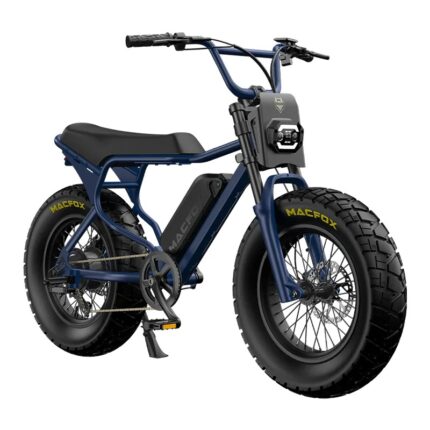
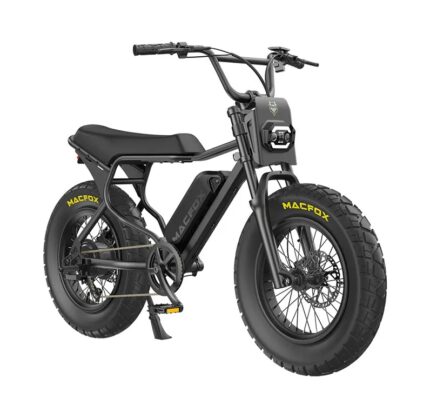
Ebikes In Michigan
From Detroit commutes to Kalamazoo rail-trails, e-bikes are everywhere, and three layers of rules apply at once:
- State statute: The Michigan Vehicle Code defines an e-bike, sets the classes, and adds Class 3 age and helmet rules.
- Land-manager policy: The Department of Natural Resources (DNR), county parks, and federal agencies decide which classes use their trails.
- Local ordinance: Cities, townships, and villages can restrict e-bikes on sidewalks, paths, and parks after a public hearing.
A ride that is legal under state law can still break a park rule or city ordinance, so keep all three in mind.
What Is Legally Considered An E-Bike In Michigan?
Under Michigan law, an electric bicycle must have a seat or saddle, fully operable pedals, and an electric motor of no more than 750 watts, and it must fit Class 1, 2, or 3. A device meeting that definition is not a motor vehicle under state law.
The 750-watt cap is where many online listings fail. The statute does not say whether the cap means rated (nominal) or peak output, so check the rated wattage on the spec sheet and frame label, and skip any bike rated above 750 watts.
E-motos are a separate category. The DNR classifies a machine as an e-moto if it exceeds 750 watts, can exceed 28 mph under motor power, works mainly as a throttle vehicle above 20 mph, or lacks fully operable pedals. E-motos must be registered, follow motor vehicle or off-road vehicle rules, and stay off nonmotorized trails.
What Equipment And Labels Must A Michigan E-Bike Carry?
Manufacturers and distributors must permanently attach a label showing the class number, top assisted speed, and motor wattage, in Arial at 9-point type or larger. Look on the seat tube or down tube. The exact wording is in Michigan’s e-bike statute.
E-bikes must also meet federal bicycle standards in 16 CFR Part 1512 and have a brake that can skid the braked wheels on dry, level pavement. From half an hour after sunset to half an hour before sunrise, Michigan’s bicycle lighting law requires a white front lamp visible from 500 feet and a rear red reflector visible from 100 to 600 feet. Missing lights or brakes is a civil infraction.
Michigan’s current statute does not require a speedometer on Class 3 bikes, though most include one.
Buyer beware: Changing a bike’s motor-powered speed or engagement is illegal unless you replace the label with an accurate one. If the change pushes the motor past 750 watts or beyond class speeds, the bike is no longer an e-bike under the law.
What Is The Speed Limit For E-Bikes In Michigan?
Michigan has no single e-bike speed limit. Motor help must cut out at 20 mph on Class 1 and Class 2 bikes and at 28 mph on Class 3. You can pedal faster under your own power.
Posted limits still apply, and removing a software limiter can turn a legal bike into an unregistered motor vehicle.
What Are The Three Classes Of Legal E-Bikes In Michigan?
Michigan uses the standard three-class system. This table shows how each class works and where it can go.
| Class | Motor Engagement | Assist Stops At | State Rider Rules | DNR Trail Access |
|---|---|---|---|---|
| Class 1 | Pedal assist only | 20 mph | Standard bicycle rules | Most trails open to bikes |
| Class 2 | Throttle or pedal assist; cuts out when braking | 20 mph | Standard bicycle rules | Only with free mobility permit |
| Class 3 | Pedal assist only | 28 mph | Operator 14+; helmet under 18 | None |
Class 1 gets the widest trail access. Class 2 adds a throttle but loses state trails unless the rider holds a mobility permit. Class 3 suits longer road commutes.
If a model switches classes through its display, ask the seller how it is labeled.
Do You Need A License, Registration Or Insurance For An E-Bike In Michigan?
No. A qualifying e-bike needs no driver’s license, plate, title, registration, or insurance, because Michigan law excludes electric bicycles from the definition of a motor vehicle. Machines outside that definition carry their own paperwork:
| Vehicle Type | License | Registration | Insurance Required |
|---|---|---|---|
| Legal e-bike (Class 1 to 3) | No | No | No |
| Moped | Driver’s license or moped license (age 15+) | Yes, $15 decal for 3 years | No |
| E-moto or motorcycle (street use) | Motorcycle endorsement | Yes, plus title | Yes |
Liability coverage is still worth considering. Some homeowner and renter policies exclude motorized bikes, so ask your agent about e-bikes by name.
Can You Ride An Electric Bike With A Suspended License In Michigan?
Generally, yes. Because a legal e-bike is not a motor vehicle in Michigan, no driver’s license is required, so a suspension alone does not bar you from riding a compliant bike.
The risk lies in the specs. A machine over 750 watts, or one that assists past the class cutoffs, can be treated as a moped or motor vehicle, and riding it on a suspended license can bring new charges. Court orders and probation terms may also limit how you travel, so confirm your situation with a Michigan attorney first.
What Are The Age And Helmet Rules For E-Bike Riders In Michigan?
Nobody under 14 may operate a Class 3 e-bike, though younger children may ride as passengers on a Class 3 built to carry them. Michigan sets no statewide minimum age for Class 1 or 2.
Anyone under 18 operating or riding as a passenger on a Class 3 must wear a fitted, fastened helmet meeting CPSC or ASTM standards. State law has no helmet rule for Class 1 or 2, but a helmet is cheap protection at e-bike speeds.
Parent readiness checklist:
- Practice hand signals and hard stops in an empty lot.
- Ride quiet routes together before allowing solo trips.
- Check that the helmet sits level and the strap is snug.
- Confirm the class label matches your child’s age and your local ordinance.
Can Teens Ride An E-Bike On The Road In Michigan?
Under state law, yes. Teens of any age can ride Class 1 and Class 2 e-bikes on Michigan roads, and riders 14 and older can operate a Class 3. Local rules can be stricter: on September 14, 2026, Bloomfield Township adopted a six-month moratorium barring riders under 16 from using e-bikes and e-scooters on sidewalks and township property, with confiscated bikes returned to parents.
Legal does not mean ready, so start young riders on quiet residential streets.
Parents should also watch Lansing. House Bill 6166, introduced on July 3, 2026 by Representative Phil Skaggs and tie-barred to House Bill 6165, would require riders under 18 without a driver’s license to get a special restricted license, available from age 15, to operate a Class 2 or Class 3 e-bike on public roads. Senate Bill 1156, introduced on September 10, 2026 by Senator Jim Runestad, proposes new age restrictions and penalties for young riders. Both sat in their chambers’ transportation committees as of late October 2026, and neither had become law.
Where Can You Ride An E-Bike In Michigan?
You can ride any class on any part of a road open to bicycles, including bike lanes and shoulders. Ride with traffic and stay as far right as practicable.
Trails are where classes split. State law allows Class 1 on paved, crushed-limestone, and rail-trail corridors unless the managing authority prohibits it, while Class 2 and 3 need that authority’s permission. Nonmotorized natural-surface trails stay closed to e-bikes unless the managing agency opens them.
| Riding Surface | Class 1 | Class 2 | Class 3 |
|---|---|---|---|
| Roads, bike lanes, shoulders | Yes | Yes | Yes |
| Local paved or limestone trails | Yes, unless prohibited | Only if authorized | Only if authorized |
| Local natural-surface trails | Only if authorized | Only if authorized | Only if authorized |
| DNR trails open to bikes | Yes | With mobility permit | No |
| State game areas, North Country Trail | No | No | No |
Rules shift from state to state, so if you ride outside Michigan, our guide to e-bike laws and your rights covers the national picture.
Is It Legal To Ride An E-Bike On The Sidewalk In Michigan?
Usually. E-bike riders follow bicycle rules, and Michigan’s sidewalk statute requires riders to yield to pedestrians and give an audible signal before passing. You cannot ride where an official sign prohibits it.
Local ordinances often go further. Berkley bans e-bikes on all sidewalks and in parks, and Beverly Hills bars Class 3 bikes from sidewalks and bikeways. Downtown districts commonly prohibit sidewalk riding, so watch for signs and keep to walking pace near doors and corners.
Which Michigan DNR Trails Allow E-Bikes?
A DNR land use order approved on August 8, 2024 expanded Class 1 access. Under the current DNR e-bike rules, Class 1 bikes may use state park, recreation area, and state forest trails that allow traditional bicycles, including many natural-surface mountain bike trails. Class 2 bikes may use the same trails only with a free DNR mobility permit. Class 3 bikes are banned on all state-managed trails.
Class 1 exceptions include state game and wildlife areas, the North Country National Scenic Trail, and the High Country, Shingle Mill, and Pickerel Lake pathways in Pigeon River Country. All classes may ride DNR-managed roads open to bicycles.
What Local E-Bike Rules And Fines Apply In Michigan?
Local authorities can set rules stricter than state law. Beyond the examples above, Beverly Hills bans e-bikes in village parks, and other Metro Detroit communities are debating similar measures.
Common violations include riding a posted no-bike sidewalk, riding against traffic, riding at night without lights, an underage Class 3 operator, and taking a Class 3 or e-moto onto a closed trail. Equipment violations are civil infractions, but fines are set locally. Check a town’s municipal code before riding there.
Can You Ride An Electric Bike On Mackinac Island?
For most visitors, no. State law bars e-bikes in Mackinac Island State Park without a permit, and the city allows e-cycles only for people with a qualifying mobility disability. Under a 2026 ordinance amendment, those riders may use Class 1 electric bicycles or Class 2 electric tricycles, and a Class 2 e-bike can be made compliant by permanently removing the throttle.
According to the Mackinac Island Police Department, applicants should email a mobility disability accommodation application at least 14 days before the trip, with bike photos and documentation such as a disability placard or medical provider statement. Approved riders buy a city bicycle license at the ferry terminal, and the ferry tags the bike for the whole visit. Police impound non-compliant e-cycles, so everyone else should plan on a pedal bike.
Where Can You Buy Or Test Ride An E-Bike In Michigan?
E-bike retailers and full-service bike shops operate in Detroit, Grand Rapids, Ann Arbor, Kalamazoo, and Traverse City, plus smaller towns such as Bay City, Northville, Owosso, and Cheboygan. Call ahead to book a test ride.
Local shops offer sizing, test rides, and warranty repairs; online orders often cost less. Either way, check these points before paying:
| What To Check | Where To Find It | Red Flag |
|---|---|---|
| Rated motor wattage | Frame label and spec sheet | Above 750 watts |
| Class and top assisted speed | Frame label | Missing label or class that does not match the ad |
| Throttle behavior | Test ride | Throttle pulling above 20 mph |
| Pedals | Visual check | Decorative or unusable pedals |
| Conversion kit, if used | Kit spec sheet | Kit rated over 750 watts |
Still weighing motors, batteries, and frame styles? Our complete e-bike buying guide walks through the trade-offs before you spend a dollar.
Quick Quiz: Which E-Bike Class Fits Your Michigan Riding?
Question 1: Will you mostly ride DNR or state park trails?
- Yes: Go to Question 2.
- No: Go to Question 3.
Question 2: Does the rider have a mobility disability and need a throttle?
- Yes: Consider a Class 2 and apply for the free DNR mobility permit.
- No: Choose a Class 1 for the broadest trail access.
Question 3: Is the rider 14 or older with a long road commute?
- Yes: A Class 3 can fit. Riders under 18 need a helmet.
- No: Go to Question 4.
Question 4: Do you want a throttle for quick starts at intersections?
- Yes: Consider a Class 2.
- No: A Class 1 covers most errands.
This quiz offers general guidance, not legal advice.
Use case 1: The Grand Rapids commuter. A rider has a 12-mile road commute and wants state park trails on weekends. A Class 3 suits the commute but is barred from state trails, so a Class 1 covers both legally, at the cost of 8 mph less motor help.
Use case 2: The Oakland County parent. A parent wants a Class 3 for a 13-year-old. State law blocks that until 14, and their township may restrict riders under 16. A Class 1 is legal statewide, so the parent checks the local ordinance and starts on quiet streets, knowing HB 6166 could later change the rules for minors.
Frequently Asked Questions About Ebikes In Michigan
What E-Bike Rules Apply In Michigan?
A Michigan e-bike needs working pedals, a motor of 750 watts or less, and a class label, but no license or registration. Class 3 operators must be 14 or older, and Class 3 riders under 18 must wear a helmet.
Where Are E-Bikes Allowed To Ride In Michigan?
All classes can use roads, bike lanes, and shoulders. Class 1 can use most DNR trails and local rail-trails, Class 2 needs a mobility permit on DNR trails, and Class 3 is banned on state-managed trails.


