Blog
Ebikes In North Carolina: Registration, Insurance, And Roads
Not sure whether your e-bike is legal on a North Carolina street, greenway, or mountain trail? Ebikes In North Carolina are legal, and a bike that meets the state definition needs no license, registration, or insurance. The catch is timing. A 28 mph bike that counts as a moped today becomes a legal Class 3 e-bike on December 1, 2026, and towns are gaining new power to limit where each class can go. This guide explains both sets of rules so you can ride, or buy, with confidence.

Key Takeaways
- Today, a legal e-bike has working pedals, a motor of 750 watts or less, and a motor-only top speed of 20 mph.
- From December 1, 2026, Session Law 2026-46 recognizes Class 1, 2, and 3 e-bikes, all capped at 750 watts.
- Until then, a 28 mph bike is a moped: registration, insurance, a rider aged 16 or older, and helmets for everyone aboard.
- Riders and passengers under 16 need a helmet on any bicycle. From December 1, anyone under 18 on a Class 3 needs one too.
- Cities and counties can limit classes and set speed limits on sidewalks and multiuse paths.
- DuPont State Recreational Forest asks visitors to leave e-bikes at home, and national forests allow them only on motorized routes.
Table of Contents

Ready to compare models? Browse our e-bike inventory, where every listing shows the class, motor rating, and assisted top speed so you can check North Carolina compliance before you order. Contact our team or text (714) 749-3162 to confirm a model’s class ahead of the December 1 change. Financing is available with $800 down, no credit check, and no interest.
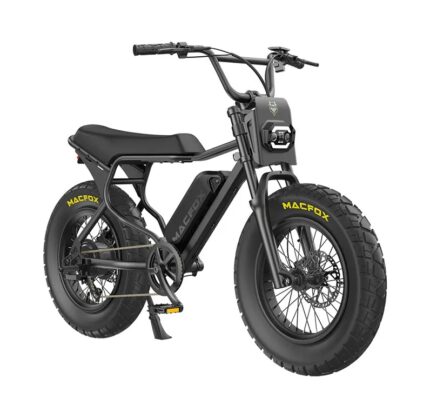
Ebikes In North Carolina
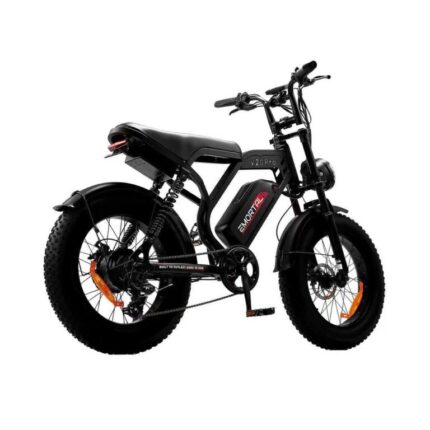
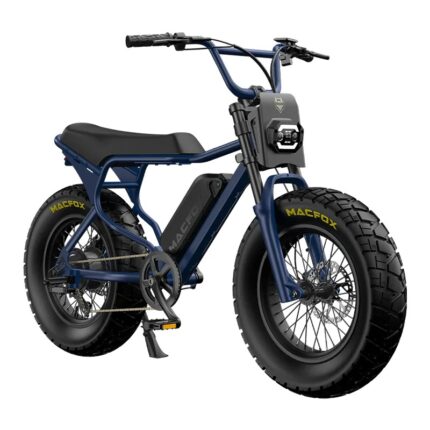
North Carolina excludes electric assisted bicycles from “motor vehicle” but includes them as vehicles: the freedoms of a bicycle, the duties of every road user. The legal picture then splits in two. The current single-category rule runs through November 30, 2026, and the three-class system takes over on December 1. Here is the same machine on each side of that date.
| Machine | Through Nov. 30, 2026 | From Dec. 1, 2026 |
|---|---|---|
| Pedals, 750 W or less, motor-only top speed 20 mph | Electric assisted bicycle | Class 1 or Class 2 |
| Pedals, 750 W or less, pedal assist to 28 mph | Moped | Class 3 |
| Over 750 W or outside the classes, under 30 mph | Moped | Generally a motorcycle |
| Capable of more than 30 mph | Motorcycle | Motorcycle |
Are E-Bikes Legal In North Carolina?
Yes, as long as the bike meets the statute. Legality turns on how it is built and configured, not where you bought it.
Many electric two-wheelers sold online are not legal bicycles here: a 2,000-watt machine reaching 40 mph is a motorcycle, whatever the listing calls it.
How Does North Carolina Define An Electric Bike?
Under G.S. 20-4.01(7a), an electric assisted bicycle must have:
- Two or three wheels.
- A seat or saddle for the rider.
- Fully operable pedals for human propulsion.
- An electric motor of no more than 750 watts.
Through November 30, the motor alone also cannot push it past 20 mph on level ground. From December 1, it must instead fit one of the three classes.
Buyer check: No class label is required here, so ask the seller for the class, top assisted speed, and motor wattage in writing. How the three-class system works nationally is useful if you ride across state lines.
Quick check: is your e-bike street-legal?
Question 1: Does your bike have fully operable pedals?
- No: not an e-bike. Read the penalties section first.
- Yes: go to Question 2.
Question 2: Is the motor rated at 750 watts or less?
- No: outside the definition.
- Yes: go to Question 3.
Question 3: Can the throttle alone push the bike past 20 mph?
- Yes: fits no class, before or after December 1.
- No: go to Question 4.
Question 4: Where does pedal assistance stop?
- At 20 mph: legal now; Class 1 or 2 from December 1.
- At 28 mph: a moped through November 30; Class 3 from December 1.
- Higher: not an e-bike, and above 30 mph a motorcycle.
A general guide, not legal advice.
Does North Carolina Follow The 3-Class E-Bike System?
From December 1, 2026, yes. Section 19 of House Bill 1094, which became Session Law 2026-46, adopts the classification most states use, applying to offenses on or after that date. The UNC School of Government analysis breaks down each provision.
| Class | How The Motor Helps | Assistance Stops At | Key Rule From Dec. 1 |
|---|---|---|---|
| Class 1 | Only while you pedal | 20 mph | Local under-18 helmet rules possible |
| Class 2 | Throttle, with or without pedaling | 20 mph | Local under-18 helmet rules possible |
| Class 3 | Only while you pedal | 28 mph | Helmet required under 18 |
Check how your bike is configured, not how it was marketed. School of Government faculty noted shops selling Class 2 bikes switchable to Class 3 in the settings. Until December 1, that switch makes it a moped — likely why shops avoid the Class 3 label.
Use case (hypothetical): A Charlotte commuter buys a 28 mph pedal-assist bike in late October. Riding it at full assistance before December makes it an unregistered moped. The fix: cap assistance at 20 mph in the settings, confirm the throttle stops there, and keep the spec sheet. From December 1 it is a legal Class 3, though local greenways may still restrict it.
What Are The Motor Power And Speed Limits For E-Bikes In North Carolina?
The ceiling is 750 watts for every class. Pedal assistance stops at 20 mph on Class 1 and 28 mph on Class 3, and a throttle can never push past 20 mph.
The throttle rule is the one riders break unknowingly. A throttle pulling to 28 mph fits no class, and under the School of Government’s reading generally counts as a motorcycle once the new law is live.
Expert tip: Skip aftermarket controllers, “unlock” apps, and speed dongles. Pushing a bike past its class can change its legal category and may void the warranty.
Shopping? Browse our class-compliant e-bikes and ask for any model’s class, wattage, and top assisted speed.
Do You Need A License, Registration, Or Insurance For An E-Bike In North Carolina?
None of the three is required for a compliant e-bike:
- License: not required; driver’s license offenses do not apply to electric assisted bicycles.
- Registration: not required; the DMV registers mopeds and motorcycles, not e-bikes.
- Insurance: not legally required.
Liability coverage is still worth a call to your agent, since some homeowner and renter policies limit motorized devices used away from home.
Do You Need A Helmet To Ride An E-Bike In North Carolina?
Yes, for younger riders. A parent or guardian may not knowingly allow a child under 16 to ride, or ride as a passenger, on a bicycle on a public roadway, bicycle path, or right-of-way unless the child wears a properly fitted, securely fastened helmet throughout. E-bikes count. The helmet statute makes it an infraction with a civil fine of no more than $10 including all assessments and costs, waivable on a first conviction if the family has since obtained a helmet.
From December 1, any rider or passenger under 18 on a Class 3 must wear a helmet, and a violation is an infraction. Cities and counties may extend that to Class 1 and Class 2.
Adults face no statewide mandate. Look for a CPSC sticker inside the shell and fit the helmet level, a finger-width above the eyebrows.
What Is The Minimum Age To Ride An E-Bike In North Carolina?
North Carolina sets no statewide minimum age for a compliant e-bike, and the new law adds none. Guides listing 16 are describing the moped rule, which still catches 28 mph bikes until December 1.
Child passengers must hold an upright position on a saddle seat, and any passenger under 40 pounds or 40 inches must be secured in a restraining seat.
Schools set their own rules, so check your district before a teenager rides to campus.
What Are The Rules For Riding An E-Bike On North Carolina Roads?
You follow the same traffic laws as drivers: obey signals and stop signs, ride with traffic, signal turns, and keep as far right as practicable, moving left to pass, clear hazards, or turn left.
The night equipment rule is more specific than most riders expect, and worth reading twice. Under G.S. 20-129(e), a bicycle ridden at night on a public street, public vehicular area, or public greenway needs a reflex mirror on the rear, a lighted front lamp visible from at least 300 feet ahead, and either a rear lamp showing a red light visible from at least 300 feet behind or bright clothing or a vest visible from at least 300 feet to the rear. A plain rear reflector on its own does not satisfy the second requirement, and the rear mirror is easy to overlook entirely.
From December 1, state law expressly allows all three classes on roadways, bicycle lanes, and shared-use paths unless a local government says otherwise.
Can You Ride An E-Bike On The Sidewalk In North Carolina?
It depends on the town. Municipalities already control their sidewalks, and from December 1 cities and counties can restrict classes and set speed limits on sidewalks and multiuse paths. Cary allows e-bikes on greenways and sidewalks while the rider is pedaling. Raleigh allows both, but not sidewalks where the road has a bike lane.
To check a local code, find the town’s ordinances on Municode or its website, search “electric assisted bicycle” and “sidewalk,” and call the clerk if the wording is unclear.
Are E-Bikes Allowed On Trails And Bike Paths In North Carolina?
Often yes, but access depends on who manages the corridor. Paved greenways usually welcome e-bikes unless a city or county restricts them; natural-surface singletrack is where managers limit motor assistance.
The Mountains-to-Sea State Trail is mostly foot trail, so check each segment’s manager first.
Are E-Bikes Allowed In North Carolina State Parks And National Forests?
Some are, some are not. The new law preserves the Department of Natural and Cultural Resources’ authority over its properties, so park rules differ from road rules.
| Area | Manager | E-Bike Access |
|---|---|---|
| State parks | NC Division of Parks and Recreation | Generally on designated bike trails |
| Pisgah and Nantahala | U.S. Forest Service | Only on routes open to motor vehicles |
| DuPont State Recreational Forest | NC Forest Service | Visitors asked to leave e-bikes at home |
| Blue Ridge Parkway, Great Smoky Mountains, Cape Hatteras, Cape Lookout | National Park Service | Generally where regular bikes go; check each park |
| Game lands | Wildlife Resources Commission | Separate rules |
The Forest Service classifies e-bikes as motorized, so most Pisgah and Nantahala singletrack is off-limits; each forest’s motor vehicle use map shows the open routes. At DuPont, the NC Forest Service page twice asks visitors to leave e-bikes at home and notes that forest rules are state laws. If you rely on an e-bike as a mobility device, contact staff before travelling rather than assuming an exemption.
Where Are The Best E-Bike Rides In North Carolina?
Flat coast, rolling Piedmont, steep mountains. Confirm e-bike rules with each manager before you go.
- Coast: Wilmington’s Gary Shell Cross-City Trail links parks and neighborhoods on paved miles.
- Piedmont: Raleigh’s Neuse River Trail has gentle grades under the city’s 10 mph greenway limit, and the American Tobacco Trail runs more than 22 miles from Durham into Chatham County.
- Mountains: Henderson County’s Ecusta Trail permits pedal-assist e-bikes and posts a 15 mph limit, and Lake James State Park offers designated bike trails.
Cold mornings and steep climbs both cut range, and advertised figures assume ideal conditions, so plan conservatively on mountain days. Our buying guide covers battery capacity and gearing.
Planning a trip? Compare our touring-ready e-bikes or contact our team about range and fit.
How Do City And Town Ordinances Affect E-Bike Rules In North Carolina?
Local rules can be stricter, and the reason they change at a city line is structural. Cities regulate e-bikes on their streets, sidewalks, and paths. Counties may regulate multiuse paths and sidewalks on county property such as parks, but having no streets of their own they cannot regulate traffic on state-maintained roads.
| Place | Current Rule | What To Check |
|---|---|---|
| Cary | Allowed on greenways and sidewalks while pedaling; 15 mph greenway limit | Pending ordinance changes |
| Raleigh | Allowed on roads, greenways and sidewalks, but not sidewalks beside a bike lane; 10 mph greenway limit | Posted greenway limits |
| Holly Springs | Adopted its own e-bike regulations this year | Current ordinance text |
| Dare County | Must be walked through county parks | Park signage |
| Kill Devil Hills, Nags Head, Kitty Hawk | Stepped-up enforcement; ordinance talks ongoing | Latest town code |
Cary police reportedly handled more than 219 e-bike calls over 16 months from January 2025. Dare County banned e-bike riding at all county parks in April 2026; staff ask riders to dismount, and repeat violations can bring suspension from park property.
Use case (hypothetical): A family renting e-bikes for two teens in Nags Head should ask the shop for each bike’s class, pack helmets for anyone under 16, and walk the bikes through county parks. From December 1, a teen on a Class 3 rental needs one too.
What Are The Penalties For Breaking E-Bike Laws In North Carolina?
For a compliant bike, most violations are infractions, such as the youth helmet rules. An out-of-spec machine carries bigger risk: riding an unregistered, uninsured moped or motorcycle brings citations and fines, and Kill Devil Hills police have stepped up enforcement against high-powered e-motorcycles and mopeds that fail the state e-bike definition.
That is the moped trap. A moped needs DMV registration, liability insurance, a rider aged 16 or older, and helmets for operator and passenger. Above 30 mph, add a driver’s license with a motorcycle endorsement. This current law breakdown explains each category and its statutes.
Visitors are judged by North Carolina law: a Class 3 legal in Virginia is still a moped here until December 1.
Frequently Asked Questions About Ebikes In North Carolina
Where Can You Legally Ride E-Bikes In North Carolina?
You can ride a compliant e-bike on public roads and in bike lanes, and from December 1, 2026, state law also allows all three classes on shared-use paths. Cities and counties may restrict classes on sidewalks and multiuse paths, and land managers set their own trail rules.
Are E-Bikes Allowed On Mountain Bike Trails In North Carolina?
Sometimes. Many state park bike trails allow e-bikes on designated routes. DuPont asks riders to leave them at home, and Pisgah and Nantahala generally limit them to routes open to motor vehicles. Check the managing agency before riding singletrack.


