
Blog
Ebikes In California And What Every Rider Must Know Before Rolling Out
California has more electric bikes on the road than any other state, and the rulebook changed again this month. A bike that is perfectly legal in a Los Angeles bike lane can be illegal to sell, banned from a county trail, or treated as an unregistered motorcycle if the motor is oversized. This guide uses the Vehicle Code and the laws signed in October 2026 to set out the three classes, the helmet and age rules, where each class may ride, and what changes on January 1, 2027.
Key Takeaways
- A legal e-bike needs three things at once: working pedals, a motor of 750 watts or less, and a Class 1, 2, or 3 label. Miss one and the Vehicle Code treats it as a moped or motorcycle.
- No license, registration, or insurance is required for any of the three classes.
- Class 3 is 16 and over, and every Class 3 rider wears a helmet at any age. Any rider under 18 wears a helmet on any class.
- Since January 1, 2026, every e-bike, battery, and charger sold, leased, or rented in California must be certified to a recognized safety standard and labeled.
- From January 1, 2027, a statewide 10 mph default applies to sidewalk riding and cities may post 10 to 20 mph limits on bike paths.
- Local rules decide the rest. Riverside, Marin, and San Mateo counties already run their own age or access restrictions.
Table of Contents
California is the biggest e-bike market in the country and one of the easiest to get wrong, because the state rule and the city rule rarely match. The state part is simple: 750 watts, working pedals, one of three classes, and a certified battery. Every bike we ship to California carries a readable class label, a certified battery and charger, and no hidden unlock mode, so the bike you receive is the bike the Vehicle Code recognizes.
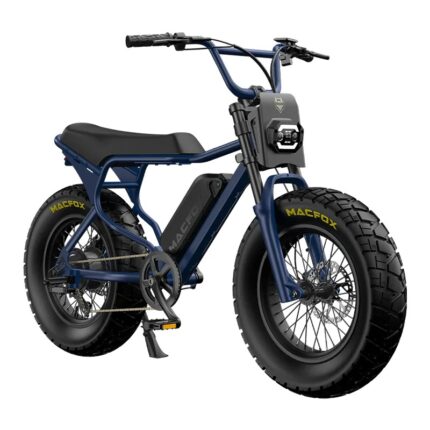
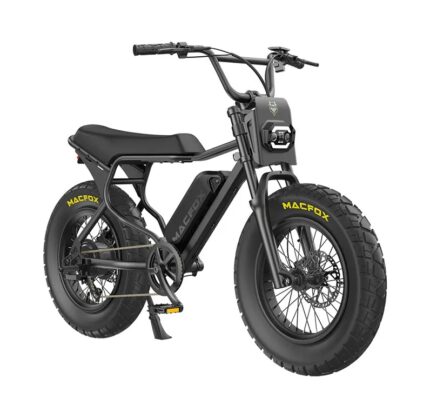
Ebikes In California
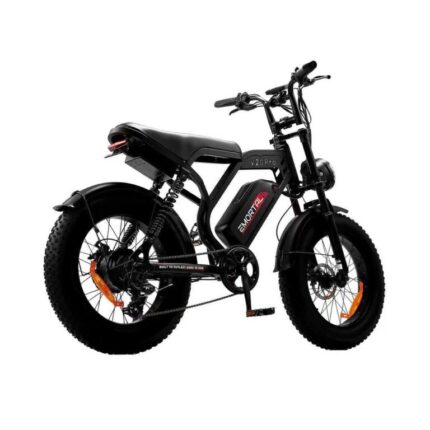
California has more electric bikes on the road than any other state, and it has the busiest rulebook to match. The state half is short: a motor of 750 watts or less, pedals that actually work, and one of three class labels. The local half is where riders get caught out, because a city, a county, a park district, or a federal land manager can each add rules on top.
The gap between those two halves is what produces most tickets. A bike that is perfectly legal in a San Diego bike lane may be barred from a Riverside County trail, limited to 10 mph on a sidewalk from next January, or, if the motor is oversized, treated as an unregistered motorcycle the moment an officer measures it.
That is also why buying matters more here than almost anywhere else. Browse our California-legal e-bikes by class and you will see a readable class label, a certified battery, and a stated top assisted speed on every listing, because those three things are what an officer, a park ranger, and your insurer will all ask about.
Are Ebikes Legal In California?
Yes. Electric bicycles are legal statewide and are treated as bicycles rather than motor vehicles, as long as they meet the definition in Vehicle Code § 312.5. Meeting that definition takes three things at once.
| Requirement | The Rule | Why It Matters |
|---|---|---|
| Operable pedals | The bike must have pedals a rider can actually use | A throttle-only machine with no pedals is not an e-bike |
| Motor size | 750 watts or less | Above 750W the bike becomes a moped or motorcycle |
| Class label | Must fit Class 1, 2, or 3 and be labeled | Unlabeled or out-of-class bikes lose bicycle status |
| Certified battery | Battery, charger, and bike certified to a recognized standard | Required for anything sold, leased, or rented since January 1, 2026 |
Miss any one of those and the bike is not an e-bike in the eyes of the Vehicle Code, whatever the seller called it. The California Highway Patrol sets out the same test in its bulletin on electric bicycles and other devices.
Is A 750W Ebike Legal In California?
Yes, 750 watts is the legal ceiling, not a grey area. A 750W motor is fine; a 1,000W or 1,500W motor is not an e-bike under state law, no matter how the listing is worded.
Two details trip people up. First, the rating that counts is the motor’s continuous output, not a peak figure a marketplace listing might advertise. Second, since January 1, 2026 a bike that can be switched past its class, through an “off-road mode” or a dealer unlock, is excluded from the definition even if it ships in a compliant state. Selling a device or kit that raises an e-bike’s speed beyond its class has itself been illegal since January 1, 2025.
What Are The Ebike Laws In California?
The core rules sit in Vehicle Code §§ 312.5, 21207.5, 21212, and 21213. They cover classes, helmets, minimum age, passengers, and path access. Everything else — sidewalks, trails, beach paths, school grounds — is set locally.
In practice that means a rider needs to know two things: the statewide floor, which never changes as you cross a city line, and the local layer, which changes constantly.
What Are The New Ebike Rules In California?
Four changes matter most right now, and two of them have not taken effect yet.
| Law | What Changed | In Effect |
|---|---|---|
| AB 1774 | Banned selling products that modify an e-bike beyond its class limits | January 1, 2025 |
| SB 1271 | Required certified, labeled bikes, batteries, and chargers; excluded easily modified bikes from the definition | January 1, 2026 |
| AB 2346 | Statewide default 10 mph sidewalk limit; lets cities post 10–20 mph limits on bike paths | January 1, 2027 |
| AB 2346 (equipment) | Speedometers on Class 2 bikes; front and rear lights on all e-bikes | January 1, 2029 |
Alongside those, AB 2595 creates a San Mateo County pilot barring children under 12 from certain lower-speed e-bikes, with a $25 fine for the parent or guardian, and SB 1167 targets retailers selling electric motorcycles as though they were e-bikes. Governor Newsom signed all three in October 2026, and CalMatters has the signing details.
Do You Need A License Or Registration For An Ebike In California?
No. A Class 1, 2, or 3 e-bike needs no driver’s license, no vehicle registration, no license plate, and no insurance. The Class 3 license requirement was removed in 2023 and has not come back.
That changes the instant the bike stops qualifying. A machine over 750 watts, or one that assists past 28 mph, is a motor vehicle: it needs registration, a plate, a license, and insurance, and in most cases it cannot be registered at all because it was never built to federal motorcycle standards. Riders in that position usually find out at a traffic stop.
Is California Cracking Down On Ebikes?
On illegal ones, yes. The enforcement push is aimed at two things: electric motorcycles sold as e-bikes, and underage riders on bikes they are not allowed to operate. Legal, labeled, correctly ridden e-bikes are not the target.
The pressure is coming from injury numbers. A UC San Diego study found an exponential rise in e-bike injuries across California, with children and teenagers heavily represented. Riverside County has gone further than most: its District Attorney has issued a public notice on parental criminal liability for reckless e-bike use, and the county has adopted an ordinance restricting where e-bikes may operate.
For a family, the practical takeaway is simple. Buy within class, keep the label readable, put a helmet on every rider under 18, and check your own county before letting a teenager ride unsupervised.
How Do Ebike Classes Work In California?
Three classes, split by whether there is a throttle and where the motor stops helping. The class is not a marketing tier; it determines age, helmet, and path access.
| Class | Throttle | Assist Cuts Out | Minimum Age | Helmet |
|---|---|---|---|---|
| Class 1 | No, pedal assist only | 20 mph | None statewide | Under 18 |
| Class 2 | Yes | 20 mph | None statewide | Under 18 |
| Class 3 | No, pedal assist only | 28 mph | 16 | All ages |
| Out of class | Any | Above 28 mph or over 750W | Not an e-bike | Motorcycle helmet |
Class 1 Ebikes In California
Pedal assist only, help stops at 20 mph. Class 1 is the most widely accepted class in the state: it has no statewide minimum age, it is allowed on bike paths and multi-use trails unless a local authority says otherwise, and it is the class most often permitted on natural-surface trails. If you want the widest choice of places to ride, this is the class to buy.
Class 2 Ebikes In California
Throttle plus pedal assist, both stopping at 20 mph. Class 2 is the easiest class to ride and the most restricted locally, because the throttle is what city councils and park districts react to. Marin County already runs a pilot barring riders under 16 from Class 2, and San Mateo County’s under-12 pilot is aimed at the same category. From January 1, 2029 every Class 2 bike sold in the state will need a speedometer.
Class 3 Ebikes In California
Pedal assist only, help continues to 28 mph. Class 3 carries the strictest personal rules: the rider must be at least 16, every rider and passenger wears a helmet regardless of age, and passengers are only allowed if the bike was built to carry them. Class 3 belongs on roads and in bike lanes; it is kept off Class I bike paths and multi-use trails unless the local authority specifically opens them.
What If Your Bike Does Not Fit A Class?
Then it is not a bicycle, and the rules change completely.
| Device | How California Treats It | What It Needs |
|---|---|---|
| Over 750W, or assist past 28 mph | Motorcycle or motor-driven cycle | License, registration, plate, insurance, M1 endorsement |
| No operable pedals | Moped or motorcycle, not an e-bike | Registration and license |
| Unlockable “off-road mode” | Excluded from the e-bike definition since January 2026 | Cannot be legally sold as an e-bike |
| Dealer-modified speed | Out of class; sale of the modifying product is illegal | Return to stock before road use |
These are the machines the new retailer rules are chasing. If a listing promises 40 mph, a 2,000W motor, or a mode that “removes the limiter,” it is not an e-bike, and no label will make it one.
Where Can You Ride Ebikes In California?
Roads and bike lanes are open to all three classes. Everything softer than that depends on the class and on who manages the land.
| Where | Class 1 | Class 2 | Class 3 |
|---|---|---|---|
| Roads and bike lanes | Yes | Yes | Yes |
| Class I bike paths and multi-use trails | Yes, unless locally prohibited | Yes, unless locally prohibited | Only if locally permitted |
| Natural-surface trails | Often, check the land manager | Narrower access | Rarely |
| Sidewalks | Local rule, 10 mph default from 2027 | Local rule, 10 mph default from 2027 | Local rule, 10 mph default from 2027 |
From January 1, 2027 cities and counties may also post speed limits between 10 and 20 mph on bike paths and multi-use trails, so expect signed limits on busy coastal and river paths before next summer.
Can You Ride An Ebike On The Sidewalk In California?
There is no single statewide answer today. California leaves sidewalk riding to local ordinance, so it is allowed in some cities, banned in others, and banned only in business districts in many. Checking your own city’s municipal code is the only reliable way to know.
That changes on January 1, 2027, when a statewide default limit of 10 mph applies to sidewalk riding. Local limits already on the books stay in force, so the new rule sets a floor rather than replacing what your city has decided.
Do You Need A Helmet To Ride An Ebike In California?
Sometimes, and the test is easy to remember: age or class.
- Every rider and passenger under 18 must wear a properly fitted, fastened helmet on any class of e-bike.
- Every Class 3 rider and passenger must wear one, at any age.
- Adults on Class 1 and Class 2 bikes are not required to, though the injury data makes a strong case.
The base fine for a helmet violation is modest, but assessments push the real cost well past the headline figure, and a crash without one is what turns a minor fall into a hospital admission in the UC San Diego figures.
Quick quiz: Which California e-bike setup fits you? This is a general guide, not legal advice.
Question 1: Who is the main rider?
- A. An adult commuting on roads: go to Question 2.
- B. An adult riding mostly paths and trails: choose Class 1, then go to Question 4.
- C. A rider under 18: go to Question 3.
Question 2: Do you need to keep up with 25 to 30 mph traffic?
- A. Yes: a Class 3 commuter suits you, and the helmet is mandatory. Go to Question 4.
- B. No, and I want path access too: choose Class 1 or 2. Go to Question 4.
Question 3: Is the rider 16 or older?
- A. Yes: Class 1, 2, or 3 are all open, with a helmet required on every one. Go to Question 4.
- B. No: Class 3 is off the table, and in Marin or San Mateo County check the local age pilot before buying Class 2. Go to Question 4.
Question 4: Will the bike be sold, leased, or rented in California?
- A. Bought new from a dealer: confirm the bike, battery, and charger carry a recognized certification label.
- B. Bought used: ask for the original receipt, check the class label is intact, and confirm nothing has been unlocked.
What Does An Ebike Cost In California?
Prices vary widely. Retail listings commonly run from around $1,200 for a basic hub-motor commuter to $8,000 or more for a premium mid-drive or cargo build. Budget on top of the bike for a certified spare charger, a serious lock, and secure overnight storage, and remember that sales tax applies to the full price.
The statewide California E-Bike Incentive Project is closed to new applications, so the savings now sit at the local level. Several air districts and electric utilities still run their own voucher or rebate programs, and those are worth checking against your ZIP code before you buy.
Frequently Asked Questions About Ebikes In California
What Do You Need To Know Before Buying Ebikes In California?
Check four things: the motor is 750 watts or less, the pedals work, the frame carries a visible Class 1, 2, or 3 label, and the bike, battery, and charger show a recognized certification mark. Since January 1, 2026 that certification is required for anything sold, leased, or rented in the state, and a bike with an unlockable off-road mode no longer counts as an e-bike at all.
What Happens If Your Ebike Exceeds The Legal Limits In California?
It stops being a bicycle. A machine over 750 watts, or one that assists past 28 mph, is a motorcycle or motor-driven cycle, which means license, registration, plate, and insurance. Most are never certified to federal motorcycle standards, so they cannot be registered at all, and riding one on a public road exposes you to unlicensed-driver and no-insurance citations.


