Blog
Ebikes In Colorado Made Simple For Every Rider And Every Trail
Buying an e-bike in Colorado is easy. Knowing where you can legally ride it is not. A bike that cruises a Denver bike lane may be banned from a Jefferson County singletrack or a national forest trail, and a citation or ranger stop can sour a good day out. This guide sorts it out using state statutes and official agency rules checked in October 2026: the three classes, where each may ride, what to verify before you buy, and which rebates are still open.
Key Takeaways
- A legal e-bike has working pedals, a motor of 750 watts or less, and fits Class 1, 2, or 3. It needs no license, registration, or insurance.
- Since August 6, 2025, a bike built to switch easily beyond its class, such as one with an “off-road mode,” is not an e-bike under state law.
- Class 3 operators must be at least 16, and anyone under 18 on a Class 3 must wear a helmet.
- The land manager, not your class label, decides dirt-trail access. U.S. Forest Service land treats every class as motorized.
- Every resident can take $225 off one qualifying new e-bike per calendar year at participating shops, and income-qualified buyers may add a $1,000 state rebate.
Table of Contents
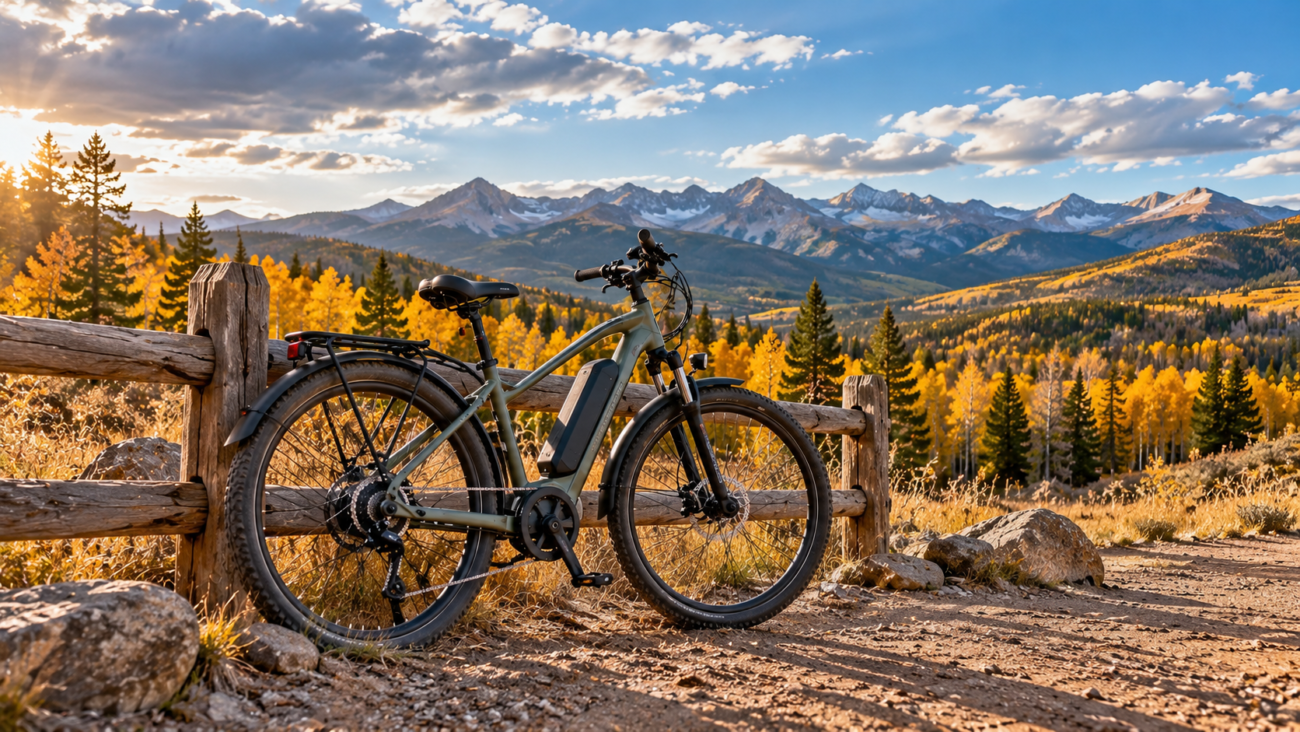
Colorado is one of the best states in the country to own an e-bike and one of the easiest to get wrong. The law is simple: 750 watts, working pedals, one of three classes. Trail access is the hard part, and it changes by county, city, and federal agency. Every bike we stock carries a readable class label and no hidden unlock mode, so you know exactly which trails stay open to you.
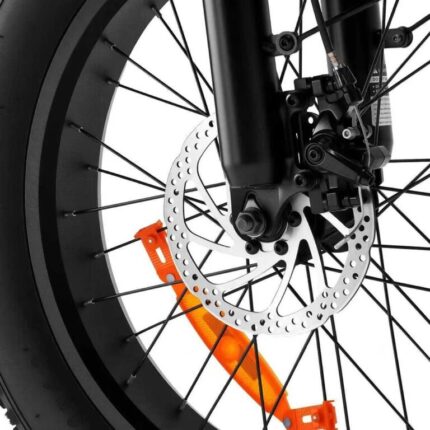
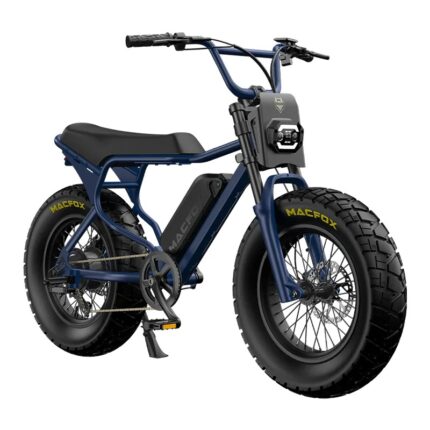
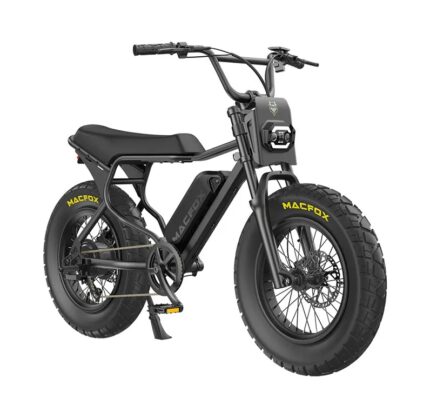
Ebikes In Colorado
Colorado has backed e-bikes harder than most states. In April 2024, it launched the nation’s first statewide e-bike tax credit.
Under state law, an e-bike has two or three wheels, fully operable pedals, and an electric motor of no more than 750 watts. If your bike meets that definition and one class limit, Colorado treats it as a bicycle.
The legal side is short. Access is trickier, because cities, counties, parks, and federal agencies set their own trail rules.
Are Ebikes Legal In Colorado?
Yes. A compliant electric bicycle has the same rights and duties as a bicycle on roads and in bike lanes. The three-class system came from HB17-1151 in 2017, which also let local governments allow or restrict e-bikes on their own paths.
Two limits define a legal machine:
- Motor output: 750 watts or less.
- Assisted speed: assist stops at 20 mph (Class 1 and 2) or 28 mph (Class 3).
Cross those limits and the vehicle is no longer an e-bike. The Jefferson County Sheriff’s Office explains the wattage-based vehicle classes: from 750 to 4,476 watts, it is a low-power electric vehicle needing a driver’s license, insurance, and registration. Above 4,476 watts, it is a motorcycle that also requires an endorsement.
After dark, you also need a white front light visible from 500 feet, a red rear reflector, and side reflectors or lights.
What Are The Recent Changes To Ebike Laws In Colorado?
The biggest update is HB25-1197, signed on May 28, 2025, and in effect since August 6, 2025. The official HB25-1197 bill summary lists the changes:
- A bike modified past its class, or designed to be easily configured past it, is no longer an e-bike.
- Sellers must disclose a bike’s characteristics at the point of sale.
- Marketing a non-e-bike as an e-bike without disclosure is a deceptive trade practice.
- Lithium-ion batteries must be certified by an accredited testing laboratory.
- From January 1, 2027, new e-bikes must be labeled with every class they can operate in.
The practical risk sits with “off-road mode” bikes, which may need a license, registration, and insurance. In 2026, Attorney General Phil Weiser issued a public advisory on the difference between e-bikes and e-motorcycles, and Bicycle Colorado plans to push for a new e-motorcycle law in 2027.
What Age And Helmet Rules Apply To Ebike Riders In Colorado?
No statewide minimum age applies to Class 1 or Class 2 bikes. Class 3 operators must be at least 16; a younger child may ride a Class 3 only as a passenger on a bike designed for passengers.
The state helmet rule covers Class 3 only: anyone under 18 operating or riding as a passenger must wear one. Some local governments add their own rules.
Injuries are the bigger concern. Children’s Hospital Colorado reported a 184% increase in traumatic e-bike injuries at its Anschutz campus from 2024 to 2025, although those counts include e-motorcycles. A helmet on every child, on every class, is the safer default.
How Do DUI Laws And Safe Passing Rules Affect Ebike Riders In Colorado?
Colorado’s impaired-driving statute applies to people operating a vehicle, and state law defines bicycles as vehicles. Riding an e-bike impaired can therefore lead to a DUI charge at 0.08 percent blood alcohol, or a DWAI charge at lower levels. For case-specific questions, talk to a defense attorney.
Drivers have duties too. CDOT’s three-foot passing guidance confirms motorists must give bicyclists and e-bike riders at least three feet when passing. Riders 15 and older may also use the Safety Stop Law, treating stop signs as yield signs and red lights as stop signs after yielding.
After a crash, call 911 if anyone is hurt, photograph the scene and your bike’s class label, and collect witness contacts.
What Are The Ebike Classes In Colorado And How Do They Differ?
Use this table to match your bike’s class to its rules:
| Class | How The Motor Helps | Assist Stops At | Rider Rules | Usual Access |
|---|---|---|---|---|
| Class 1 | Only while pedaling | 20 mph | No state age or helmet rule | Roads, paths, many dirt trails |
| Class 2 | Throttle or pedaling | 20 mph | No state age or helmet rule | Roads, most paved paths |
| Class 3 | Only while pedaling, speedometer required | 28 mph | Age 16+, helmet under 18 | Roads and bike lanes |
Before paying, find the manufacturer label, usually near the bottom bracket or seat tube. It should list class, top assisted speed, and motor wattage. A missing label, or a seller boasting that the bike can “unlock” more speed, is a reason to walk away.
Are Class 3 Ebikes Legal In Colorado?
Yes, on public streets and in bike lanes. Riders must be at least 16, the bike needs a working speedometer, and anyone under 18 must wear a helmet.
The catch is paths. State law keeps Class 3 bikes off bike and pedestrian paths unless the path sits within a street or a local authority allows them. Jefferson County Open Space limits them to roads and parking lots, and El Paso County bars them from county trails.
Where Are Ebikes Allowed On Trails And Paths In Colorado?
Class 1 and 2 e-bikes may generally use paths where bicycles are allowed, unless a local government says otherwise. On natural-surface trails, the land manager decides:
| Land Manager | Class 1 | Class 2 | Class 3 |
|---|---|---|---|
| Colorado State Parks | Trails open to bikes | Trails open to bikes | Roads and bike lanes only |
| Jefferson County Open Space | Natural and paved trails | Paved trails only | Roads and parking lots only |
| El Paso County Parks | Primary and secondary trails, 20 mph | Primary and secondary trails, 20 mph | Not on county trails |
| Colorado Springs city trails | Where other bikes are allowed (phased) | Limited, check signs | Not on trails |
| U.S. Forest Service | Motorized routes only | Motorized routes only | Motorized routes only |
| Bureau of Land Management | Varies by trail | Varies by trail | Varies by trail |
Colorado Springs shows how fast this shifts. In February 2025, City Council voted 6-3 to allow Class 1 e-bikes where other bikes are allowed, but parks leaders said TOPS-funded open space would not open immediately, and opponents argued only voters can approve that. On national forest land, e-bikes stay on routes open to motor vehicles on the district’s Motor Vehicle Use Map. Posted trailhead signs always win.
Can You Ride Ebikes On The Sidewalk In Colorado?
It depends on the city. State law lets Class 1 and 2 e-bikes go where bicycles may, including sidewalks, unless a local ordinance or sign says otherwise. Class 3 bikes generally stay off sidewalks unless a local rule allows them.
Many downtowns restrict sidewalk riding. Search your city’s code for “electrical assisted bicycle” and “sidewalk,” and yield to pedestrians wherever riding is allowed.
Are Ebikes Allowed In Colorado State Parks?
Yes, with limits. Under Colorado Parks and Wildlife’s state park e-bike rules, Class 1 and 2 bikes may use park roads, bike lanes, campgrounds, and multi-use trails open to non-motorized biking. Class 3 bikes are limited to designated roads and bike lanes. No OHV registration is needed.
State Wildlife Areas are stricter: e-bikes stay on designated roads and in camping or parking areas open to motor vehicles, and visitors need a valid hunting or fishing license.
Where Can You Find Electric Bikes For Sale In Colorado?
Buy from a seller that can prove the bike is legal. Specialist e-bike shops usually offer test rides, fitting, and battery support, while direct-to-consumer brands may cost less but often rely on mail-in service.
To claim the state discount, buy new from a participating retailer, and make sure the bike carries UL 2849 or EN 15194 certification. Run through this checklist first:
| Check | What To Confirm | Why It Matters |
|---|---|---|
| Class label | Class, top speed, wattage | Proves e-bike status and trail eligibility |
| Motor rating | 750 watts or less | Above this, licensing applies |
| Speed modes | No “off-road” or unlock setting | Such bikes lost e-bike status in 2025 |
| Safety certification | UL 2849 or EN 15194 logo | Required for the state discount |
| Retailer status | Registered participating retailer | Needed for the $225 discount |
Not sure which class suits your routes? Our team can walk you through class, fit, and incentive paperwork before you commit.
Which Ebike Shops Serve Boulder And Colorado Springs Riders?
Shops change rebate participation often, so start with the Colorado Energy Office’s participating retailer list. The state notes the list is self-reported, so call ahead to confirm.
Boulder’s dense bike network suits commuter and cargo models. Colorado Springs riders face long climbs and evolving trail access, so a Class 1 bike keeps the most options open.
Buying used? Ask for battery age and the original receipt, test the motor on a hill, and confirm the class label remains. State incentives apply only to new bikes.
What Is The Best Electric Bike For Colorado Terrain?
The best e-bike matches your route, not the biggest spec sheet.
- Mountain models: A Class 1 mid-drive with hydraulic disc brakes fits the most trail systems.
- Commuter models: Class 3 helps on long Front Range roads but limits path access.
- Cargo models: Look for a sturdy frame, low step-through, and a stated load limit.
Steep climbs, cold mornings, and heavy loads cut battery range, so plan a buffer between towns.
Quick quiz: Which Colorado e-bike setup fits you? This is a general guide, not legal advice.
Question 1: Where will you ride most?
- A. Dirt trails: go to Question 2.
- B. Roads and bike lanes: go to Question 3.
- C. Errands and school runs: consider a Class 1 or 2 cargo bike, then go to Question 4.
Question 2: Which trails?
- A. State parks or Jefferson County: a Class 1 e-mountain bike gives the widest access. Go to Question 4.
- B. National forest: check the Motor Vehicle Use Map first. Go to Question 4.
Question 3: Are you 16 or older and riding mostly faster roads?
- A. Yes: a Class 3 commuter may suit you. Go to Question 4.
- B. No, or I also want paths: choose Class 1 or 2. Go to Question 4.
Question 4: Is your household income at or below 80% of your county’s median?
- A. Yes: register for the next state rebate window and pair it with the $225 discount.
- B. No: claim the $225 discount, and Denver residents should check city voucher limits.
How Much Does An Electric Cargo Bike Cost In Colorado?
Prices vary widely. Retail listings commonly run from about $1,800 for basic hub-motor cargo bikes to $8,000 or more for premium mid-drive haulers. Budget for racks, a quality lock, and secure storage, and remember sales tax is due on the full price.
Take a hypothetical Denver couple pricing a $4,000 cargo bike. Denver’s income-capped voucher plus the state discount would take $900 off. A state rebate with the cargo bonus plus the discount would take $1,525 off. They cannot combine the Denver voucher and state rebate, so their next step is checking which program they qualify for first.
Are There Ebike Rebates And Discounts Available In Colorado?
Yes. Every resident can get a $225 instant discount on one qualifying new e-bike per calendar year at a participating retailer, with proof of a Colorado address dated within three months. The discount fell from $450 on January 1, 2026, and the state says it runs through 2032.
| Program | Amount | Who Qualifies | Combines With $225? |
|---|---|---|---|
| State tax credit | $225 off | All residents | Not applicable |
| State income-qualified rebate | $1,000, plus $300 for cargo or adaptive | Income at or below 80% of county AMI | Yes, at shops in both programs |
| Denver standard rebate | $675 | Denver residents 16+ under income cap | Yes, up to $900 |
| Denver adaptive rebates | $625 or $1,175 | Denver residents needing adaptive bikes | Yes |
The state relaunched its income-qualified rebate on August 24, 2026, funding more than 2,800 lottery vouchers. Bike Colorado Springs lists further windows of October 19 to 26, 2026, and January 11 to 18, 2027, and each person gets only one lifetime state rebate. Denver’s 2026 releases have passed, and its voucher plus the state discount can cover no more than 80 percent of the pre-tax price.
Is any e-bike free? No. Stacked savings still leave a balance. Bring proof of address and any voucher when you shop, and we can help confirm eligibility before checkout. If you are buying outside the state programs, we offer in-house financing with $800 down, no credit check and no interest, and you can browse the full range here.
Frequently Asked Questions About Ebikes In Colorado
Are Ebikes In Colorado Legal Without A License Or Registration?
Yes. A Class 1, 2, or 3 e-bike with a motor of 750 watts or less needs no license, registration, or insurance. Vehicles above that limit, or built to switch past their class, are treated as low-power electric vehicles or motorcycles.
Can You Ride Ebikes On Colorado Singletrack Trails?
Sometimes. Class 1 e-bikes are allowed on many natural-surface trails, including state park and Jefferson County Open Space trails. Class 2 access is narrower, Class 3 is rarely allowed, and Forest Service non-motorized trails are closed to every class.


