Blog
Ebikes In Connecticut: Registration, Insurance, Legally Ride
Bought an e-bike, or about to, and unsure what Connecticut expects from you? Here is the short answer: ebikes in Connecticut are legal, and a compliant Class 1, 2, or 3 model needs no license, registration, or insurance. The catch is that the state tightened its rules in October 2025, so overpowered or modified machines can now count as motor vehicles, and every rider must wear a helmet. This guide, from a team that sells and services e-bikes, explains what that means for you.
Key Takeaways
- A compliant e-bike needs working pedals, a motor of no more than 750 watts, and a Class 1, 2, or 3 rating.
- No license, registration, or insurance is required for any compliant class.
- Every e-bike rider and passenger must wear a helmet, at any age, on any class.
- Riders under 16 cannot operate a Class 3, and Class 3 bikes are barred from bike paths and multiuse trails.
- A pedal-free machine above 750 watts is a motor-driven cycle, so the rider needs a driver’s license.
- Connecticut’s e-bike voucher has run in two short rounds, and no new round is currently open.
Table of Contents
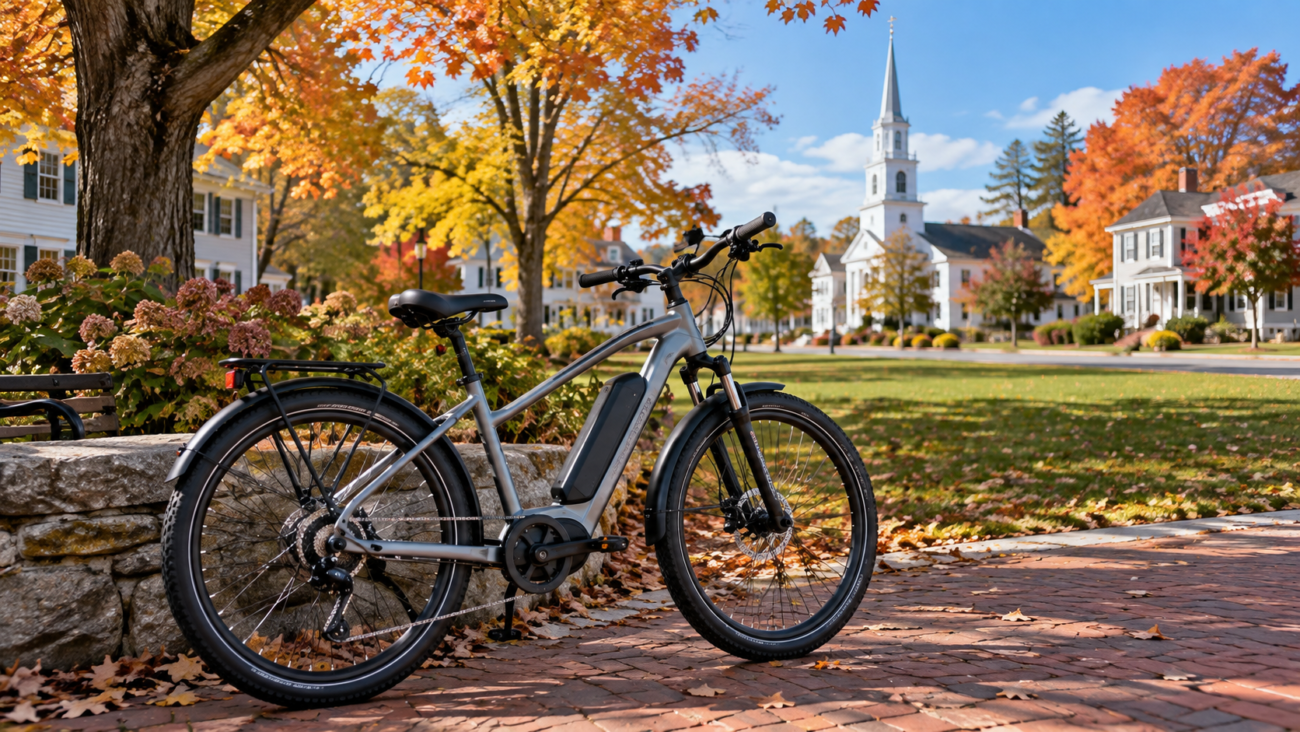
Connecticut rewards riders who buy the right machine. Stay under 750 watts with working pedals and a proper class label, and you skip the DMV entirely. Go over the line and you are suddenly looking at a driver’s license and a possible impound. Every bike we stock carries a readable class label, and we will check a model against Connecticut’s rules before you order it.
Ebikes In Connecticut
Connecticut treats a compliant e-bike much like a regular bicycle. You share the road, follow the same traffic rules, and skip the DMV entirely. What has changed is the flood of moped-style machines sold as “e-bikes,” which is why riders and parents keep asking what is allowed.
Most questions come down to four things: whether your machine legally counts as an e-bike, what equipment you need, how old riders must be, and where you can ride. State law sets the baseline, towns and land managers can add restrictions, and each question is answered below in that order.
Are Ebikes Legal In Connecticut?
Yes. Electric bicycles are legal statewide, and their riders carry the same rights and duties as people on ordinary bicycles. For a standard e-bike, that means no permit, no plate, and no insurance policy.
Step outside the legal definition, though, and the law treats your ride as a motor-driven cycle or a motorcycle.
Enforcement mostly lands on overpowered or altered machines. When the 2025 law took effect, police described a $100 fine for riding a modified e-bike and possible impound when someone under 16, or without a driver’s license, rides a motor-driven cycle.
What Counts As An Ebike Under Connecticut Law?
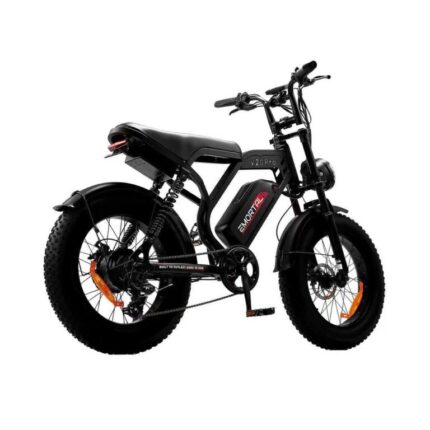
A Connecticut e-bike has operable pedals, an electric motor of no more than 750 watts, and an assisted top speed that fits Class 1, 2, or 3. Three kinds of machines fall outside that definition:
- Machines with no working pedals and a motor above 750 watts
- Throttle bikes that push past 20 mph on motor power alone
- Electric dirt bikes and ATVs, which a 2026 amendment names as excluded
Manufacturers must attach a label showing the class, top assisted speed, and motor wattage. If someone modifies the bike so it changes class or stops qualifying, the label has to change too. Marketing a non-qualifying vehicle as an “e-bike” is treated as a deceptive trade practice.
Quick quiz: is my bike legally an e-bike? This is a general guide, not legal advice. Start at Question 1.
Question 1: Can the pedals actually move the bike?
- Yes: go to Question 2.
- No: it is not an e-bike. Use the watt table below to find its category.
Question 2: Does the label show 750 watts or less?
- Yes: go to Question 3.
- No, or no label: treat it as a possible motor-driven cycle until the seller confirms the rating in writing.
Question 3: Does it have a throttle?
- Yes: go to Question 4.
- No: go to Question 5.
Question 4: Does the throttle stop pushing at 20 mph?
- Yes: it is likely a Class 2.
- No: it is not an e-bike.
Question 5: Where does pedal assist cut out?
- At 20 mph: likely a Class 1.
- At 28 mph: likely a Class 3, so the rider must be 16 or older.
- Above 28 mph: it is not an e-bike.
If the controller, firmware, or speed settings were changed, your result may no longer apply.
What Is The Legal Motor Watt Limit For Ebikes In Connecticut?
The ceiling is 750 watts. At or below that, with working pedals and a proper class, the machine stays a bicycle. Above it, the category depends on the motor and seat height, as this table shows.
| Vehicle | Legal Category | Driver’s License | Registration and Insurance |
|---|---|---|---|
| Working pedals, motor of 750W or less, Class 1 to 3 | E-bike | No | No |
| Seat 26 inches or higher, motor above 750W up to 3,700W | Motor-driven cycle | Yes, standard license | No DMV registration |
| Motor above 3,700W | Motorcycle | Yes, with motorcycle endorsement | Yes |
The 3,700-watt figure comes from the state’s legislative research report on Public Act 25-159. Some early police notices quoted 3,500 watts, so rely on the statute rather than older handouts. Motor-driven cycles also cannot be ridden on sidewalks.
Buyer beware: tuning kits, speed dongles, and firmware unlocks can turn a legal bike into a motor-driven cycle overnight. The frame label stops protecting you once the controller says otherwise.
When Did Connecticut’s Updated Ebike Definition Take Effect?
The major update took effect on October 1, 2025, through Public Act 25-159. It created the electric motor-driven cycle category, added modification and labeling penalties, and made helmets universal for e-bike riders.
Connecticut first adopted its three-class system in 2018, defining an e-bike motor as “fewer than” 750 watts, which left a motor rated exactly 750 watts in a gray area. Public Act 26-24, effective October 1, 2026, changes the cap to “not more than” 750 watts and writes dirt bikes and ATVs out of the definition. If you bought your bike before either date, re-check its label.
How Does Connecticut Classify Ebikes Into Three Classes?
Connecticut sorts legal e-bikes into three tiers, and the tier decides who may ride and where. Use this comparison when you shop.
| Class | How Assist Works | Assist Stops At | Rider Age | Bike Paths and Multiuse Trails |
|---|---|---|---|---|
| Class 1 | Pedal-assist only | 20 mph | No state minimum | Allowed unless locally restricted |
| Class 2 | Throttle or pedal-assist | 20 mph | No state minimum | Allowed unless locally restricted |
| Class 3 | Pedal-assist only | 28 mph | 16 or older | Not allowed |
Pedal-assist adds power only while you pedal, while a throttle can move the bike without pedaling. Read the label rather than guessing from the bike’s looks.
Are Class 2 Throttle Ebikes Legal In Connecticut?
Yes. Class 2 throttle e-bikes are legal and share Class 1 access rules. The throttle simply has to stop adding power at 20 mph.
Throttles suit hilly commutes, cargo hauling, and riders returning after an injury. The main limit is natural-surface trails, where land managers sometimes allow only pedal-only bikes.
Use case: a hilly school run. Picture a parent who wants to replace short car trips with a Class 2 cargo bike for school drop-off. The steps are simple: choose a bike with a proper passenger seat and footrests, put helmets on both riders, and map a route on roads and painted lanes before trying the town greenway. The limitation is that local path rules may push the route onto busier streets.
Where Can I Ride A Class 3 Ebike In Connecticut?
Class 3 e-bikes belong on roadways and in on-street bike lanes. State law bars them from bicycle trails, bicycle paths, and multiuse trails and paths, and police departments such as Glastonbury also list sidewalks as off limits. The reason is speed: assistance to 28 mph suits traffic, not crowds of walkers and dogs. Plan commutes around roads with wide shoulders or painted lanes.
Do I Need A License, Registration, Or Insurance For An Ebike In Connecticut?
No, not for a compliant e-bike. Taking each requirement separately:
- License: Not required for any class. A driver’s license applies to motor-driven cycles, and a motorcycle endorsement applies to motorcycles.
- Registration: E-bikes are not registered with the DMV and carry no plates.
- Insurance: The state does not require coverage for any e-bike class.
Compliant machines skip this paperwork because the law treats them as bicycles.
Practical tip: no mandate does not mean no risk. Ask your homeowners or renters insurer whether e-bikes are covered for theft and liability, because some policies exclude motorized bikes. If yours does, compare standalone bicycle policies.
Do I Need A Helmet To Ride An Ebike In Connecticut?
Yes. Every e-bike rider and passenger must wear a helmet, with no age or class exception. Riding without one is an infraction, and police described a $90 fine when the change took effect. This trips up newcomers, because the regular bicycle helmet law focuses on younger riders. On an e-bike, adults are covered too.
Getting the helmet right matters as much as wearing one:
- Look for a CPSC certification sticker inside the shell.
- Sit it level, about two finger widths above your eyebrows.
- Replace it after any crash, even if it looks undamaged.
What Is The Minimum Age For Riding An Ebike In Connecticut?
The age floor is 16 for operating a Class 3 e-bike. Class 1 and Class 2 have no statewide minimum, although towns, schools, and parks can set their own rules, and some Connecticut schools now bar e-bikes from campus.
A rider under 16 may ride on a Class 3 only as a passenger, and only if the bike is designed to carry one.
Use case: a teenager’s first e-bike. Imagine a 15-year-old asking for a 2,000-watt, pedal-free “e-bike” seen online. That machine fails Question 1 of the quiz, making it a motor-driven cycle that requires a driver’s license a 15-year-old cannot hold. A Class 3 is also off the table until 16. A properly fitted Class 1 is the legal option, and most parents will welcome its lower assisted speed.
Where Can You Legally Ride An Ebike In Connecticut?
You can ride on public roads and in bike lanes, following the same rules as any cyclist. Ride with traffic, obey signals, use hand signals, and keep right unless passing, turning left, or avoiding hazards. Limited-access highways are closed to bicycles, and state law lets towns regulate e-bike use, so local access can differ.
The table below summarizes typical access by class.
| Surface | Class 1 | Class 2 | Class 3 |
|---|---|---|---|
| Public roads and bike lanes | Yes | Yes | Yes |
| Paved shared-use bike paths | Generally yes | Generally yes | No |
| Natural-surface trails | Land manager decides | Land manager decides | No |
| Sidewalks | Town rules decide | Town rules decide | Usually no |
| Limited-access highways | No | No | No |
Riding after dark: local police guidance from Glastonbury calls for a white front light visible from 500 feet, a red rear light or reflector visible from 600 feet, and side reflectors.
Are Ebikes Allowed On Trails And Bike Paths In Connecticut?
Paved greenways and bike paths generally welcome Class 1 and Class 2 e-bikes, while Class 3 is excluded by state law. On natural surfaces, state parks, conservation commissions, and land trusts set their own conditions, and some allow no motorized bikes at all.
Read the trailhead sign first, ring a bell before passing walkers, and yield to horses.
How Does The Connecticut Ebike Incentive Program Work?
Connecticut’s eBike Incentive Program is a state voucher that cuts the price of a qualifying new e-bike at the register. It sits under CHEAPR, was created by the 2022 Connecticut Clean Air Act, and is run by the Department of Energy and Environmental Protection.
The official eBike program page explains that residents aged 18 or older applied for a voucher before buying, then redeemed it at a participating brick-and-mortar Connecticut retailer. Eligible bikes needed an MSRP under $3,000 and recognized battery safety certification. Here is how the two rounds compared.
| Detail | Round 1 (2023) | Round 2 (2024) |
|---|---|---|
| Application window | Opened June 28, closed after 10 days | September 17 to October 1 |
| Standard voucher | $500, though none were issued | $500 |
| Enhanced Voucher+ | $1,500 total | $1,250 total |
| How vouchers were awarded | First come, first served | Tiered lottery, income-qualified first |
| Time to redeem | 90 days | 240 days |
Demand far outran funding. According to a DEEP press release, 468 vouchers were awarded in Round 1 from more than 6,000 applications.
DEEP’s program page still shows Round 2 as closed, and no new round has been officially opened. Join DEEP’s eBike mailing list for updates, but do not delay a needed purchase on the assumption that a voucher is coming.
Who Sells Ebikes In Connecticut?
Connecticut riders can buy from local bike shops or online brands that ship into the state. Either way, look for a clear class label, a written warranty, a battery with recognized safety certification, and a realistic service plan.
Local shops offer test rides, fitting, and hands-on diagnosis, and only participating in-state shops can redeem state vouchers. Online sellers offer wider selection and flexible payment, but repairs may mean shipping parts back and forth. Ask every seller who fixes the bike when the motor cuts out in month eight.
We sell and service e-bikes at Ebike Plugs. We are not a Connecticut voucher retailer, so voucher holders should buy from a participating local shop. Otherwise, we offer in-house financing with $800 down, no credit check, and no interest, and we can confirm a model’s class label fits Connecticut rules before you order. Browse the full range here.
Frequently Asked Questions About Ebikes In Connecticut
What Ebike Rules Apply Across Connecticut?
Statewide, a compliant e-bike has working pedals, a motor of no more than 750 watts, and a Class 1, 2, or 3 label. Riders need no license, registration, or insurance. Every rider and passenger must wear a helmet. Riders under 16 cannot operate Class 3, and Class 3 is barred from bike paths and multiuse trails.
Which Ebike Class Is Best For Connecticut Roads?
It depends on your trip. Class 1 offers the widest access, including most shared paths. Class 2 adds a throttle for hills and cargo with the same access. Class 3 suits longer road commutes at up to 28 mph, but it stays on roads and bike lanes and requires riders aged 16 or older.


