
Blog
Ebikes In Florida: Registration, Ride Or Buy An Electric Bike
Ebikes in Florida need no driver license, registration, or insurance, as long as the bike fits the state definition: working pedals, a seat, a motor under 750 watts, and a Class 1, 2, or 3 rating. Riders and passengers under 16 must wear a helmet. The catch is everything around that rule. A tuned controller can turn a legal bike into a motor vehicle, and a path open in one city may be closed in the next.
Key Takeaways
- A qualifying e-bike is exempt from Florida’s license, registration, title, and insurance laws.
- Class 1 and 2 motors stop assisting at 20 mph, Class 3 at 28 mph, and only Class 2 may run on throttle alone.
- Riders and passengers under 16 must wear a helmet meeting the federal bicycle standard.
- There is no statewide minimum age, but cities and counties may set one and require photo ID.
- SB 382, the 2026 bill capping speeds near pedestrians, was vetoed, so existing law stands.
- Changing a bike’s motor speed without relabeling it breaks state law.
Table of Contents
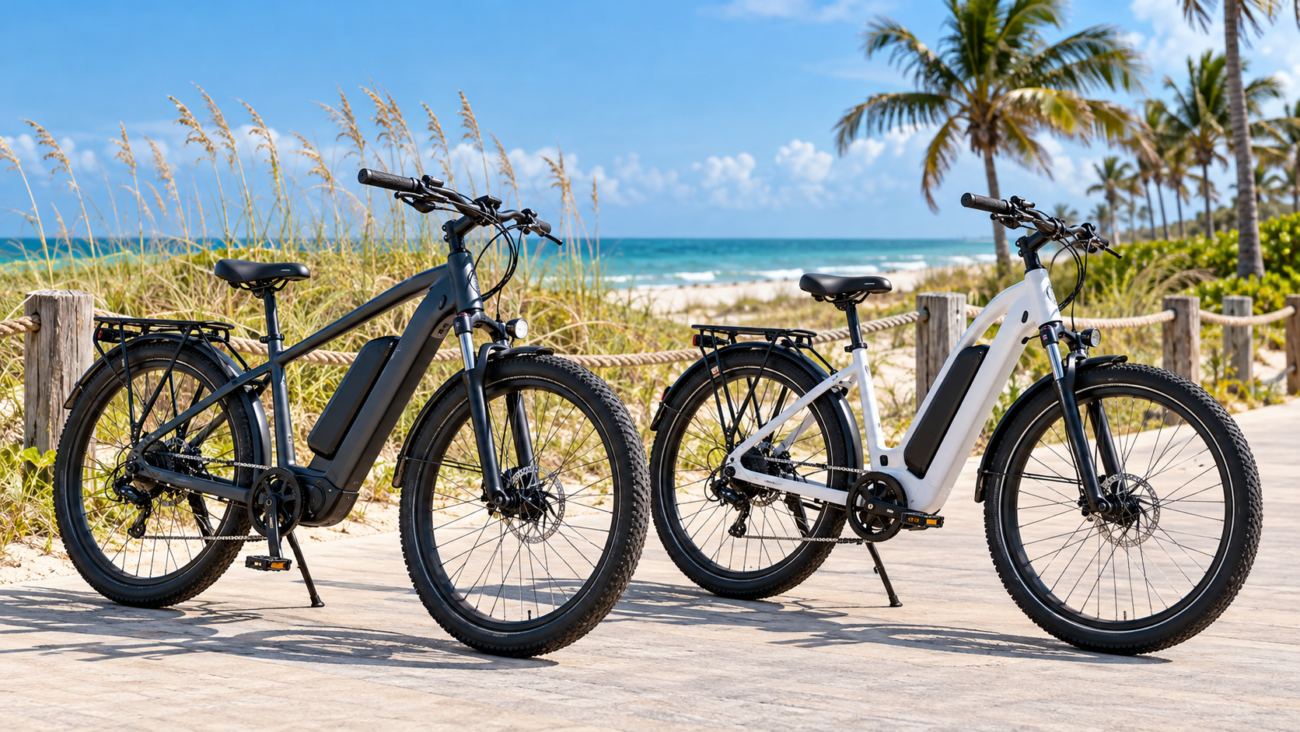
Florida keeps e-bike ownership simple. If your bike has working pedals and stays under 750 watts, there is no license, registration, or insurance to deal with. The complications are local: a path open in Sarasota may be closed in Palm Beach, and several cities changed their rules during 2026. Every bike we stock carries its class and wattage on the label before it leaves the floor, so you can check it against your own city’s rules and get on with riding.
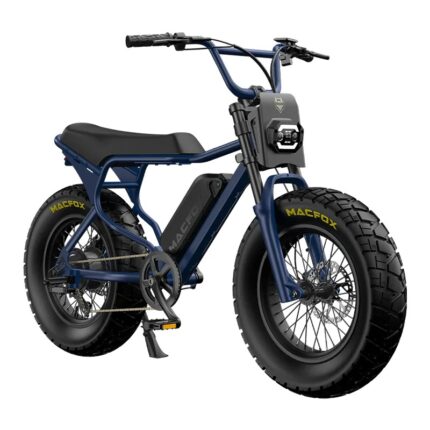
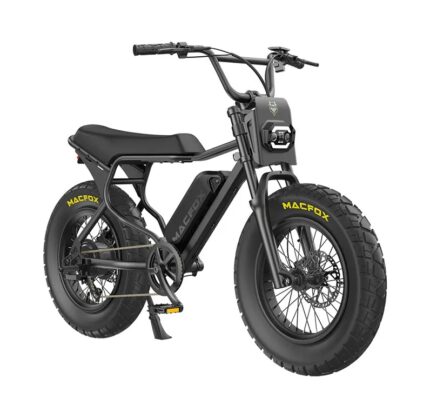
Ebikes In Florida
Flat terrain and mild winters make Florida a natural fit for electric bikes, and pedal assist takes the sting out of long distances and summer heat.
The legal starting point is simple: Florida treats a qualifying e-bike as a bicycle, not a moped or scooter. That classification drives most answers in this guide. What changes from place to place is the local layer, because cities, counties, and trail managers can add their own rules, and several did in 2026.
How Does Florida Define An Electric Bike?
Under section 316.003 of the Florida Statutes, an electric bicycle is a bicycle or tricycle with fully operable pedals, a seat or saddle, and an electric motor of less than 750 watts that fits one of three classes. A motor rated at exactly 750 watts falls outside the definition.
Florida’s electric bicycle statute, section 316.20655, gives a qualifying e-bike the rights and duties of a bicycle and exempts it from laws on financial responsibility, driver licenses, registration, and titles.
The same section requires a permanent manufacturer label showing the class, top assisted speed, and motor wattage. The bike must meet federal bicycle equipment rules, and the motor must disengage when the rider stops pedaling or brakes. A pedal-less electric motorbike falls under moped or motorcycle rules instead.
What Electric Bikes Are Street Legal In Florida?
A street-legal e-bike has working pedals, a motor under 750 watts, assist that cuts off at its class speed, and the class label. If a seller cannot tell you the class and wattage, treat that as a warning sign.
Can a 1000-watt e-bike use Florida roads? Not as an e-bike. Moped or motorcycle rules apply, which generally means registration and a licensed rider.
Buyer beware: state law bars tampering with an e-bike to change its motor-powered speed or engagement unless the class label is replaced afterward. Unlocking a limiter, adding a throttle to a Class 1 or 3 bike, or fitting a stronger controller can also push it outside every class.
Quick check: is your e-bike street legal? This is general information, not legal advice.
Question 1: Does the bike have working pedals and a seat?
- Yes: go to Question 2.
- No: it is not an e-bike. Check moped and motorcycle rules before riding on roads.
Question 2: Does the label show a motor under 750 watts?
- Yes: go to Question 3.
- No, or no label: it likely falls outside the definition. Ask the seller for documentation.
Question 3: When does the motor stop helping?
- At 20 mph: Class 1 or 2. Go to Question 4.
- At 28 mph, pedal assist only: Class 3. Go to Question 4.
- Past those speeds, or unlocked: it fits no class. Restore factory settings or treat it as a motor vehicle.
Question 4: Will any rider or passenger be under 16?
- Yes: a fitted helmet is required. Then check your city’s age rules.
- No: the bike fits the state definition. Check local rules for your routes.
Not sure about a model? Message our team with its name, and we will help you confirm its class and wattage before you buy.
What Are The Three Ebike Classes In Florida?
The difference is how the motor helps and when it stops.
| Class | How the Motor Helps | Assist Stops At | Often Suits |
|---|---|---|---|
| Class 1 | Pedal assist only | 20 mph | Casual riders, busy paths |
| Class 2 | Pedal assist plus throttle | 20 mph | Riders who need help starting |
| Class 3 | Pedal assist only | 28 mph | Longer road commutes |
Choose by where you ride most, not top speed. A Class 3 bike gains little on a crowded waterfront path, and some trail managers restrict higher classes.
Use case: a Sarasota County commuter. A hypothetical rider commutes about 10 miles each way, mostly in bike lanes, with a short shared path near work. Class 3 is legal on roads and bike lanes, so it fits. Her plan: buy a labeled Class 3 model, check county rules for the path segment, yield to pedestrians there, and wear a helmet by choice. The result is a faster commute. The limitation is longer stopping distances and possible future path limits.
What Are The Current Florida Ebike Laws?
The core law sits in sections 316.003, 316.20655, and the state bicycle regulations in section 316.2065, which apply to e-bike riders. In practice, you must:
- Obey traffic signals, signs, and right-of-way rules
- Ride in the bike lane, or near the right edge, when slower than traffic, except when passing, turning left, or avoiding hazards
- Use a white front lamp visible from 500 feet and a red rear lamp and reflector visible from 600 feet between sunset and sunrise
- Ride no more than two abreast on a roadway, and only when you do not impede traffic
- Have brakes that stop the bike within 25 feet from 10 mph on dry, level pavement
- Carry passengers only on a bike designed or equipped for them
What happened in 2026: CS/SB 382 passed both chambers unanimously. It would have barred riding faster than 10 mph within 50 feet of a pedestrian. Governor DeSantis vetoed it on June 25, 2026, writing that the standard would be hard to measure and could invite more local surveillance. Current law stands, though a co-sponsor has signaled interest in trying again.
Myth: a motor means motor vehicle rules apply. Fact: a qualifying bike is treated as a bicycle. Impairment is the notable exception, covered below.
Can Florida Cities Or Counties Set Their Own Ebike Rules?
Yes. Local governments can regulate e-bikes on streets and sidewalks they control, and agencies managing paths, trails, beaches, and dunes can restrict or ban them. Cities and counties may also set minimum ages and require government-issued photo ID.
- Deltona passed an under-18 ban in July 2026, then removed it after the Volusia County sheriff declined to enforce it.
- Jacksonville approved a 15 mph limit on sidewalks and shared-use paths in September 2026, effective 60 days after the mayor signs it.
- Fort Lauderdale was reviewing a draft in October 2026 with a minimum age of 16 and an ID rule.
- Palm Beach prohibits e-bikes on the Lake Trail and town sidewalks.
| Topic | Statewide Rule | Can Local Rules Change It? |
|---|---|---|
| Minimum age | None | Yes, by ordinance |
| Photo ID | Not required | Yes, by ordinance |
| Sidewalk riding | Allowed, pedestrian duties apply | Yes, can restrict or ban |
| Paths, trails, beaches | Allowed where bicycles go | Yes, managing agency decides |
Tip: in an unfamiliar town, search the city code for “electric bicycle” and read signs at path entrances.
What Are The Ebike Speed Limits In Florida?
Class 1 and 2 motors stop assisting at 20 mph, Class 3 at 28 mph. These are assist cutoffs, not road speed limits.
Pedaling faster under your own power does not change the class, but posted limits still apply. Local rules can go lower, such as Jacksonville’s 15 mph sidewalk cap, and state trails may post their own. Jacksonville’s ordinance also prohibits careless or reckless riding on paths and sidewalks.
Do You Need A License Or Registration To Ride An Ebike In Florida?
No. A qualifying e-bike needs no license, title, registration, or plate. The official FLHSMV vehicle guidance confirms this and tells riders to check stricter local ordinances.
Impairment is different. Florida’s DUI statute covers any vehicle, a Florida appeals court has held that it applies to bicyclists, and courts have revoked driver licenses after bicycle DUI convictions. If you have a suspended license or pending DUI case, ask a Florida traffic attorney before relying on an e-bike.
| Requirement | Qualifying E-Bike | Moped | Over-Limit Motorbike |
|---|---|---|---|
| Driver license | Not required | Required | Generally required |
| Registration | Not required | Required | Generally required |
| State minimum age | None | 16 | 16, with license |
How Old Do You Have To Be To Ride An Ebike In Florida?
Florida has no statewide minimum age for any class. Some guides claim Class 3 riders must be 16, but the statute contains no such rule. Local governments can set minimum ages.
A bike may carry only as many people as it was designed or equipped for, and a child under 4 or weighing 40 pounds or less must ride in a proper seat or carrier. Parents may not knowingly let a minor child break these bicycle rules.
Use case: a Jacksonville parent. A hypothetical parent buys an e-bike for a 14-year-old’s school commute. No state age minimum applies, but a helmet is required, and the city’s 15 mph sidewalk cap will apply once in effect. A sensible plan: a Class 1 or 2 bike, lights, a fitted helmet, and a practice ride. The limitation: local rules are changing, so recheck the city code each school year.
Do You Need Insurance To Ride An Ebike In Florida?
No. The statute exempts e-bike riders from financial responsibility laws.
Optional coverage is still worth considering, because e-bikes are costly to replace and a collision with a pedestrian can lead to a liability claim. Ask your homeowner or renter insurer whether e-bikes are covered, because some policies exclude motorized bikes or cap theft payouts. Get the answer in writing.
Are Helmets Required For Ebike Riders In Florida?
Yes for riders and passengers under 16, on every class, including a child in a bike trailer. The helmet must fit, be strapped, and meet the federal bicycle helmet standard. A first violation is dismissed if the rider shows proof of buying a compliant helmet. Adults are not required to wear one, but a Class 3 bike can hold 28 mph with assist, so a helmet is cheap protection.
Other equipment worth having:
- Front and rear lights, required at night
- Side reflectors
- A bell for passing pedestrians
- A sturdy lock
For battery safety, look for a UL 2849 certified electrical system, use the original charger, avoid charging unattended, and stop using any battery that swells, smells, or overheats.
Where Can You Ride Ebikes In Florida?
Anywhere a regular bicycle is allowed, including streets, shoulders, bike lanes, and multiuse paths, unless a local government or managing agency has restricted e-bikes. On shared paths, pedestrians come first.
Coastal areas catch visitors off guard. State law lets local agencies restrict e-bikes on beaches and dunes, and Palm Beach’s Lake Trail is closed to e-bikes.
Can You Ride An Ebike On The Sidewalk In Florida?
Yes, unless a local ordinance says otherwise. On a sidewalk, you have a pedestrian’s rights and duties, must yield to people on foot, and must give an audible signal before passing.
State law sets no sidewalk speed limit, but cities can, and some ban sidewalk riding outright. Slow down near driveways, where drivers rarely expect fast sidewalk traffic.
Are Ebikes Allowed On Bike Trails And In State Parks In Florida?
Often yes on paved trails, but the managing agency decides. The Florida State Parks FAQ says e-bikes are permitted on state trails, bicycle or multi-use trails, and paved park roads, but not on pedestrian-only or equestrian-only trails.
An older park guideline described tighter limits on electric assist, so call the ranger station before a long ride. County greenways set their own rules.
Where Can You Buy An Ebike In Florida?
Specialist dealers serve Sarasota, North Port, Orlando, Jacksonville, Fort Myers, Ocala, and Saint Cloud. A local shop means test rides, fitting, and nearby service. Buying online can work, but confirm who handles warranty repairs in Florida before you pay.
| Checkpoint | What to Look For | Why It Matters |
|---|---|---|
| Class label | Class, assisted speed, wattage | Proves it fits Florida’s definition |
| Motor rating | Under 750 watts | Otherwise it is not an e-bike |
| Battery | UL 2849 certification | Lowers fire risk |
| Warranty | Written terms, Florida service | Motors need specialist repair |
Before buying used:
- Check the label for class and wattage.
- Inspect the battery for swelling or cracks.
- Ask whether the controller has been modified.
- Test ride for power drops and weak brakes.
- Confirm the charger matches the battery.
Visit our Tamiami Trail showroom for a free test ride and fitting. In-house financing is available: $800 down, no credit check, no interest, with a weekly or monthly plan arranged by text. Ask for full terms in writing.
Frequently Asked Questions About Ebikes In Florida
Are Ebikes Legal In Florida Without A License?
Yes. An e-bike with working pedals, a motor under 750 watts, and a Class 1, 2, or 3 rating needs no license, registration, or insurance. Machines above that limit or without pedals are regulated as mopeds or motorcycles.
Do You Need A License For A Class 3 Ebike In Florida?
No. Class 3 e-bikes need no license or registration, and state law sets no minimum age for them. Assist must stop at 28 mph, riders under 16 need a helmet, and local rules may limit Class 3 bikes on some paths.


