
Blog
Ebikes In Georgia: Where You Can Ride, License, Registration
Bought an e-bike and not sure whether Georgia treats it like a bicycle or a moped? That answer decides whether you need a license, where you can ride, and how a crash claim plays out. The short version: ebikes in Georgia are legal, and a compliant one with working pedals and a motor rated at 750 watts or less needs no license, tag, or insurance. This guide covers the statute, the classes, helmet and age rules, and local ordinances.
Key Takeaways
- A compliant e-bike is a bicycle under Georgia law, so no license, registration, or insurance is required.
- The motor must be rated at 750 watts or less. Read the rated figure, not the higher “peak” number in ads.
- Riders under 16 need a helmet on any bicycle, and every Class 3 rider or passenger needs one at any age.
- Class 3 operators must be at least 15, and Class 3 bikes are kept off most off-road paths.
- Georgia State Parks admit only Class 1 e-bikes on trails, and cities like Atlanta and Woodstock add their own rules.
Table of Contents
Georgia keeps the state rule simple and lets every city, county, and park agency add to it, which is why two riders on identical bikes can get different answers ten miles apart. The part that never changes is the bike itself: working pedals, a motor rated at 750 watts or less, and a permanent class label. Every bike we stock is listed with its class and rated wattage, so you can match a bike to the roads, paths, and trails you actually ride.
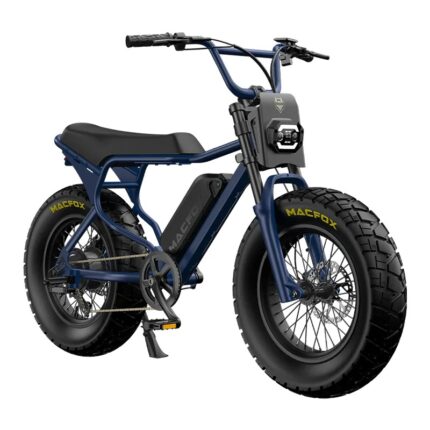
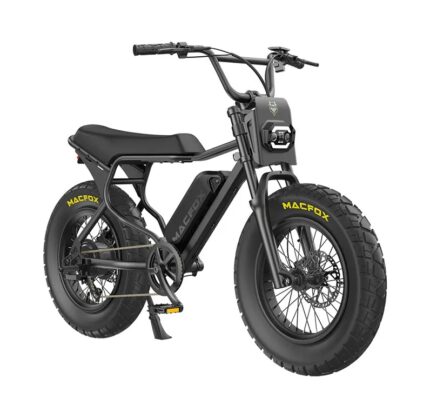
Ebikes In Georgia
E-bikes now show up across Georgia, from Atlanta’s BeltLine to Athens and Savannah, and that growth is why cities keep writing new rules.
One point shapes everything else. State law sets the baseline, but cities, counties, and park agencies can add rules on top. A ride that is legal in Marietta may not be legal on a Woodstock trail.
Are Electric Bikes Legal In Georgia?
Yes. Pedal-assist and throttle e-bikes are legal statewide when they meet the definition of an “electric assisted bicycle.” Georgia leaves that device out of its definition of a motor vehicle, and under O.C.G.A. § 40-6-301 the rider generally has the same rights and duties as an ordinary cyclist.
Machines that miss the definition lose that protection. A bike with a motor rated above 750 watts, or with pedals that do not actually work, falls under Georgia’s moped or motorcycle rules. Many “electric dirt bikes” sold online land there, whatever the listing calls them.
How Does Georgia Define An Electric Bicycle Under State Law?
Georgia defines “electric assisted bicycle” in O.C.G.A. § 40-1-1 and sets out the three classes in § 40-6-300.
A legal e-bike needs two or three wheels, fully operable pedals, a saddle, and an electric motor rated at 750 watts or less. The motor must also cut out when you stop pedaling or apply the brakes. Miss any of these and you face moped or motorcycle rules, which can mean a tag, a title, and a Department of Driver Services credential.
Watch the wattage wording in ads. Many listings lead with peak output, the brief surge a motor can deliver. The Velotric Discover 3, for example, pairs a 750-watt rated motor with a 1,100-watt peak. The statute does not say whether “power output” means rated or peak, but the industry labels bikes by rated output. If a seller cannot tell you that figure, keep shopping.
Use this checklist before you pay:
| What To Check | Legal Threshold | Where To Find It |
|---|---|---|
| Motor rating | 750W rated or less | Frame label or spec sheet |
| Pedals | Fully operable | Physical inspection |
| Motor cutoff | Stops when you quit pedaling or brake | Test ride |
| Class label | Class, wattage, and top assisted speed | Frame, near the crank or downtube |
| Speedometer | Class 3 only | Handlebar display |
Which Three E-Bike Classes Does Georgia Recognize?
Georgia adopted its three-tier system through House Bill 454, effective July 1, 2019:
- Class 1: The motor helps only while you pedal, and assistance stops at 20 mph.
- Class 2: A throttle can move the bike without pedaling, but the motor cannot reach 20 mph on its own.
- Class 3: The motor helps only while you pedal, and assistance stops at 28 mph.
You can read the exact wording in the official class definitions. Bikes built on or after January 1, 2020, must carry a permanent label showing the class, motor wattage, and top assisted speed in at least 9-point Arial, and Class 3 bikes need a speedometer.
The class you buy controls most of your legal duties:
| Class | Motor Engages | Assist Limit | Minimum Age | Helmet Required | Shared-Use Paths |
|---|---|---|---|---|---|
| Class 1 | Pedaling only | 20 mph | None statewide | Under 16 | Allowed unless locally banned |
| Class 2 | Throttle or pedaling | Under 20 mph on motor alone | None statewide | Under 16 | Allowed unless locally banned |
| Class 3 | Pedaling only | 28 mph | 15 | Everyone | Only beside a highway or where permitted |
Are Class 2 Throttle E-Bikes Legal In Georgia?
Yes, but the wording is unusual. Most states say a Class 2 motor must stop assisting at 20 mph. Georgia says the motor can propel the bike on its own but cannot reach 20 mph. If the throttle alone pushes past 20 mph, the bike sits outside Class 2. Keep the spec sheet on your phone to show an officer its factory class.
What Is The Legal Speed Limit For E-Bikes In Georgia?
There are two limits. The assist limit is where the motor must stop helping, set by class. The road’s posted speed limit still applies on top of that.
Local rules can be stricter. Atlanta limits e-bike motors to 20 mph on shared-use paths like the BeltLine.
Buyer beware: speed dongles and firmware hacks push the motor past its cutoff, which can remove the bike from every legal class.
Do You Need A License, Registration, Or Insurance For An E-Bike In Georgia?
No to all three for a compliant e-bike. Driver Services credentials apply to motor vehicles, and e-bikes are excluded from that definition. No tag or title is needed, and Georgia does not require liability coverage for any class.
The picture changes once a bike falls outside the definition:
| Requirement | Compliant E-Bike | Over 750W Or No Working Pedals |
|---|---|---|
| Driver’s license | Not required | May be required |
| Tag and title | Not required | May be required |
| Insurance | Optional | May be required |
| Path access | Set by class | Generally barred |
Optional coverage is still worth a look, since some homeowner and renter policies exclude motorized bikes. Ask your insurer about e-bikes by name.
Unsure whether a model clears the 750-watt ceiling? Send our team its spec sheet through our contact page, and we will check its class before you buy.
What Are The Helmet Laws For E-Bike Riders In Georgia?
Georgia has two helmet rules. First, no one under 16 may ride or be a passenger on any bicycle on a road, bike path, bike lane, or sidewalk without a helmet. The state’s bicycle helmet law covers e-bikes too, though riders under 16 cannot be fined or jailed for breaking it. Second, every operator and passenger on a Class 3 bike must wear one, whatever their age.
Adults on Class 1 or Class 2 bikes can legally skip the helmet, but that is a poor bet. Emergency rooms treated an estimated 53,200 e-bike injuries from 2017 through 2022, and nearly half came in 2022 alone, according to federal injury estimates from the Consumer Product Safety Commission.
When you shop, check certification and fit. Georgia’s statute calls for a helmet meeting ANSI or Snell standards, and bike helmets sold in the U.S. also carry a CPSC sticker. It should sit level, two finger-widths above your eyebrows.
What Is The Minimum Age To Ride An E-Bike In Georgia?
There is no statewide minimum age for Class 1 or Class 2. No one under 15 may operate a Class 3 bike, though younger riders can be passengers on one built to carry them. The under-16 helmet rule still applies to passengers, and rental shops cannot rent a Class 3 bike to anyone without a helmet.
Local rules can raise the bar. Woodstock now limits its paved trails to riders 18 and older on Class 1 e-bikes.
Use case: a Woodstock parent shopping for a 14-year-old. The parent likes a 28 mph commuter, but a 14-year-old cannot operate a Class 3 bike at all. A Class 1 bike is legal statewide, yet Woodstock bars riders under 18 from its paved trails and bans e-bikes from sidewalks. The workable plan is a Class 1 bike, a certified helmet, and low-traffic streets.
Where Can You Ride An E-Bike In Georgia?
You can ride on roadways, bike lanes, paved shoulders, and many paths, depending on class and local rules. You inherit every cyclist’s duty: ride with traffic, stay as far right as practicable, signal turns, and obey signals. Drivers must give you at least three feet when passing.
After dark, Georgia requires a white front light visible from 300 feet and either a red rear light visible from 300 feet or an approved red reflector. Your brakes must be able to skid the wheel on dry pavement.
This table shows where each class can generally go:
| Location | Class 1 | Class 2 | Class 3 |
|---|---|---|---|
| Roads and bike lanes | Yes | Yes | Yes |
| Paved shared-use paths | Yes, unless banned | Yes, unless banned | Beside a highway or where permitted |
| Natural-surface trails | Manager decides | Manager decides | Manager decides |
| State Park trails | Yes | Ask the park | Ask the park |
| Atlanta BeltLine | Yes | Yes | No |
| Sidewalks | Generally no | Generally no | Generally no |
Do Local E-Bike Rules Differ Within Georgia?
Yes, and Woodstock shows how far they can go. Its July 2026 ordinance bans bicycles, e-bikes, and motorized devices from city sidewalks, except children under 13 on non-electric bikes outside downtown “Walk Your Wheels” zones. Only adults 18 and older may ride Class 1 e-bikes on paved trails, which carry a 20 mph limit, and a no-ride zone covers Main Street between Oak and Fowler streets.
In Atlanta, police say only Class 1 and Class 2 bikes may use shared paths like the BeltLine.
To check a city, search its Code of Ordinances, often on Municode, for “electric assisted bicycle,” “sidewalk,” and “trail.”
Can You Ride EBikes On The Sidewalk In Georgia?
Generally no. O.C.G.A. § 40-6-144 bars vehicles from sidewalks, with a narrow exception letting local governments allow children 12 and under to ride bicycles there. That exception rarely helps an e-bike rider, and Woodstock has closed it to e-bikes entirely.
Are EBikes Allowed On Trails And Bike Paths In Georgia?
Mostly yes for Class 1 and Class 2, and mostly no for Class 3. The Class 3 path rules bar those bikes from bicycle and shared-use paths unless the path runs beside a highway or the managing agency allows them. On natural-surface dirt trails, the land manager decides which devices may ride.
The state park e-bike policy allows Class 1 bikes on roads and trails open to bicycles, with no matching grant for Class 2 or Class 3. The PATH Foundation, which runs the Silver Comet Trail, allows e-bikes that stay at or under 20 mph and describes that as Class 1. Federal land can be stricter.
Use case: an Atlanta commuter who wants speed. A rider’s commute mixes city streets with the BeltLine, and a Class 3 bike is tempting. Class 3 is legal on the streets but barred from the BeltLine. The fix is a Class 1 or Class 2 bike with a 20 mph assist limit, or Class 3 on streets only. The trade-off is top speed versus path access.
What Are The Penalties For Breaking EBikes Law In Georgia?
Most violations are traffic citations, and fines vary by court and city. Woodstock’s first-time violations reportedly bring fines of up to $100.
The bigger risk sits with overpowered bikes. A machine outside the definition may be treated as an unlicensed, unregistered, uninsured motor vehicle, which can sink an injury or insurance claim after a crash.
Impaired riding is also serious. Georgia applies its vehicle rules to bicycles, and the DUI statute covers any moving vehicle. Georgia defense attorneys report bicycle DUI arrests, although § 40-6-291 exempts bicycle riders from one of that statute’s penalty subsections. If you face a charge, talk to a Georgia attorney.
Which EBikes Meet Georgia’s Legal Standards?
The Velotric Discover 3 shows how class-switching bikes work: a 750-watt rated motor, a factory setting of 20 mph, and a mode switch up to 28 mph covering Class 1, 2, and 3. Once you select Class 3, the Class 3 age, helmet, and path rules apply, so keep the bike set to the class that fits where you ride.
Quick check: what class is your bike? This branching quiz is general information, not legal advice.
- Question 1: Is the motor rated at 750 watts or less, with working pedals? If yes, go to Question 2. If no, see Result A.
- Question 2: Can the throttle move the bike without pedaling? If yes, go to Question 3. If no, go to Question 4.
- Question 3: Can the throttle alone reach 20 mph? If yes, see Result A. If no, see Result B.
- Question 4: Does pedal assistance continue above 20 mph? If no, see Result C. If it stops by 28 mph, see Result D. If it goes past 28 mph, see Result A.
Results:
- Result A: Likely not an electric assisted bicycle. Expect moped or motorcycle rules and stay off paths.
- Result B: Class 2. Roads, bike lanes, and most paved paths are open, but State Park trails are not covered.
- Result C: Class 1. You get the widest access, including State Park and PATH trails.
- Result D: Class 3. Ride roads and bike lanes, be at least 15, wear a helmet, and use paths only where posted.
Beyond the class, look for integrated lights and an electrical system certified to UL 2849.
Browse our Georgia-ready e-bikes, each listed with its class and rated wattage, to match a bike to your routes.
Frequently Asked Questions About Ebikes In Georgia
Can You Ride An Ebike On Public Roads In Georgia?
Yes. Compliant Class 1, 2, and 3 e-bikes can ride on public roads where bicycles are allowed. Riders follow cyclists’ traffic laws and need lights at night.
Do You Need A License Or Registration To Ride An E-Bike In Georgia?
No. A compliant e-bike with working pedals and a motor rated at 750 watts or less needs no driver’s license, registration, tag, or insurance in Georgia.


