
Blog
Ebikes In Hawaii: Riding Habits Illegal Where To Rent Or Buy
Bought an e-bike online, or planning to rent one on vacation, and not sure it is legal to ride here? Hawaii rewrote its rules on July 15, 2026, and a bike that drew no attention last year can now earn a citation or get impounded. The short answer: ebikes in Hawaii are legal wherever a regular bicycle can go, as long as the motor is 750 watts or less, the pedals work, the bike carries a $30 registration decal, and riders under 18 wear a helmet.
Key Takeaways
- A legal e-bike has working pedals, a motor of 750 watts or less, and assistance that stops at 20 mph (Class 1 and 2) or 28 mph (Class 3).
- Every e-bike needs a one-time $30 county registration. Unregistered bikes can be cited or impounded.
- Riders under 18 must wear a fastened helmet. Riders under 16 need direct adult supervision on Class 2 and Class 3 bikes.
- No driver’s license or insurance is required for a compliant e-bike.
- Sidewalk riding is allowed at 10 mph or less, except in business districts or where a county bans it.
- Anything over 750 watts or faster than 28 mph is a high-speed electric device, banned from every public road, path, and sidewalk.
Table of Contents
Hawaii is the one state where the paperwork matters as much as the bike. Act 259 rewrote the rules on July 15, 2026, and an unregistered or overpowered machine can now be seized rather than simply ticketed. The test is short: 750 watts or less, working pedals, a permanent class label, and a $30 county decal on the seat tube. Every bike we ship carries a readable class label and a stated rated wattage, so it can be registered the day it lands.
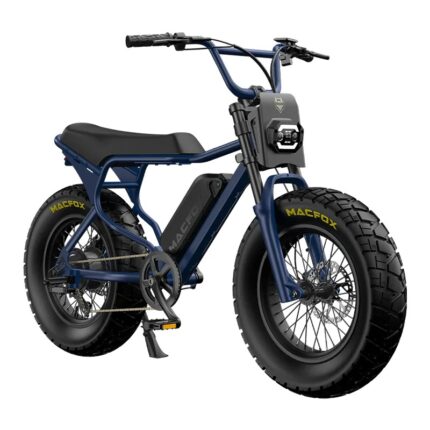
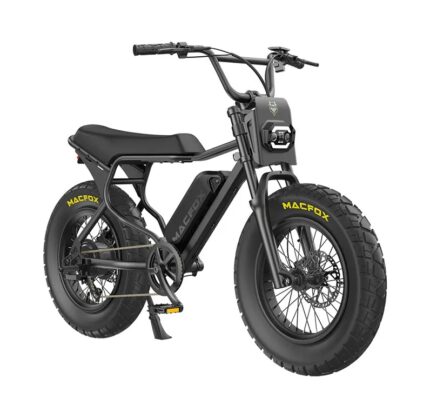
Ebikes In Hawaii
E-bikes solve a very island-specific problem. Town centers like Kailua, Hilo, and Kailua-Kona are compact but hilly, parking is tight, and trade winds can turn a 3-mile ride into a workout. A motor flattens all of that, with no gas, no parking hunt, and no rental car for short hops.
The rules come mostly from Hawaii Revised Statutes (HRS) chapter 291C, which Act 259 rewrote this year. Counties then layer on their own limits for sidewalks, bike lanes, and paths. This guide is built from the Act 259 text, Hawaii Department of Transportation (HDOT) notices, and county registration rules.
It serves three groups:
- Residents who need to stay registered and legal.
- Visitors who mostly need to know where they can ride.
- Shoppers who must avoid buying a bike that cannot be registered.
Are Ebikes Allowed In Hawaii?
Yes. A qualifying e-bike may be ridden anywhere a traditional bicycle is allowed, including roads, shoulders, bike lanes, and shared-use paths.
To qualify, the bike must meet three conditions:
- Motor: No more than 750 watts.
- Pedals: Fully operable pedals.
- Speed: Motor assistance stops at 20 mph (Class 1 and 2) or 28 mph (Class 3).
The state’s own explanation is in HDOT’s Act 259 summary. HDOT is still drafting administrative rules to carry out the law, so recheck details such as labeling enforcement before a big purchase.
What Is The Minimum Age For Riding An Ebikes In Hawaii?
Riders under 16 may not operate a Class 2 (throttle) or Class 3 (28 mph) e-bike unless under direct supervision. The law defines that as a parent, guardian, or adult 18 or older who is physically present and close enough to observe and control how the bike is operated.
Class 1 is now simpler. The old law barred anyone under 15 from riding any e-bike, but Act 259 removed that floor for pedal-assist-only bikes. The Hawaii Bicycling League guide confirms there is no state minimum age for Class 1, which leaves the decision to families.
Before a teen rides alone, look for these readiness markers:
- They brake early, knowing an e-bike needs more stopping distance.
- They can look over a shoulder without swerving.
- They use hand signals consistently.
Electric scooters follow a separate rule: no riders under 15 on public property. Rental operators often set stricter limits, so ask before booking.
How Do The Three Ebikes Classes Work In Hawaii?
Each class is defined by how the motor engages and where it stops helping:
| Class | How The Motor Engages | Assist Cutoff | Extra Equipment | Under-16 Rule |
|---|---|---|---|---|
| Class 1 | Pedal assist only | 20 mph | None | No state minimum |
| Class 2 | Throttle or pedal assist | 20 mph | None | Direct supervision |
| Class 3 | Pedal assist only | 28 mph | Speedometer | Direct supervision |
The class on the manufacturer’s label decides which rules apply, not how the bike feels on the road.
Act 259 requires manufacturers and distributors to permanently attach a label showing the class, top assisted speed, and motor wattage, and removing it is prohibited. Sellers, including online sellers delivering to Hawaii, must also disclose in writing whether the bike is legal on public roads, sidewalks, and bike lanes. HDOT can fine violators up to $500.
Buyer beware: If a listing shows “1000W” or “35 mph capable,” that bike cannot be registered as an e-bike in Hawaii, whatever the seller calls it.
Are Class 2 Throttle Ebikes Legal In Hawaii?
Yes. Throttle e-bikes are legal as long as the motor stops assisting at 20 mph.
Throttle use draws more attention on seaside promenades, harbor-front paths, and resort walkways, where a quick launch surprises people on foot. Feather it near pedestrians.
Throttle versus pedal assist comes down to terrain. On steep grades, like the climbs above Kailua-Kona, a throttle helps you restart on a hill. Into a stiff trade wind, pedal assist with a torque sensor tends to feel smoother and stretch the battery further.
What Are The Legal Speed And Motor Watt Limits For Ebikes In Hawaii?
Motor assistance must stop at 20 mph for Class 1 and 2, and at 28 mph for Class 3. Motors are capped at 750 watts.
Act 259 does not specify whether that figure means rated or peak output, and HDOT has not yet published rules on it. The practical answer is to buy a bike whose label and spec sheet both state 750W or less.
Aftermarket controllers, “unlock” firmware, and tuning dongles that raise the speed cap push a bike outside the definition. Police can seize a nonconforming e-bike, meaning one that fails the classification, labeling, equipment, or operational requirements.
Posted speed limits still apply, and on sidewalks the ceiling is 10 mph.
Do I Need To Register My Ebikes In Hawaii?
Yes. A one-time $30 fee buys a permanent registration for the life of the bike.
To register on Oahu, follow these steps:
- Gather proof of ownership: a receipt or bill of sale, or an affidavit of ownership.
- Fill out the application: list the make, year, color, serial number, and wheel size, and state the motor wattage.
- File it: book an AlohaQ appointment at a Satellite City Hall, or apply by mail.
- Attach the decal: put it on the seat tube, facing forward.
Current forms are listed with the Honolulu registration requirements. Neighbor island owners register through their county’s director of finance. When you sell, file a notice of transfer so the new owner is on record.
Skipping registration is costly. Officials can seize an unregistered bike and hold it for 10 days. You redeem it by paying the fee plus a $25 penalty, and unclaimed bikes are sold at public auction.
Do I Need A Driver’s License Or Insurance To Ride Ebikes In Hawaii?
No. A compliant e-bike needs no license, learner permit, or motor vehicle insurance. Act 259 states outright that insurance is not required for a road-legal, classified e-bike.
Mopeds and electric motorcycles work differently:
| Category | License Required | Insurance Required | Registration | Bike Lanes Allowed |
|---|---|---|---|---|
| E-bike (Class 1–3) | No | No | One-time $30 | Yes |
| Moped (30 mph max) | Yes | Not for private two-wheel mopeds | Annual | No |
| Electric motorcycle (over 28 mph) | Yes | Yes | Annual | No |
For an expensive bike, ask your homeowners or renters insurer whether theft coverage extends to it. Some policies exclude motorized bikes.
Do I Need A Helmet To Ride An Ebikes In Hawaii?
Yes, if you are under 18. Every rider under 18 must wear a properly fitted and fastened bicycle helmet, and the rule also covers children in a bike seat or towed trailer.
Adults are exempt by law. Physics is not. A 28 mph crash is a 28 mph crash at any age.
A good fit looks like this:
- The helmet sits level, about two fingers above the eyebrows.
- The side straps form a V just under each ear.
- Only one finger fits under the chin strap.
- A CPSC certification sticker is inside the shell. For regular Class 3 speeds, consider a helmet also certified to NTA 8776, a standard written for faster e-bikes.
Gear up at our island shop for certified helmets, lights, and locks, with fitting help included on every purchase.
Are Ebikes Allowed On Trails And Bike Paths In Hawaii?
Yes on public roads, striped bike lanes, and paved multi-use paths, where e-bikes have the same access as pedal bikes. Counties can post specific lanes and paths to keep motorized bikes off.
Natural-surface trails are different. Trails in the state’s Na Ala Hele program, managed by the Department of Land and Natural Resources (DLNR), have generally excluded e-bikes, and a DLNR advisory council recommended no change in May 2026.
| Location | Class 1–3 Status | What Can Change It |
|---|---|---|
| Roads and bike lanes | Allowed | County posting on specific lanes |
| Paved multi-use paths | Allowed | County posting on specific paths |
| Sidewalks outside business districts | Allowed at 10 mph or less | County ordinance |
| State Na Ala Hele trails | Generally not allowed | DLNR policy changes |
Where Can I Ride A Class 3 Ebikes In Hawaii?
Roads and bike lanes are the best fit. State law gives Class 3 the same access as other classes, but shared paths are where county restrictions and complaints concentrate.
Faster bikes stay welcome on paths when riders:
- Call out before passing.
- Slow to walking pace near families and dogs.
- Pass only with clear sight lines.
Are Ebikes Allowed On Sidewalks In Hawaii?
Yes, outside business districts, as long as you stay at 10 mph or below and yield to pedestrians.
State law defines a business district as any 600-foot stretch of road where business or public buildings fill at least 300 feet of frontage. If you see continuous storefronts, assume sidewalk riding is banned. Step off, walk the bike through the block, and remount where the sidewalk clears.
Which Ebikes And Riding Habits Are Illegal In Hawaii?
Any device with a motor over 750 watts, or one that can exceed 28 mph, is a high-speed electric device banned from streets, bike lanes, paths, and sidewalks. Many “e-motos” and electric dirt bikes fall into this group.
Act 259 also prohibits:
- Wheelies, stunts, and exhibition riding outside permitted events.
- Standing on the seat or riding on the handlebars.
- Unsafe or reckless operation.
Carry passengers only on seats designed for them. After dark, you need a white front lamp and a red rear reflector. For riders under 18, enforcement can fall on a parent or guardian.
Quick check: Is your setup ready to ride?
- Does the label show 750W or less and a cutoff of 28 mph or lower? If no, keep it off public areas. If yes, go to Question 2.
- Is a registration decal on the seat tube? If no, register first. If yes, go to Question 3.
- Is the rider under 16 on a Class 2 or 3 bike? If yes, an adult must directly supervise. Either way, go to Question 4.
- Is the rider under 18? If yes, add a fastened helmet. If no, you are legal.
This check covers state rules only.
Use case: An Oahu resident finds a discounted 1,000W fat-tire bike online. Because it cannot be registered, she picks a 750W Class 2 model instead, accepting a slightly slower climb.
Where Can I Rent Or Buy An Ebikes In Hawaii?
Rentals cluster in visitor hubs such as Waikiki, Kailua-Kona, and Hilo. Before booking, confirm the bike’s class, whether helmets are provided for riders under 18, and that the rental carries a registration decal. State law bars renting to anyone under 18 who will not wear a helmet.
Local dealers offer test rides, assembly, and island warranty service. Direct-to-consumer brands often cost less, but service and shipping fall on you. Either way, confirm who handles warranty repairs on your island, how fast replacement batteries arrive, and whether tires, brake pads, and chains are stocked locally. Salt air speeds up corrosion.
You may also qualify for the state e-bike rebate, listed at up to $500 or 20% of the price for eligible buyers of new e-bikes from retail stores. Applicants must be 18 or older and show low-income program participation, student enrollment, or no four-wheel vehicle, and must apply within one year of purchase. Payouts depend on available funds.
Use case: A family visiting Kailua-Kona wants a throttle bike for their 14-year-old. Because a parent must supervise directly, they book a Class 1 bike for the teen instead.
Reserve your ride through our booking page for multi-day savings, doorstep drop-off at your hotel or home, and a free test ride before you commit.
How Much Does It Cost To Ship Ebikes To Hawaii?
Costs depend on the carrier, origin, and packaging, so get written quotes including harbor fees.
The battery is the main obstacle. Under FAA battery limits, lithium-ion batteries above 160 watt-hours are forbidden in passenger bags. E-bike packs are far larger, so most shipments go by ocean freight under hazardous-materials rules.
| Cost Factor | Ship From Mainland | Buy Locally |
|---|---|---|
| Bike price | Often lower | Often higher |
| Freight and harbor fees | You pay | Built into price |
| Warranty service | May require shipping back | Handled on island |
Frequently Asked Questions About Ebikes In Hawaii
Are Ebikes In Hawaii Legal On Public Roads?
Yes. Class 1, 2, and 3 e-bikes with working pedals and a motor of 750 watts or less can ride on public roads and in bike lanes, just like regular bicycles, once registered.
How Much Does It Cost To Register Ebikes In Hawaii?
Registration costs $30, paid once to your county’s director of finance, and lasts for the life of the bike.


