
Blog
Ebikes In Massachusetts (Laws, Riding Spots And Buying Guide)
Ebikes in Massachusetts need no license, registration, or insurance if they are Class 1 or Class 2 models with a motor of 750 watts or less that stops assisting at 20 mph. Anything faster falls outside the state’s e-bike definition and is usually treated as a motorized bicycle, with moped-style rules. That gap catches many buyers who order a 28 mph bike online. This guide, checked against state statutes and bill records in October 2026, shows how to stay legal, where to ride, and what to verify before buying.
Key Takeaways
- Class 1 and Class 2 e-bikes (750 watts or less, 20 mph assist cutoff) carry the rights and duties of bicycles.
- Class 3 is not named in state law, so a 28 mph bike usually falls under motorized bicycle rules, including registration and no off-street recreational paths.
- Riders and passengers 16 or younger must wear a helmet.
- E-bikes are banned from sidewalks statewide, and natural-surface trails stay closed unless the land manager opts in.
- The Ride Safe Act and related bills are not law yet.
- The state voucher program is closed and not expected to run in 2026.
- Check the permanent label for class, top assisted speed, and wattage before you pay.
Table of Contents
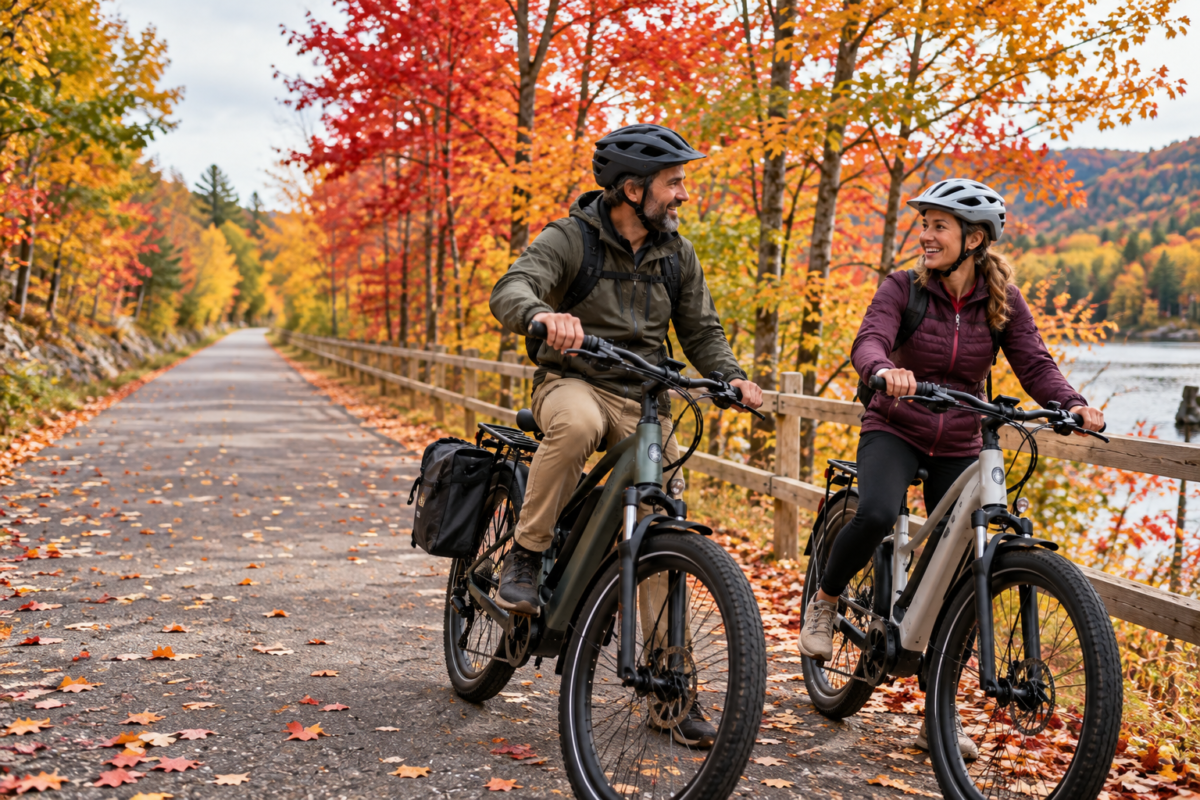
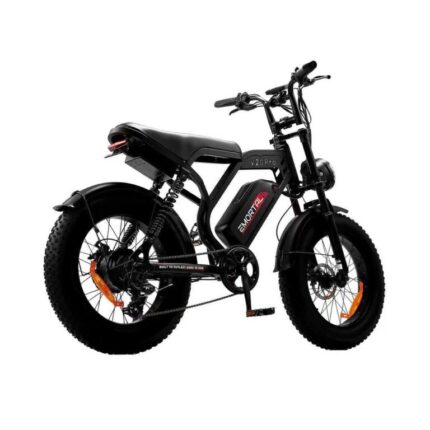
Once you know which class keeps you legal on your route, the next step is picking the bike. At Ebike Plugs we stock Class 1 and Class 2 models that meet the 750-watt and 20 mph limits Massachusetts writes into law, with the permanent class label already on the frame, so your bike stays a bicycle on Bay State roads and paths. Browse the full e-bike collection, ask us anything through the contact page, and spread the cost with our financing options if you would rather not pay in one go.
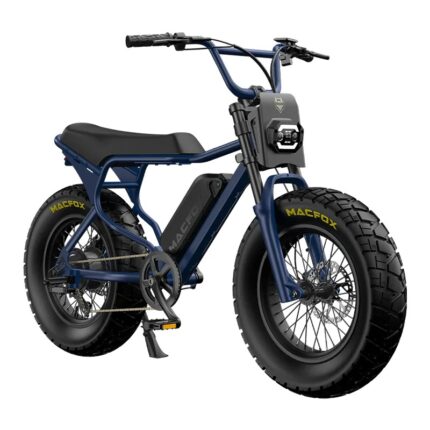
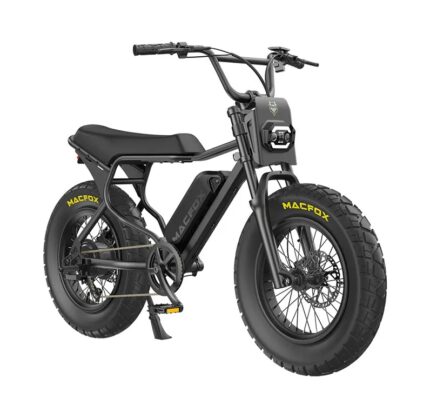
Ebikes In Massachusetts
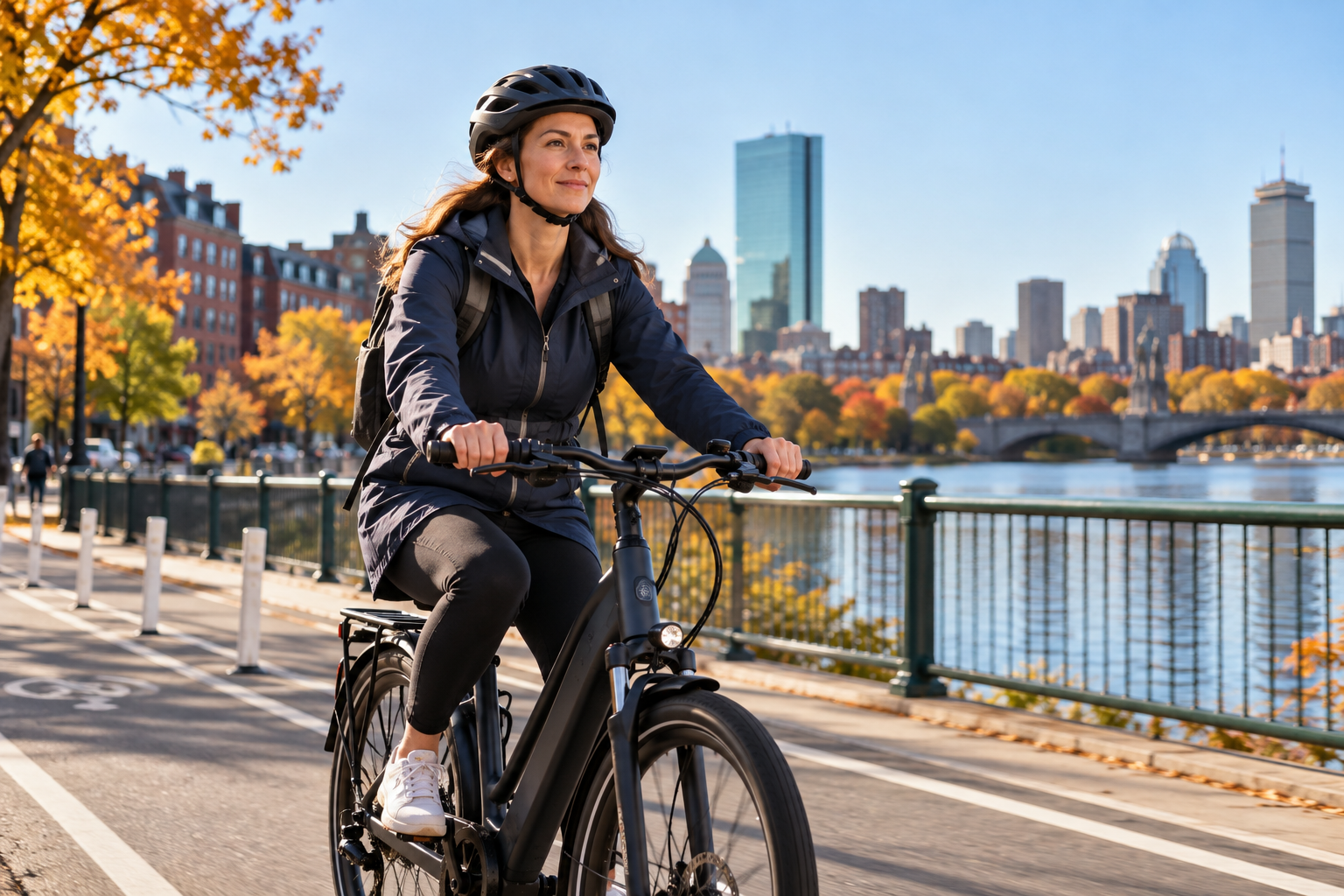
Commuters use e-bikes to skip Boston traffic, and North Shore riders cruise coastal roads from Lynn to Marblehead without arriving drenched in sweat.
The legal position is simple: pedal-assist (Class 1) and throttle (Class 2) models up to 750 watts are treated much like regular bicycles. Trouble starts when the specs drift past those numbers.
What Counts As An E-Bike Under Massachusetts State Law?
Under Massachusetts General Laws chapter 90, section 1, an electric bicycle is a bicycle or tricycle with fully operable pedals and a motor of 750 watts or less that meets the Class 1 or Class 2 definition. It is not a motor vehicle, and the state e-bike statute gives its rider the rights and duties of a bicyclist.
A motorized bicycle, or moped, is a separate category: a bike with a helper motor, an automatic transmission, and a top speed no higher than 30 mph. Operators must be at least 16, hold a license or learner’s permit, register with the RMV, wear a DOT-standard helmet, and ride no faster than 25 mph.
Ask three questions:
- Is the motor rated at 750 watts or less?
- Does motor assistance stop at 20 mph?
- Does the bike have working pedals?
If any answer is no, it is not an electric bicycle under state law. Here is how common machines are sorted.
| Machine Type | Assist Cutoff | License And Registration | Helmet Rule |
|---|---|---|---|
| Class 1 e-bike | 20 mph, pedal only | Not required | 16 or younger |
| Class 2 e-bike | 20 mph, throttle allowed | Not required | 16 or younger |
| Class 3 style (28 mph) | Not named in statute | Usually required | DOT helmet, all ages |
| Over 750 W or e-moto | Not an e-bike | Moped or motorcycle rules may apply | Required |
What Are The Speed And Motor Watt Limits For E-Bikes In Massachusetts?
The limits are 750 watts and a motor that stops assisting at 20 mph. Stay within both and your bike remains a bicycle in the eyes of the law.
The cutoff applies to the motor, not to you. Coasting downhill or pedaling hard past 20 mph does not change your bike’s class.
Buyer beware: derestriction dongles and firmware unlocks can push assist past 20 mph. State law bars tampering that changes motor-powered speed unless the label is properly replaced, and the modified bike no longer meets the e-bike definition.
To verify a bike before purchase:
- Find the frame label. Manufacturers and distributors must permanently attach one showing class, top assisted speed, and motor wattage.
- Ask the seller to confirm the nominal (continuous) rating is 750 watts or less, since peak figures run higher.
- Ask to see the assist speed setting in the display menu.
What Would The Ride Safe Act Change For E-Bikes In Massachusetts?
It would replace class labels with four speed tiers based on maximum designed or assisted speed. Governor Maura Healey filed the bill (S.3077) on May 4, 2026, building on a state commission’s January recommendations.
| Proposed Tier | Max Designed Speed | Typical Devices | Main Change |
|---|---|---|---|
| Tier 0 | 20 mph or less | Bicycles, Class 1 and 2 | Bicycle rules stay |
| Tier 1 | 21 to 30 mph | Class 3 e-bikes | Helmet for all ages, age 16+ |
| Tier 2 | 31 to 40 mph | Electric mopeds | Barred from bike lanes and paths |
| Tier 3 | 41 mph or more | Electric motorbikes | Barred from bike lanes and paths |
As filed, the full bill text would also require UL 2849 electrical certification or an equivalent for e-bikes, ban aftermarket speed modifications, and phase in several sections on January 1, 2028.
None of it is law yet. S.3077 sits with the Joint Committee on Transportation after a May 28 hearing, but similar language moved into the 2026 economic development bill. The Senate version adds a default 20 mph limit on shared-use paths and bars children under 14 from operating powered devices. As of late October 2026, the House and Senate versions had still not been reconciled and signed, so nothing in this section applies to you today.
Does Massachusetts Use The Three Class E-Bike System?
Only partly. State law defines Class 1 and Class 2 but does not name Class 3.
Nationally, Class 3 means pedal assist to 28 mph, and manufacturers still use that label. Here, a bike sold as Class 3 usually defaults to motorized bicycle rules, and the RMV excludes mopeds from off-street recreational paths. A bike that looks perfect for a rail-trail commute may not be allowed on one.
If a dealer caps assist at 20 mph, ask for a replacement label showing Class 1, 20 mph, and the wattage. A bike sold as Class 1 or 2 is cleaner still.
Example: A Somerville commuter wants a 28 mph bike for a route on local bike paths. As a likely motorized bicycle, it would need registration and be kept off those paths. A Class 1 bike keeps her path access, at the cost of some top-end speed.
Are Class 2 Throttle E-Bikes Legal In Massachusetts?
Yes. Class 2 is written into state law, so a throttle does not disqualify a bike as long as assistance stops at 20 mph.
Some land managers treat throttles differently: the Department of Conservation and Recreation (DCR) has allowed Class 1 on wider improved paths while limiting Class 2 to areas open to vehicles.
On busy rail trails, use the throttle sparingly around walkers.
Do You Need A License, Registration Or Insurance To Ride An E-Bike In Massachusetts?
No. Class 1 and Class 2 e-bikes need no license, title, plate, or registration, and teens riding them need no learner’s permit.
Motorized bicycles are different. The RMV moped requirements call for riders 16 or older with a license or permit, registration, a DOT-standard helmet, and a 25 mph cap. Remove a moped’s speed restrictor and the RMV reclassifies it as a motorcycle.
Insurance is not required for a legal e-bike. Homeowners and renters policies differ on theft and crash liability for motorized items, so ask your agent.
Do You Need A Helmet To Ride An E-Bike In Massachusetts?
Yes, if you are 16 or younger. Riders and passengers in that age group must wear a fitted, strapped helmet that meets U.S. Consumer Product Safety Commission (CPSC) standards. A child in an enclosed, head-protecting trailer is exempt.
Adults are not required to wear one, but it is smart.
From a half hour after sunset to a half hour before sunrise, you need a white headlight visible from 500 feet, a red taillight or reflector visible from 600 feet, pedal or ankle reflectors, and side reflectors. Give an audible warning when safety requires it; a bell works, but sirens and whistles are banned.
Two rules surprise new riders. Brakes must stop the bike from 15 mph within 30 feet on dry, level pavement, and crashes involving injury or over $100 in property damage must be reported to local police.
What Is The Minimum Age For Riding An E-Bike In Massachusetts?
There is no statewide minimum age for Class 1 or Class 2 e-bikes, because the law treats them as bicycles. Motorized bicycles require riders to be at least 16.
Children under 1 cannot be carried on the bike. Kids aged 1 to 4, or 40 pounds or less, must ride in an attached seat with a harness and spoke protection.
Parents carry real responsibility. They may not knowingly let a rider under 18 break bicycle rules, and police can impound a minor’s bike for up to 15 days. If the Senate’s pending language passes, children under 14 could be barred from powered devices, so check before buying for a young teen.
Example: A Worcester parent wants a cargo e-bike for daycare runs with a 3-year-old. The child needs a harnessed seat and a helmet, and winter pickups require lights. A Class 1 cargo bike keeps the setup bicycle-legal.
Where Can You Legally Ride An Electric Bicycle In Massachusetts?
You can ride on most public roads, bike lanes, and paved shared-use paths. E-bikes share bicycle rights and duties, with a few exceptions.
Cities, towns, and state agencies can restrict e-bikes or set speed limits on paths they control, but only after public notice and a hearing. Natural-surface trails for nonmotorized use are closed by default unless the managing authority opts in the same way.
| Where You Ride | Class 1 | Class 2 | Rule To Remember |
|---|---|---|---|
| Roads and bike lanes | Allowed | Allowed | Follow traffic law |
| Sidewalks | Banned | Banned | Statewide ban |
| Paved shared-use paths | Generally allowed | Check local rules | Managers may restrict |
| Natural-surface trails | Closed by default | Closed by default | Opt-in only |
Ride no more than two abreast, signal turns, and yield to people on foot. If you are comparing states before a move or a bike-rack road trip, our guide to e-bike laws and your rights covers the national picture.
Which Massachusetts Cities Have Their Own E-Bike Rules?
Most cities follow state law and add local rules on paths they control. They cannot use those powers to restrict Class 1 or Class 2 bikes on public roads or marked bike lanes.
Boston enforces the sidewalk ban and runs Bluebikes, whose Class 1 e-bikes stop assisting at 18 mph. Cambridge has an extensive separated bike-lane network, and Worcester hosted a MassBike program that distributed about 205 low-cost e-bikes from 2022 to 2025.
Ownership matters: Brewster notes the Cape Cod Rail Trail is under DCR control, so state rules apply there. In Framingham and other suburbs, check the town website before choosing a daily route.
Can You Ride An E-Bike On The Sidewalk In Massachusetts?
No. State law bans e-bikes on sidewalks everywhere in Massachusetts, whatever the class.
Pedal cyclists may use sidewalks outside business districts when needed for safety, but that exception does not extend to e-bikes. Walk the bike or use quiet side streets.
Are E-Bikes Allowed On Trails And Bike Paths In Massachusetts?
It depends on the path. Paved shared-use paths are generally open, but the agency or town in charge can restrict them.
DCR’s park regulations have allowed Class 1 on improved paths at least 8 feet wide, limited faster bikes to areas open to vehicles, and kept e-bikes off natural-surface trails. Posted signs remain your best guide.
When signs are unclear, contact the managing agency.
What Is The Massachusetts E-Bike Voucher Program?
It was an income-based incentive the Massachusetts Clean Energy Center (MassCEC) launched in April 2025. Its program summary reports more than 3,000 residents bought e-bikes through over 70 participating retailers.
| Voucher Type | Maximum Amount | Who Qualified |
|---|---|---|
| Enhanced | Up to $1,200 | Income at or below 225% of federal poverty level |
| Standard | Up to $800 | Income at or below 400% of federal poverty level |
| Equipment | Up to $150 | Selected applicants, for safety gear |
The process worked like this:
- Register during a two-week open window.
- Wait for random selection.
- Upload proof of residency and income within seven days.
- Receive a voucher code by email.
- Redeem it in person at a participating retailer within 60 days.
Applicants had to be residents aged 18 or older, and standard e-bikes were capped at $5,000.
Can you apply now? No. MassCEC says the program is closed and not expected to run in 2026. Watch MassCEC’s own pages for any future round.
Where Can You Find Electric Bike Dealers And Shops In Massachusetts?
Specialist shops cluster in Greater Boston, North Shore towns such as Marblehead, and the Worcester area.
Use this checklist when you visit:
- Take a test ride with a hill and a hard stop.
- Check that a trained mechanic assembles every bike.
- Confirm the label shows Class 1 or 2, 20 mph, and 750 watts or less.
- Ask whether the electrical system is certified to UL 2849.
- Find out who handles warranty and battery claims.
Not sure which style fits your commute or your budget? Our complete e-bike buying guide walks through motors, batteries, and frame types before you spend a dollar.
Quick Check: Which Rules Apply To Your Bike?
This is general information, not legal advice.
Question 1: What does the label show?
- Class 1 or 2, 20 mph, 750 watts or less: go to Question 2.
- Class 3 or 28 mph: treat it as a likely motorized bicycle needing a license, registration, and roads only, or ask for a properly relabeled 20 mph setup.
- No label or over 750 watts: request documentation before buying.
Question 2: Where will you ride most?
- Roads and bike lanes: go to Question 3.
- Paved paths: check posted rules, then go to Question 3.
- Dirt trails: closed unless the manager has opted in.
Question 3: Is the rider 16 or younger?
- Yes: a CPSC-certified helmet is required.
- No: a helmet is recommended, and the night lighting rules apply to everyone.
Frequently Asked Questions About Ebikes In Massachusetts
Are Ebikes In Massachusetts Legal Without A License Or Registration?
Yes. Class 1 and Class 2 e-bikes with motors of 750 watts or less that stop assisting at 20 mph need no license, registration, or insurance. Faster bikes, including most 28 mph models, usually count as motorized bicycles and need a license or learner’s permit plus registration.
How Does The Massachusetts E-Bike Voucher Program Work?
The MassCEC program gave income-based vouchers of up to $1,200, plus up to $150 for gear, through random selection. Winners had 60 days to redeem in person at a participating retailer. The program is closed and is not expected to run in 2026.


