
Blog
Ebikes In New Hampshire: What Is An E-Bike, Where Can I Ride
Bought an e-bike and not sure whether it is allowed on the rail trail this weekend? Guessing wrong can mean a warning from a ranger, a ruined ride, or owning a bike that legally is not an e-bike at all. Here is the short answer: ebikes in New Hampshire are legal, need no license or registration, and share the road rights of regular bicycles, provided they have working pedals, a motor under 750 watts, and fit one of three state classes.
Key Takeaways
- A compliant e-bike is legally a bicycle, so no license, registration, title, plates, or insurance is required.
- Every legal e-bike needs operable pedals, a motor under 750 watts, and a class label.
- Class 3 operators must be 16 or older, and Class 3 riders under 18 need a helmet.
- State-managed rail trails, including the Northern Rail Trail, allow all three classes at up to 20 mph.
- 2026 bills for e-bike registration and tighter Class 3 rules did not become law.
Table of Contents

Comparing ebikes for sale in New Hampshire? Ask the seller to show you the class label before you pay, and match it to the spec sheet. Browse the Ebike Plugs lineup, or text us at +1 (714) 749-3162 with your route and the rider’s age and we will point you to models that fit. Ask about our in-house financing: $800 down, no credit check, and no interest. Questions first? Reach us through the contact page.
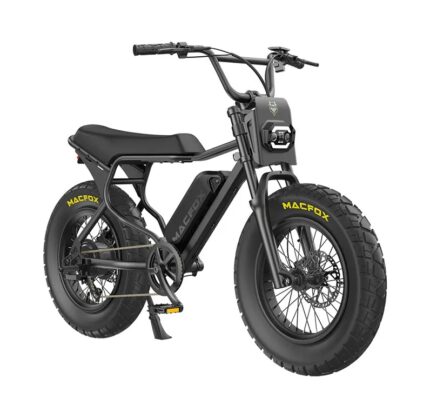
Ebikes In New Hampshire
New Hampshire’s e-bike rules come from two 2019 statutes: RSA 259:27-a, which defines the three classes, and RSA 265:144-a, which sets how and where you ride. Neither has been amended since.
Before your first ride, settle three questions:
- Legal standing: Does your bike have pedals, a motor under 750 watts, and a class label?
- Rider eligibility: Do your age and helmet match your bike’s class?
- Route access: Does the road, path, or trail manager allow your class?
Terrain matters too. Steep grades and cold mornings can both cut battery range, so plan around climbing and temperature, not distance alone.
Are Ebikes Legal In New Hampshire?
Yes. Under the New Hampshire e-bike statute, e-bike riders get all the rights and duties of bicycle riders. House Bill 148 created this framework, effective August 18, 2019.
Day to day, you follow bicycle rules: ride with traffic, keep right when slower, and obey signs and signals.
Legal status disappears if your bike falls outside the definition. The most common ways that happens:
- The motor is rated at 750 watts or more.
- The assist cutoff has been raised beyond the bike’s labeled class.
- The motor keeps driving the bike when you brake. State law requires it to cut out.
- The bike runs on a gas engine. Only electric motors qualify.
What Is An E-Bike In New Hampshire?
Legally, an e-bike is a pedaled vehicle with an electric motor of less than 750 watts that fits Class 1, 2, or 3. It must also meet the federal bicycle safety requirements in 16 C.F.R. Part 1512.
It is not a moped, a stand-up scooter, or an off-highway recreational vehicle (OHRV). State law expressly classifies any pedaled vehicle with a motor that misses the e-bike definition as an OHRV. Mopeds are a separate category with their own registration rules.
That shift matters. OHRVs fall under RSA 215-A, with registration requirements and limits on where they may operate. If you are unsure how a high-powered bike is classified, get written advice from a New Hampshire attorney before riding it on public ways.
What Labeling Is Required For E-Bikes In New Hampshire?
Since January 1, 2020, manufacturers and distributors must permanently attach a label in a prominent spot showing the bike’s class number, top assisted speed, and motor wattage, printed in Arial font at 9-point size or larger.
Buyer beware: Inspect used, imported, and marketplace bikes for a missing or altered label. Without one, you cannot easily show a ranger or officer your class, and it can signal a bike never built to the three-class standard.
Quick label check before you buy:
- The label is present, permanent, and readable.
- The class and wattage match the spec sheet.
- The display’s top assist speed matches the label.
- A Class 3 bike has a working mph speedometer.
How Does New Hampshire Classify Electric Bicycles Into Three Classes?
The official class definitions separate bikes by how the motor engages and when it stops helping.
| Class | How The Motor Works | Assist Stops At | Typical Fit |
|---|---|---|---|
| Class 1 | Pedal assist only | 20 mph | Rail trails, commuting, new riders |
| Class 2 | Throttle can propel the bike without pedaling | 20 mph | Riders who want help starting on hills |
| Class 3 | Pedal assist only | 28 mph | Longer road commutes |
Quick quiz: which class fits your riding? This is a planning aid, not legal advice.
Question 1: Will anyone under 16 operate the bike?
- Yes: Class 3 is off the table. Choose Class 1, or Class 2 if they need throttle help on hills.
- No: go to Question 2.
Question 2: Where will you ride most?
- City paths and greenways: go to Question 3.
- State rail trails: any class is allowed, but the 20 mph limit means Class 1 or 2 is usually better value.
- Roads with long commutes: go to Question 4.
Question 3: Do you want a throttle for stop-and-go starts?
- Yes: choose Class 2, if the path manager has not banned it.
- No: choose Class 1, the class most widely accepted on paths.
Question 4: Will you regularly ride above 20 mph with traffic?
- Yes: Class 3 fits, with a helmet required under 18.
- No: Class 1 keeps your path options open.
What Motor Power And Speed Limits Apply To Each Class?
All three classes share one ceiling: a motor under 750 watts. Classes 1 and 2 stop assisting at 20 mph, while Class 3 stops at 28 mph and must have a speedometer showing miles per hour. These are assist cutoffs, not speed limits, so posted limits still apply, including 20 mph on state park property.
Aftermarket tuning kits and firmware unlocks are the biggest legal trap. State law bars changing a bike’s assisted speed or motor engagement unless you replace the label with the correct class. Push the cutoff past 28 mph or the motor to 750 watts or more, and no label makes it an e-bike.
One gray area remains. The statute does not say whether the 750-watt limit means continuous rated or peak output. HB 1410 would have addressed out-of-class machines, but it did not pass. The cautious approach is to buy a bike whose label shows a rated motor below 750 watts.
What Are The E-Bike Laws And Regulations In New Hampshire?
E-bike riders follow the same rules of the road as cyclists, including hand signals and keeping steering, brakes, and tires in safe condition.
After dark, RSA 266:86 requires a white front lamp visible from 300 feet and a red rear reflector. RSA 265:144 also requires at least one reflective clothing item, such as a vest or helmet strip, from half an hour after sunset to half an hour before sunrise. On shared paths, slow down near walkers and announce yourself before passing.
This table compares the rules that differ by class.
| Rule | Class 1 And 2 | Class 3 |
|---|---|---|
| Minimum operator age | None in state law | 16 |
| Helmet | Under 16 on public ways | Under 18, riders and passengers |
| Speedometer | Not required | Required |
| Local bike and multi-use paths | Allowed unless banned | Only beside a road or with permission |
| State rail trails | Allowed | Allowed |
How Does The Bike-Walk Alliance Of New Hampshire Help Riders?
The Bike-Walk Alliance of New Hampshire (BWANH) is a statewide education and advocacy group working to make the state safer for people walking and biking. In 2026 testimony, it opposed HB 1533 as overly burdensome for Class 3 riders and said the existing statute treats e-bikes appropriately. It favored HB 1410’s approach to out-of-class machines, provided Class 1, 2, and 3 e-bikes were clearly excluded.
Riders can follow its updates on proposed law changes and safety education.
Do I Need A License Or Registration To Ride An E-Bike In New Hampshire?
No. RSA 265:144-a exempts compliant e-bikes from state rules on driver’s licenses, financial responsibility, registration, titles, OHRVs, and license plates. Mopeds are different and must be registered.
Because the exemption covers driver’s licenses, a suspended license does not by itself bar you from riding a compliant e-bike. That is not a pass on impaired riding, though. If your license is suspended, especially for an alcohol-related offense, speak with a New Hampshire attorney first.
Insurance is optional. Some homeowner policies exclude motorized bikes, so ask your agent to confirm coverage in writing.
What Are The Most Recent Changes To New Hampshire E-Bike Rules?
As of November 2026, the core e-bike law has not changed since 2019. Several 2026 bills proposed major changes, and none became law.
| Bill (2026) | What It Proposed | Status |
|---|---|---|
| HB 1533 | New rules for electric bicycles and alternative electric micromobility devices, opposed by BWANH as burdensome for Class 3 riders | Interim study, adopted by the House on February 19, 2026 |
| HB 1410 | A new out-of-class electric vehicle category for faster personal mobility devices | Held in committee; did not become law |
| HB 1703 | A $50 annual registration fee for all bicycles and e-bikes on public ways | Killed in the House |
Interim study keeps a bill alive for the next session, so similar proposals could return in 2027. Follow the HB 1533 bill docket on the official General Court website.
Do Helmet And Age Rules Apply To Riders In New Hampshire?
Yes, at two levels. Under the general bicycle law, anyone under 16 riding a bicycle, including an e-bike, on a public way must wear an approved helmet. Class 3 adds a stricter rule: riders and passengers under 18 must wear a fitted, fastened helmet meeting CPSC or ASTM standards. No one under 16 may operate a Class 3, though they can ride as a passenger on one built for passengers.
State law sets no minimum age for Class 1 or Class 2, so that call rests with parents and local rules.
Use case (hypothetical): A parent wants a 28 mph Class 3 so their 15-year-old can keep up with older friends. State law bars that, so the better move is a Class 1 now, with an upgrade possible at 16 and a helmet required through 17. If HB 1533’s ideas return, 16- and 17-year-olds could someday face extra requirements.
Our helmet collection lists the certification on every product page, so you can match a helmet to the standard the law names.
Where Can I Ride An E-Bike In New Hampshire?
Across New Hampshire, you can ride a compliant e-bike on public roads, in bike lanes, and on most shared-use paths that allow bicycles. The exceptions mostly involve Class 3, natural-surface trails, and federal land.
| Place | Class 1 And 2 | Class 3 |
|---|---|---|
| Public roads and bike lanes | Yes | Yes |
| Local multi-use paths | Yes, unless banned | Beside a road or with permission |
| State rail trails | Yes | Yes |
| State park trails open to bikes | Yes | Class III recreational roads, park roads, and rail trails only |
| Natural-surface non-motorized trails | Manager decides | Manager decides |
| Sidewalks | Local ordinance | Local ordinance |
Under the state park e-bike rules, a 20 mph limit applies on state park property unless signs say otherwise. Published guidance on e-bikes in the White Mountain National Forest has been inconsistent, so contact the forest before riding there.
Standout rides worth planning around:
- Northern Rail Trail: About 58 to 59 miles of cinder and crushed stone from Lebanon to Boscawen.
- Seacoast riding: Odiorne Point State Park in Rye allows bikes on its paved paths.
Where Can I Ride An E-Bike In Lebanon?
The paved Mascoma River Greenway runs roughly 2.5 to 2.8 miles from Glen Road in West Lebanon to Spencer Street downtown, where it meets the Northern Rail Trail heading toward Enfield and Mascoma Lake. Colburn Park is a common access point.
Two managers mean two sets of rules. Lebanon Recreation and Parks manages the Greenway, so Class 3 riders need city permission. Check posted signs or call (603) 448-5121. At Spencer Street, you join the state-managed Northern Rail Trail, where all three classes are allowed at up to 20 mph.
Use case (hypothetical): A downtown rider wants to commute about 10 miles to Enfield and is torn between Class 1 and Class 3. A Class 1 with wider tires covers the Greenway and crushed-stone trail with no permission questions. The limitation: the trail is shared with snowmobiles in winter, so plan a road alternative.
Can You Ride An E-Bike On Sidewalks In New Hampshire?
It depends on the town. State law has no blanket sidewalk rule, and HB 1533 did not pass. Cities and towns set their own rules by ordinance.
Check your town’s municipal code or ask the local police department.
Etiquette: In crowded areas, dismount and walk. Turn off throttle mode so a bump does not launch the bike.
Can Electric Bicycles Use State Rail Trails And Bike Paths?
Yes, with class-based limits. State-managed rail trails allow all three classes, and state park trails open to bikes allow Class 1 and 2. On city and town paths, Class 1 and 2 are allowed unless banned, while Class 3 needs a roadside path or permission.
Natural-surface, non-motorized trails built from native soil fall outside the state’s path rules, so their managers decide. Crushed-stone corridors shared with walkers and horses call for lower speeds than paved paths.
Before a long trip, contact the NH Bureau of Trails at (603) 271-3254 or the local trail manager, and watch for spring mud-season closures. Riding across the state line? Our guide to e-bike laws and your rights covers the national picture.
Frequently Asked Questions About Ebikes In New Hampshire
What Are The Rules For Ebikes In New Hampshire?
Ebikes in New Hampshire must have working pedals and an electric motor under 750 watts, fit Class 1, 2, or 3, and carry a class label. Riders follow bicycle traffic laws. Class 3 operators must be 16 or older, need a helmet under 18, and can use local paths only beside roads or with permission.
Do I Need A License Or Registration To Ride An E-Bike In New Hampshire?
No. New Hampshire exempts compliant e-bikes from driver’s license, registration, title, plate, and insurance requirements under RSA 265:144-a. A 2026 bill proposed registration, but it did not become law. Bikes outside the three classes can be treated as OHRVs.


