Blog
Ebikes In Oklahoma (What Every Rider Needs To Know To Stay Legal)
You want to ride without a ticket or an awkward turnaround at a trailhead. The good news is that an e-bike meeting Oklahoma’s legal definition needs no driver license, registration, title, or insurance. The catch is local: cities and trail managers set their own limits, and many online guides still quote rules Oklahoma replaced in 2019. Here is the legal definition, the three classes, the road and helmet rules, trail access, and the city ordinances that actually change your ride, checked against Title 47 of the Oklahoma Statutes.
Key Takeaways
- A legal Oklahoma e-bike has fully operative pedals, a motor rated at 750 watts or less, and fits Class 1, 2, or 3.
- Class 1 and Class 2 stop assisting at 20 mph. Class 3 stops at 28 mph and needs a speedometer.
- No license, registration, title, or insurance is required, and Class 3 operators must be 16 or older.
- All three classes may use bike and multiuse paths by default, but the statute hands natural-surface trails back to whoever manages them.
- Tulsa’s River Parks trails allow only pedal-assist Class 1 and Class 2, and post a 15 mph limit. Oklahoma City allows only Class 1 on its natural trails.
- Oklahoma’s cyclist allowances at stop signs and red lights do not cover e-bikes. Many published guides get this backwards.
- Changing a bike’s motor-powered speed or engagement without replacing the class label violates state law.
Table of Contents
Ready to compare models? Browse our e-bike inventory, where every listing shows the class, motor rating, and assisted top speed so you can check Oklahoma legality before you order. Contact our team or text (714) 749-3162 to book a free test ride and a walkthrough of what each class means for Tulsa and Oklahoma City trails. Financing is available with $800 down, no credit check, and no interest.
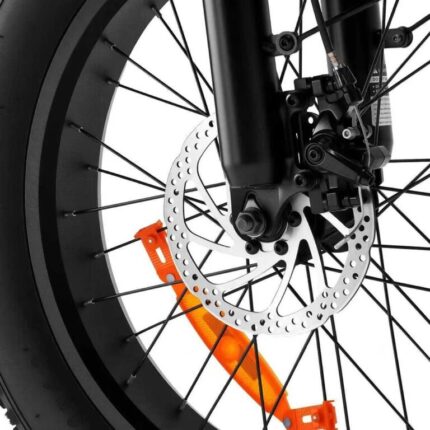
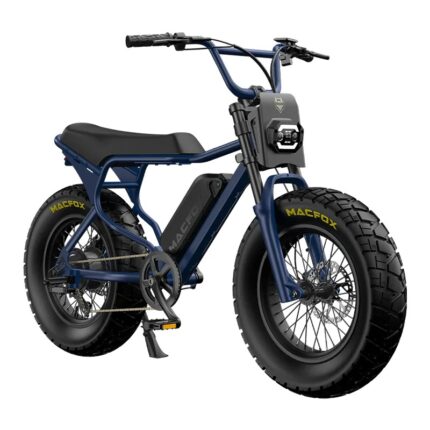
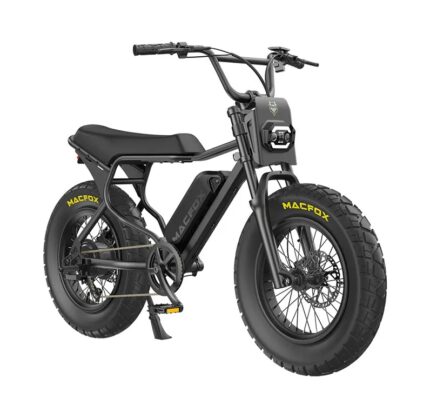
Ebikes In Oklahoma
An e-bike that meets Oklahoma’s legal definition carries no paperwork at all. No driver license, no registration, no title, no insurance. The friction is local: cities and trail managers set their own access rules, and a surprising number of online guides still quote a definition Oklahoma threw out in 2019.
Two questions keep the picture simple. State law decides whether your machine counts as a bicycle. The city, park authority, or federal land manager decides where you can take it.
| Topic | Statewide Rule | Where It Comes From |
|---|---|---|
| License, registration, insurance | Not required | 47 O.S. § 11-1209(B) |
| Motor and pedals | 750 watts max, fully operative pedals | 47 O.S. § 1-104(B) |
| Minimum age | 16, Class 3 only | 47 O.S. § 11-1209(F)(1) |
| Helmet | No statewide rule | Local ordinances |
| Bike and multiuse paths | All three classes by default | 47 O.S. § 11-1209(E)(1) |
| Natural-surface trails | Set by the managing authority | 47 O.S. § 11-1209(E)(2) |
| Sidewalks | Set by each city | Local ordinances |
That last distinction does most of the work in practice. The statute hands you paved-path access and then explicitly hands dirt back to whoever manages it.
How Does Oklahoma Define An Electric-Assisted Bicycle?
Under 47 O.S. Section 1-104, an electric-assisted bicycle has two or three wheels, fully operative pedals for human propulsion, and an electric motor rated at no more than 750 watts that fits one of three classes. Miss any one point and it is not an e-bike under state law.
The section draws three separate lines. A bicycle is human-powered only. An electric-assisted bicycle adds the limited electric motor. A motorized bicycle is a different animal: a pedal bike with a combustion engine of 80 cubic centimeters or less and a maximum design speed of no more than 35 mph on level ground. How the three-class system works nationally is worth a read if you ride in neighboring states, because Oklahoma’s version is close to the national model but not identical. Section 1-104 then says that where Title 47 uses the word “bicycle,” it includes electric-assisted bicycles and motorized bicycles unless a provision specifies otherwise, so most cycling rules carry across.
Hold onto that phrase, “unless a provision specifies otherwise.” It decides one of the most commonly botched points in Oklahoma e-bike coverage, and we come back to it below.
Two conditions are easy to miss. The bike must meet the bicycle manufacturing and equipment requirements the federal Consumer Product Safety Commission has adopted, and the motor must disengage or stop functioning when the rider stops pedaling or applies the brakes.
You will still find Section 11-805.2 cited across the web. House Bill 1265 repealed it and built the three-class system in its place, effective November 1, 2019. The old definition allowed 1,000-watt motors and speeds up to 30 mph, so any guide quoting Section 11-805.2 or a 1,000-watt ceiling is describing law that no longer exists.
What Are The Motor Power And Throttle Limits For E-Bikes In Oklahoma?
The cap is 750 watts. Above that, the machine is not an electric-assisted bicycle in Oklahoma no matter how it is marketed.
Only Class 2 may run on throttle alone, and its assistance has to stop at 20 mph. Class 1 and Class 3 motors help only while you pedal, cutting out at 20 mph and 28 mph.
The statute says the motor must be “rated” at no more than 750 watts without resolving every marketing trick around peak output. Since the law turns on the rating, the safe buy is a bike whose rated wattage is 750 or less and whose label says so. A listing that advertises only peak power, or quotes 750 watts nominal beside a 1,500-watt peak, deserves a direct question before you pay.
Buyer beware: imports advertised at 2,000 or 3,000 watts routinely ship with pedals and a “bicycle” label attached. On Oklahoma roads they are not bicycles, and the label does not change that.
Does Oklahoma Follow The Three-Class E-Bike System?
Yes. House Bill 1265 adopted the three-class model in 2019, putting Oklahoma in line with most states.
| Class | Motor Engages | Assist Stops At | Extra Requirement |
|---|---|---|---|
| Class 1 | Pedaling only | 20 mph | None |
| Class 2 | Throttle or pedaling | 20 mph | None |
| Class 3 | Pedaling only | 28 mph | Speedometer; operator 16 or older |
Since January 1, 2020, manufacturers and distributors have had to permanently affix a prominent label showing the class number, the top assisted speed, and the motor wattage, in Arial type of at least 9 points. That label is your best evidence of class at a traffic stop or a trailhead.
Bought used, or bought abroad? The label usually maps straight onto the Oklahoma classes. A mismatch is the thing to watch, and the classic one is a Class 2 throttle that keeps pulling past 20 mph.
Are E-Bikes Street Legal In Oklahoma?
Yes, if the bike fits the state definition. Five checks settle it:
- The label lists Class 1, 2, or 3.
- Labeled wattage is 750 watts or less.
- Assistance stops at 20 mph (Class 1 and 2) or 28 mph (Class 3).
- The pedals actually propel the bike.
- On a Class 3, a speedometer displays speed in miles per hour.
The usual pitfall is a quiet modification. Removed speed limiters, swapped controllers, tuning dongles, and higher-voltage batteries all push a bike past its class while the original label sits there saying otherwise. Section 11-1209(D) prohibits tampering with or modifying an e-bike to change its motor-powered speed capability or engagement unless the classification label is properly replaced. Past Class 3 limits, no label makes it legal.
Not sure where your bike stands? Contact our team or text (714) 749-3162 and we will check the label, the rated wattage, and the assist cut-off with you.
How Can You Tell If An E-Bike Is Illegal In Oklahoma?
The warning signs are consistent:
- A missing, removed, or covered class label
- Decorative pedals that cannot actually propel the bike
- Marketing that promises 40 to 50 mph, or an “off-road mode” that lifts the cut-off
- Motor ratings above 750 watts, or peak power quoted with no rated figure
- Motorcycle-style seats and footpegs with token pedals bolted on
Before paying, ask for three things: a photo of the class label, a spec sheet listing rated wattage, and the assisted top speed in every ride mode. A seller who dodges any of the three has told you what you need to know.
Do You Need A License, Registration, Or Insurance To Ride An E-Bike In Oklahoma?
No. Section 11-1209(B) exempts qualifying e-bikes and their operators from Oklahoma’s financial responsibility, vehicle insurance, driver license, vehicle registration, and certificate of title provisions. The exemption travels with the definition, and it ends the moment a machine falls outside it.
| Machine | License | Registration | Insurance |
|---|---|---|---|
| Class 1, 2, or 3 e-bike | No | No | No |
| Over 750 watts, or no working pedals | Expect motor vehicle rules | Expect motor vehicle rules | Expect motor vehicle rules |
| Gas-engine motorized bicycle | Check Service Oklahoma | Check Service Oklahoma | Check Service Oklahoma |
Insurance is optional, which is not the same as unnecessary. Homeowners and renters policies often exclude motorized vehicles, and an e-bike worth $2,000 or more is worth a specific conversation with your agent about theft and liability, or a standalone e-bike policy.
What Is The Minimum Age For Riding An E-Bike In Oklahoma?
Riders must be 16 or older to operate a Class 3 e-bike. Younger riders may ride as passengers on a Class 3 built to carry them. Class 1 and Class 2 carry no statewide minimum age, which leaves the question to parents and to local ordinances.
Use case: a Norman parent is shopping for a 15-year-old. State law rules out operating a Class 3, and Norman’s youth helmet ordinance means a helmet in town. A Class 1 bike plus a properly fitted helmet satisfies both and opens the widest set of trails. The limit of this advice: other Oklahoma cities set their own helmet rules, so a rider who crosses city lines should check before assuming.
What Is The Legal E-Bike Speed Limit In Oklahoma?
The 20 mph and 28 mph figures are motor cut-offs, not speed limits. Pedal past them under your own power and you have broken no class rule.
Posted limits are a separate matter and they still bind you, on streets and on trails. Tulsa’s River Parks trails post 15 mph. Riding a Class 3 at 28 mph on a crowded path is how access gets restricted for everyone, and in Tulsa that process is already underway.
What Happens If You Are Caught Riding An Illegal E-Bike In Oklahoma?
A machine that fails the definition loses the Section 11-1209 exemptions, and the questions that follow are license, registration, insurance, and equipment questions. What gets charged depends on the machine and the jurisdiction.
Local penalties are real money. Oklahoma City treats violations of its e-bike trail ordinances as class “a” offenses, punishable by a fine of up to $500 plus costs and fees.
The civil exposure is larger than the fine. After a crash, an uninsured rider can be personally liable, and insurers may contest claims involving a modified bike on the ground that the machine was not what the policy covered.
After any crash: get medical care, report it to police, photograph the scene and your class label while it is in front of you, and talk to an Oklahoma attorney before giving any insurer a recorded statement.
What Are The Rules For Riding On The Road In Oklahoma?
E-bike riders follow the cyclist traffic rules. Ride with traffic and as far right as is safe, moving left to pass, to turn left, or to clear a hazard. Signal by hand, obey signals, and yield as any vehicle would. Oklahoma’s bicycle equipment rules call for a white front lamp and a red rear lamp or reflector when you ride after dark, and lights that drivers actually notice are worth more than the statutory minimum.
Drivers owe you room. Under the traffic laws effective November 1, 2019, a driver passing you must move fully into the left lane when a second same-direction lane exists, and must leave at least three feet when there is only one lane.
Expert tip, and a correction worth reading twice: Oklahoma’s cyclist allowances at stop signs and red lights almost certainly do not cover your e-bike. Section 11-202.1 lets a cyclist roll a stop sign cautiously and proceed through a steady red after stopping, but it defines “bicycle” by pointing specifically at subsection A of Section 1-104, the human-powered definition. That specific cross-reference is the “unless otherwise specified” carve-out at work. The separate detection-failure rule in Section 11-202, which lets a vehicle proceed through a red light the sensors never saw, is written for motorcycles. Neither one hands an e-bike rider permission. Treat stop signs and signals the way a driver would, and understand that plenty of published Oklahoma guides get this backwards.
Do You Need A Helmet To Ride An E-Bike In Oklahoma?
No statewide law requires a helmet for an e-bike rider of any age. The old youth rule disappeared with the 2019 repeal of Section 11-805.2.
Cities fill the gap unevenly. Norman has a youth helmet ordinance, which published summaries describe as covering riders under 18. Some summaries also report an Oklahoma City helmet requirement reaching riders of all ages. Both are worth confirming in the current city code before you rely on either, because a municipal helmet rule is the kind of provision that gets amended without making the news.
Buy a helmet that meets the U.S. CPSC bicycle standard. Class 3 riders should look at NTA 8776 certification, a Dutch standard written for faster e-bikes, which tests at higher impact speeds and covers more of the head. Check the fit every ride: two fingers of clearance above the eyebrows, straps forming a V under each ear, one finger of slack under the chin strap.
Are E-Bikes Allowed On Trails And Bike Paths In Oklahoma?
It depends on the surface and on who manages it, and the statute says so in as many words. Section 11-1209(E)(1) lets all three classes use bicycle and multiuse paths wherever bicycles are permitted, subject to the local authority or state agency with jurisdiction prohibiting them. Section 11-1209(E)(2) then carves natural-surface nonmotorized trails out of that access entirely and leaves them to the managing authority.
Tulsa is the clearest example of a local authority using that power. Under current River Parks trail rules, an e-bike must be pedal-assist Class 1 or Class 2, must have pedals mounted on the frame, and must be regulated to a maximum of 20 mph unless otherwise posted. Note that the device cap and the posted limit are two different numbers: the trails post 15 mph. A Class 3 commuter that is perfectly legal on Tulsa streets does not belong on those trails at all.
That rule is being enforced harder than it used to be. In June 2026, River Parks asked Tulsa Police to step up speed enforcement on the trails after four people were hospitalized from bike crashes in a single month, with the City Council backing the effort through a $60,000 line item. River Parks staff pointed at fast electric bikes as the core problem while saying pedal-assist riders remain welcome.
For state parks, policy varies by park and by trail, so call the park office before you plan a singletrack ride. On national forest land, the Forest Service manages e-bikes as motor vehicles, which generally confines them to routes shown as open on that forest’s Motor Vehicle Use Map.
| Where | Class 1 | Class 2 | Class 3 |
|---|---|---|---|
| Bike and multiuse paths (state default) | Yes | Yes | Yes |
| Tulsa River Parks trails | Yes | Yes | No |
| Oklahoma City multi-use trails | Yes | Yes | Yes |
| Oklahoma City natural trails | Yes | No | No |
| National forest non-motorized trails | Generally no | Generally no | Generally no |
Use case: a Tulsa rider commutes on a Class 3 and wants weekend River Parks miles. The bike is legal on streets and on most paved paths statewide, but River Parks excludes Class 3 outright. The honest options are street-only weekends or a second Class 1 or Class 2 bike with a matching label. A software mode switch will not help: if the permanent label says Class 3, that is what a ranger or an officer reads.
Which City Ordinances Change E-Bike Rules In Oklahoma?
Oklahoma City set its rules by council vote on August 31, 2021. All three classes may use city streets and the paved multi-use trails. Only Class 1 may use the natural-surface trails, which puts Class 2 and Class 3 on pavement. Violations carry that fine of up to $500 plus costs. The city also prohibits riding on sidewalks where signs say so, which matters most downtown, so read the posts before you ride a block of sidewalk to reach a rack.
Norman is the city where state law and local law pull in different directions. Its youth helmet rule means a teenager who needs no helmet under state law needs one in Norman. And in October 2026, the Norman council adopted its own cyclist stop-sign and red-light rule, an “Idaho stop” style ordinance, which local reporting says does not apply to e-bikes or scooters. Same conclusion as state law, reached separately: on an e-bike in Norman, stop.
Elsewhere, assume nothing. Broken Arrow, Stillwater, Edmond, and smaller cities each set their own park and trail rules, and a call to the parks department before a first ride costs less than a citation. Military installations and university campuses, including the OU and UCO campuses, set their own and sometimes stricter rules.
How Do You Choose A Street-Legal E-Bike In Oklahoma?
Start from where you will actually ride, not from the spec sheet. Class 1 buys the widest trail access in this state, and the Oklahoma City natural-trail rule is the sharpest illustration of why. Class 3 suits riders 16 and older with long road commutes. For cargo or children, a Class 2 throttle earns its keep pulling away from a stop, as long as the bike is built to carry passengers.
Our e-bike buying guide walks through frames, batteries, and motors in more detail. Four specs to verify before money changes hands: a permanent class label showing rated wattage of 750 or less, the assisted top speed in every mode, hydraulic disc brakes on anything heavy or fast, and UL 2849 certification for the electrical system, which is the standard that addresses battery fire risk.
Quiz: which class fits your Oklahoma riding?
Question 1: Will you ride natural-surface trails, like Oklahoma City’s dirt trails?
- Yes: go to Question 2.
- No: go to Question 3.
Question 2: Do you need a throttle?
- No: see Result A.
- Yes: Class 2 is barred from OKC natural trails, so weigh throttle against trail access. See Result A or Result B.
Question 3: Is the rider 16 or older and commuting more than about 10 miles each way on roads?
- Yes: see Result C, then check the path rules on your specific route.
- No: go to Question 4.
Question 4: Will you carry cargo or a child?
- Yes: see Result B.
- No: see Result A.
- Result A: a Class 1 bike, for the widest trail and path access in Oklahoma.
- Result B: a Class 2 cargo bike rated to carry passengers; confirm trail rules before leaving pavement.
- Result C: a Class 3 bike, accepting that River Parks and OKC natural trails are closed to it.
This is a starting point for shopping, not legal advice.
Frequently Asked Questions About Ebikes In Oklahoma
What Are The Main E-Bike Rules In Oklahoma?
An Oklahoma e-bike must have fully operative pedals, a motor rated at 750 watts or less, and fit Class 1, 2, or 3. No license, registration, or insurance is required. Class 3 operators must be 16 or older, and cities and trail managers may add helmet rules and class restrictions on top.
Can You Ride An E-Bike On Public Streets In Oklahoma?
Yes. All three classes may use public streets with the same rights and duties as a bicyclist, including obeying signals, signaling by hand, and running lights after dark. A machine over 750 watts or without working pedals is not an e-bike under state law and should expect motor vehicle rules instead.


