
Blog
Ebikes In Delaware Made Simple For Every Rider
Ebikes in Delaware are street legal, and the state treats a compliant one almost exactly like a regular bicycle. With working pedals, a motor of 750 watts or less, and a class label, you can ride without a license, registration, or insurance. The catch is in the details: Class 3 has extra rules, the helmet law covers every rider under 18, and the sidewalk rule trips up many riders.
Key Takeaways
- A compliant e-bike has the same rights and duties as a bicycle.
- Every class is capped at 750 watts. Assistance stops at 20 mph for Class 1 and 2, and at 28 mph for Class 3.
- No license, registration, title, plates, or insurance is required.
- Riders under 18 must wear a helmet on any bike. On Class 3, everyone must.
- No one under 16 may operate a Class 3 e-bike.
- No sidewalk riding while the motor is running.
- Since September 24, 2026, sellers may not market electric mopeds or motorcycles as e-bikes.
Table of Contents
Delaware keeps a compliant e-bike on the easy side of the line: no license, no registration, no insurance. What catches riders out is the fine print — the 750-watt ceiling, the under-18 helmet rule, the Class 3 age limit, and a sidewalk ban that applies the moment the motor is running. Every bike we stock is checked for wattage, cutoff speed, and a readable class label before it leaves the floor.
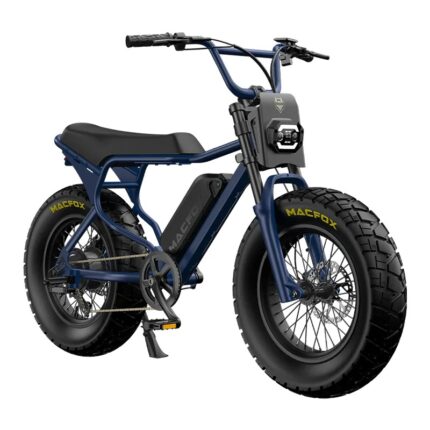
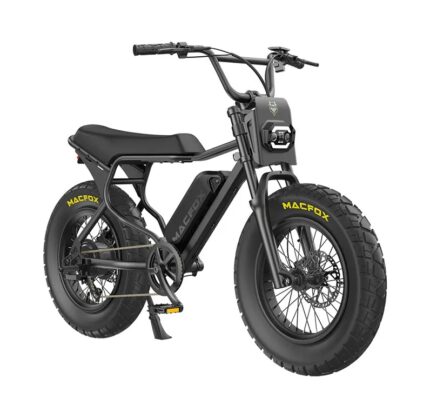
Ebikes In Delaware
Delaware treats a compliant e-bike as a bicycle with a helper motor, not a moped or a motorcycle. That distinction decides where you ride, what paperwork you need, and how a traffic stop plays out.
Several bodies share authority. The General Assembly writes the rules in Title 21 of the Delaware Code. DelDOT manages most state roads and many shared-use paths, DNREC’s Division of Parks and Recreation controls state park trails, and towns can add their own restrictions.
Statewide law is the floor. A path manager can restrict e-bikes after notice and a public hearing, so check local rules where you ride. For the wider picture, see our guide to e-bike laws and your rights.
Are Ebikes Street Legal In Delaware?
Yes. Section 4198P(a) gives an e-bike rider all the rights of a bicyclist, along with the same duties. You can read the full text in the Delaware bicycle statutes.
Riders moving from looser states often assume a 1,000- or 1,500-watt bike is fine as long as it has pedals. In Delaware, it is not. A machine over the limits generally falls into the moped or motorcycle category, which brings licensing and registration duties.
What Are The Speed And Motor Power Limits For Ebikes In Delaware?
All three classes share a 750-watt ceiling. Class 1 and Class 2 must stop assisting at 20 mph, and Class 3 by 28 mph. These are assistance cutoffs, not speed limits, so posted limits still apply.
The motor must also disengage when you stop pedaling or apply the brakes. Brake-cutoff sensors are the first thing our team checks on a used bike, because cheap conversion kits often skip them.
Buyer beware: derestriction dongles, firmware unlocks, and “off-road mode” settings are the fastest way to lose legal status. Under § 4198P(d), you may not modify motor speed or engagement unless you replace the class label afterward, and no label can save a bike pushed past 750 watts or 28 mph.
Want a bike that is already compliant? Browse our street-legal e-bike collection. Every model is checked for wattage, cutoff speeds, and labeling, with financing at $800 down, no credit check, and no interest on a weekly or monthly plan.
How Does Delaware Define An Electric Bike?
Delaware defines an electric bicycle as a two- or three-wheeled bicycle with fully operable pedals, a seat, and a motor of 750 watts or less that fits one of three classes. It must also meet federal bicycle equipment standards under 16 C.F.R. Part 1512.
There is no weight or wheel-size limit, so cargo bikes, trikes, and fat-tire models can qualify. Delaware has no state sales tax, and because e-bikes are not registered, there is no registration fee.
Does Delaware Recognize Three Classes Of Ebikes?
Yes. Delaware adopted the three-class system in 2022, and labeling took effect January 1, 2023.
| Class | How the Motor Works | Assist Stops At | Extra Rules |
|---|---|---|---|
| Class 1 | Pedal assist only | 20 mph | Bicycle rules only |
| Class 2 | Pedal assist or throttle | 20 mph | Bicycle rules only |
| Class 3 | Pedal assist only | 28 mph | Age 16+, helmet for all, speedometer |
Manufacturers must permanently attach a label, printed in Arial at 9-point or larger, showing the class, top assisted speed, and motor wattage.
Buying secondhand? Photograph the label and compare it with the display’s settings. Ask for the receipt and spec sheet, and if the label is missing, confirm the rated wattage on the motor housing before you pay.
Quick check: which class is your bike? This guide is not a legal ruling.
Question 1: Does your bike have fully operable pedals and a motor rated 750 watts or less?
- If no, it is not an e-bike under Delaware law. See the moped section below.
- If yes, go to Question 2.
Question 2: At what speed does the motor stop helping?
- At 20 mph or less, go to Question 3.
- Between 20 and 28 mph, pedal assist only: likely Class 3. Riders must be 16 or older, wear helmets, and use a speedometer.
- Above 28 mph, or a throttle working past 20 mph: not a legal e-bike.
Question 3: Does it have a throttle?
- If yes, it is likely Class 2.
- If no, it is likely Class 1. Both ride wherever bicycles go.
How Do Ebikes Differ From Mopeds And Scooters Under Delaware Law?
The difference comes down to pedals, power, and paperwork. Delaware’s moped definitions exclude electric bicycles, but a machine that fails the e-bike test usually lands in the moped or motorcycle category.
| Feature | Compliant E-Bike | Moped | Motorcycle or E-Moto |
|---|---|---|---|
| Driver’s license | Not required | Required | Required, with endorsement |
| Registration and title | Not required | Required | Required |
| Insurance | Not required | Not required | Required |
| Bike lanes and paths | Allowed | Not allowed | Not allowed |
Warning signs include footpegs instead of pedals, a motorcycle-style frame, assisted speeds past 28 mph, or no class label.
Delaware also tightened the rules for sellers. The Truth in E-Bike Marketing Act, House Substitute 1 for HB 439, took effect September 24, 2026. Commercial sellers can no longer market electric mopeds or motorcycles as e-bikes, and buyers must receive a written disclosure of the vehicle’s classification, maximum power, and any registration, licensing, or insurance requirement. See the HB 439 bill record for details.
Are Class 2 Throttle Ebikes Legal In Delaware?
Yes. Delaware’s definitions include a Class 2 e-bike whose motor can propel it without pedaling, up to 20 mph. One wrinkle: § 4198P(f) requires the motor to cut out when pedaling stops or the brakes are applied, and the statute does not spell out how that applies to throttles. Choose a labeled Class 2 model with a working brake cutoff, and do not modify either.
A throttle helps from a stop and with cargo, while a torque sensor feels more natural in traffic. Campuses and some park authorities set stricter policies, so check first.
Do You Need A License, Registration, Or Insurance To Ride Ebikes In Delaware?
No to all three. Section 4198P(b) exempts e-bikes and riders from Delaware’s rules on licenses, registration, titles, plates, and insurance.
| Requirement | Required? | What It Means for You |
|---|---|---|
| Driver’s license | No | No license for any class |
| Registration, title, plates | No | No DMV visit |
| Insurance | No | You still carry crash liability |
| Class label | Yes (manufacturer) | Keep it intact and readable |
Exempt from paperwork is not exempt from blame. If you cause a crash, you can be personally liable. Ask your homeowners or renters agent whether your policy covers e-bikes, since many exclude motorized devices, or consider standalone e-bike or umbrella coverage.
Expert tip: keep your receipt and a photo of the class label on your phone to prove compliance after a stop or claim.
What Are The Helmet Laws For Ebike Riders In Delaware?
Under § 4198K, anyone under 18 must wear a helmet on any bicycle or e-bike, as operator or passenger, including children in child seats or trailers. On Class 3, every operator and passenger must wear one.
For helmets made on or after March 11, 1999, “approved” means it meets the Consumer Product Safety Commission standard, so look for the CPSC label inside the shell. The federal helmet standard explains what that label must say. Some Class 3 riders add NTA 8776 certification, a Dutch standard for faster e-bikes, though Delaware only requires CPSC compliance.
Parents can be fined $25 for a first violation and $50 after that, and a court may dismiss the charge once a compliant helmet is bought. Under § 4198K(e), not wearing a helmet is not admissible as evidence in a civil trial. Wear one anyway, because the medical stakes outweigh the legal ones.
What Is The Minimum Age To Ride An Ebike In Delaware?
There is no minimum age for Class 1 or Class 2. No one under 16 may operate a Class 3 e-bike, though a younger rider may ride as a passenger on one built for passengers.
Under § 4192, parents may not knowingly permit a child to break Delaware’s bicycle rules. Before handing over a bike, make sure the young rider can brake smoothly, signal while holding a line, and handle a busy intersection.
Where Can You Legally Ride An Ebike In Delaware?
You can ride anywhere bicycles are allowed: streets, highways, shoulders, bike lanes, and multi-use paths. The statute allows three exceptions. Path managers may restrict e-bikes after a public hearing, dirt trails designated nonmotorized may be closed, and sidewalks are off-limits under motor power.
| Location | Class 1 and 2 | Class 3 | Watch For |
|---|---|---|---|
| Roads and bike lanes | Yes | Yes | Local signage |
| Multi-use paths | Yes, unless restricted | Yes, unless restricted | Hearing-based bans |
| Nonmotorized dirt trails | Often no | Often no | Posted closures |
| State park paths | Check current rules | Likely restricted | DNREC rule update |
Beach towns often set seasonal boardwalk rules by ordinance, so read posted signs before you ride.
Can You Ride An Ebike On The Sidewalk In Delaware?
Not under motor power. Section 4198P(g)(3) bans e-bikes from all sidewalks while the motor is in use, even where regular bikes are allowed.
With the motor off, you can pedal where bicycles are permitted, but § 4198B requires you to yield to pedestrians and give an audible signal before passing. Many towns ban downtown sidewalk cycling entirely.
Where Can You Ride A Class 3 Ebike In Delaware?
Under state law, Class 3 bikes may go wherever bicycles go. The extra Class 3 rules are the age limit, helmets for all riders, and a speedometer.
State parks may soon differ. In 2026, DNREC proposed rules allowing Class 1 and Class 2 e-bikes on designated park bike paths while restricting Class 3, and public comment closed August 20, 2026. Before riding a park route like the Junction and Breakwater Trail, check the DNREC park rulemaking page.
What Rules Of The Road Must Ebike Riders Follow In Delaware?
Cyclist rules apply. Ride with traffic, keep right except when passing or turning left, ride no more than two abreast, signal turns, and keep one hand on the bars.
Delaware lets bicyclists slow and yield at many stop signs. You must still stop fully where the cross road has three or more lanes, where a vehicle is already stopped at the sign, and at every red signal. Earbuds in both ears are not allowed.
| Equipment | When | Delaware Standard |
|---|---|---|
| White front lamp | At night | Visible 500 feet ahead |
| Red rear reflector | Always | Visible 600 feet behind |
| Side reflectors or lamp | At night | Visible from both sides |
| Brakes | Always | Stop within 25 feet from 10 mph |
The DelDOT bicycle guide summarizes these rules on one sheet.
Riding impaired is costly. Under § 4198J, a first offense brings a $150 to $1,150 fine, and a repeat within two years brings $400 to $1,500, up to 30 days in jail, or both.
What Should You Do After An Ebike Crash In Delaware?
Take these steps at the scene:
- Move to safety and call 911 if anyone is hurt.
- Get medical care, even if you feel fine.
- Report the crash to police and get the report number.
- Photograph the vehicles, your bike’s class label, the road, and injuries.
- Collect witness contacts and the driver’s insurance details.
- Keep your damaged bike and helmet unrepaired.
A careless driver is the usual cause, but a pothole may point to a government road owner, and a failed brake sensor may support a product claim. Under Delaware’s modified comparative negligence rule, your recovery shrinks by your share of fault and is barred if your fault exceeds the other side’s.
Most injury lawsuits must be filed within two years under 10 Del. C. § 8119, and government claims can carry extra notice rules. Whether a car’s personal injury protection covers an injured e-bike rider is not directly settled in Delaware law, so talk to a licensed Delaware injury attorney early.
Use case 1 (hypothetical): A Newark parent wants a Class 3 bike for a 15-year-old’s commute. The law bars operators under 16, so a Class 1 bike and a CPSC helmet are the better buy until the teen turns 16.
Use case 2 (hypothetical): A Lewes rider buys a 1,500-watt “e-bike” online. It exceeds the 750-watt cap, so it does not qualify. The rider either registers it as the vehicle it is or sells it and buys a labeled e-bike, and the new disclosure law now helps buyers catch this before checkout.
Not sure which class a bike falls into? Get in touch and we will check the wattage and labeling with you before you buy.
Frequently Asked Questions About Ebikes In Delaware
Are Ebikes Allowed On Delaware Highways And Main Roads?
Yes. Compliant e-bikes may use streets, highways, and shoulders wherever bicycles are allowed. Where signs prohibit bicycles, such as some limited-access expressways, e-bikes are prohibited too.
Can You Ride An Ebike On Delaware State Park Trails?
It depends on the trail and class. Nonmotorized dirt trails can be closed to e-bikes, and DNREC’s 2026 proposal would allow Class 1 and 2 on designated park bike paths while restricting Class 3. Check posted signs and DNREC’s current rules before each park ride.


